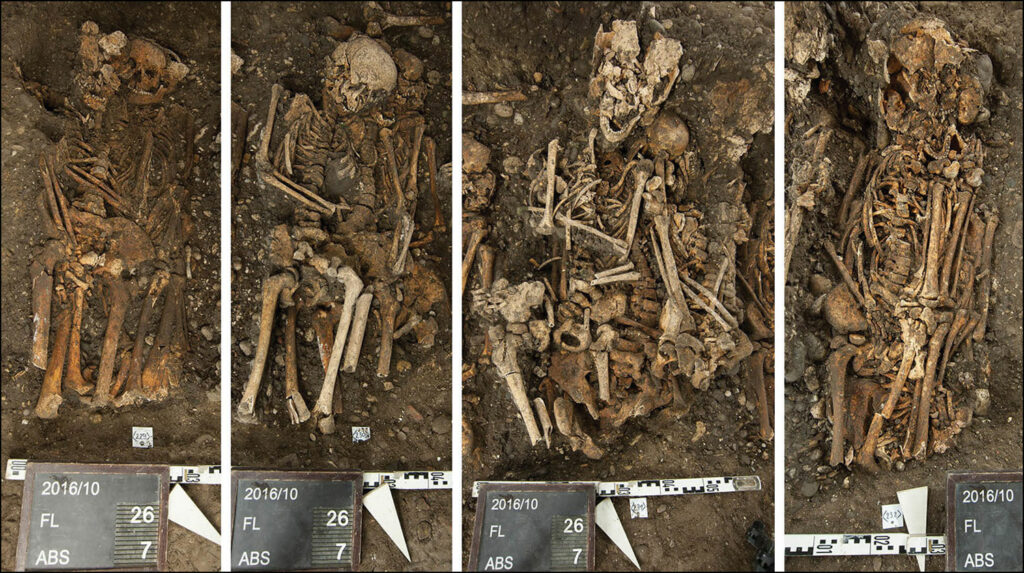
BASEL, SWITZERLAND—According to a statement released by Antiquity, analysis of skeletal remains recovered from a seventeenth-century hospital cemetery in Basel, Switzerland, suggests that young laborers were the people most likely to die during an outbreak of plague. As a trade center that drew people in from abroad, the city of Basel was vulnerable to the spread of Yersinia pestis bacteria and outbreaks of plague. The last recorded outbreak of the disease in Basel occurred between 1665 and 1670. Researchers led by osteoarchaeologist Laura Rindlisbacher of the University of Basel examined skeletal remains recovered from the hospital cemetery dated to this period, and were able to detect the presence of Y. pestis in five of the individuals who died within a short time span. On average, these five were about 17 years of age at the time of death. Their bones showed signs of degenerative diseases brought on by physically demanding work as well. “Work strain was of particular interest for us, as this represents one of the most important factors for vulnerability during a pandemic,” Rindlisbacher said. “If somebody can’t forego work to survive, even the danger of contracting a deadly disease cannot stop these people from working,” she explained. Individuals could have also been affected by access to social networks that provided care to the sick, the researchers suggest. “It was striking to observe the extent to which young lives were cut short by the plague, especially the lives of disadvantaged lower-class youths already subject to hard and frequent labor in Early Modern Basel,” Rindlisbacher concluded. Read the original scholarly article about this research in Antiquity. To read about a mass grave discovered beneath a French supermarket, go to "A Parisian Plague."