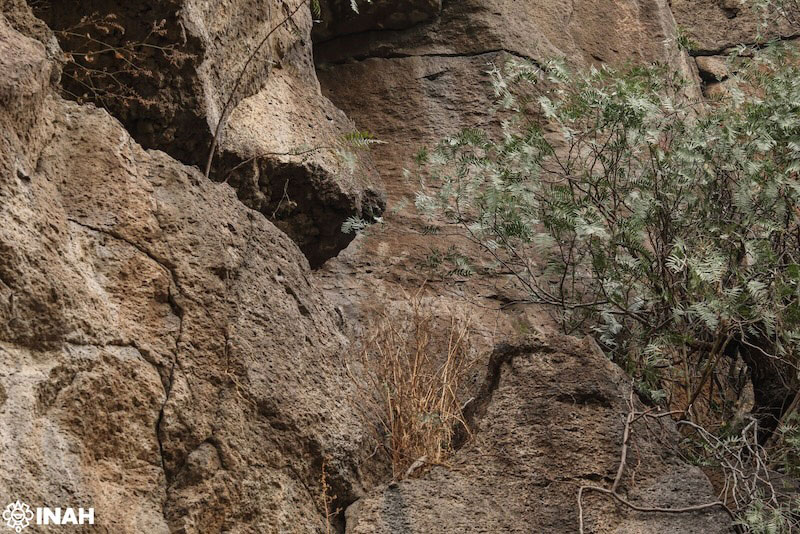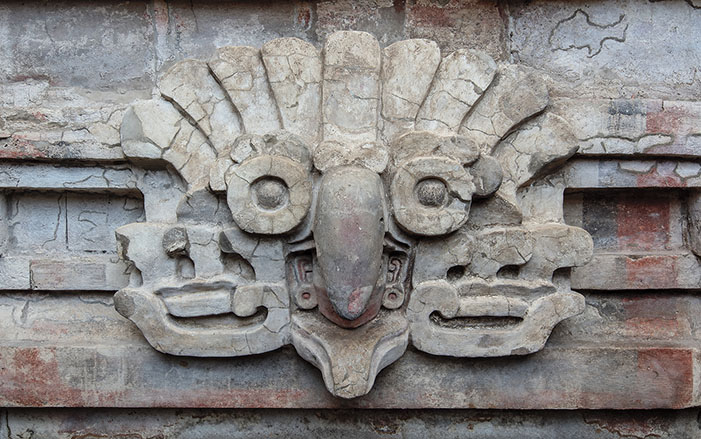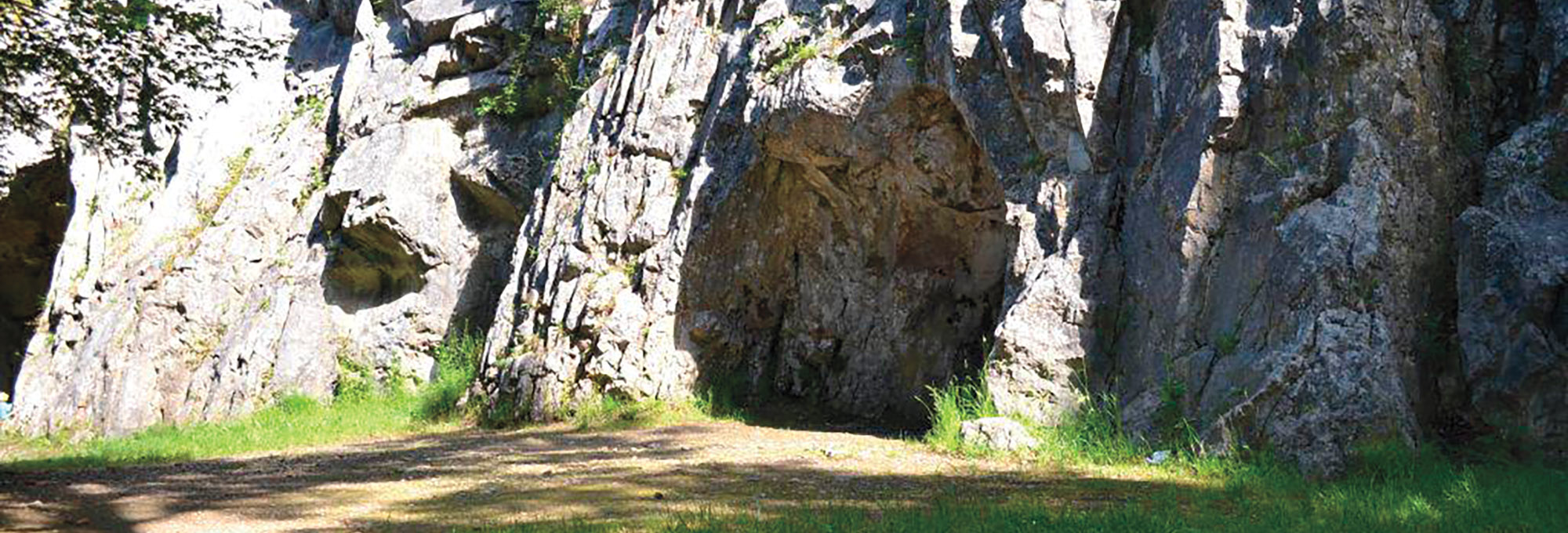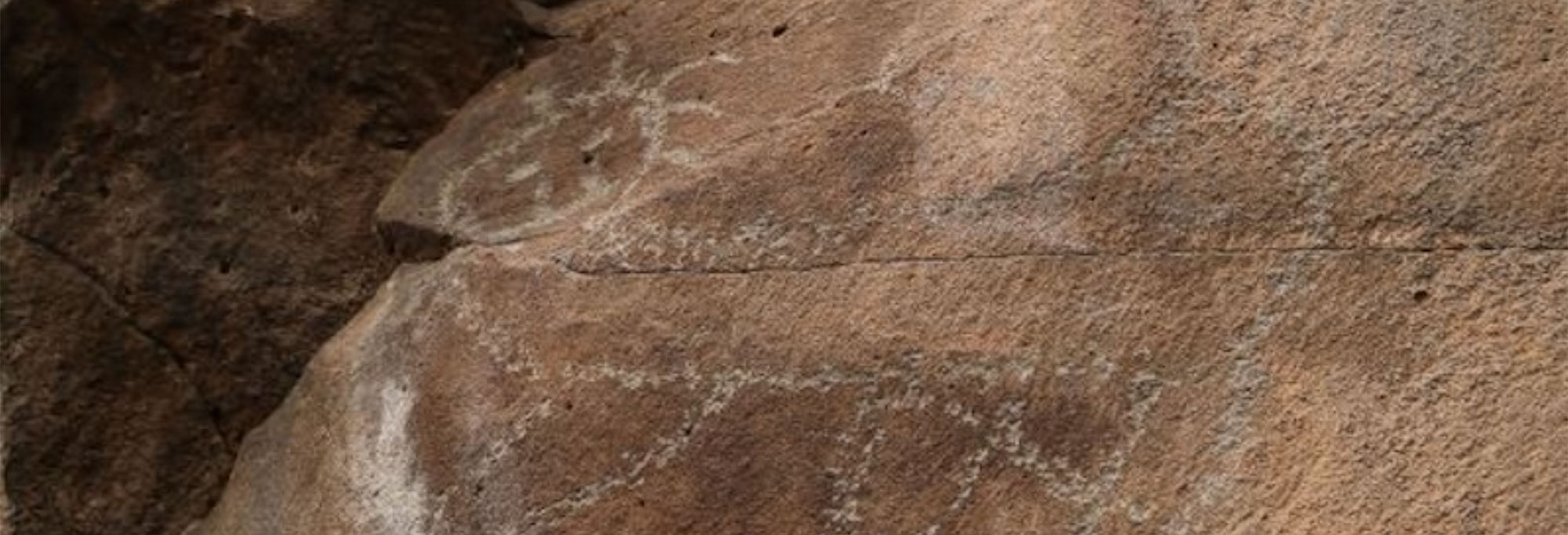
HIDALGO, MEXICO—According to a Mexico News Daily report, 16 paintings and petroglyphs have been discovered on cliffs near the Tula River and the La Requena Dam, at central Mexico’s El Venado site, which is named for the depictions of deer on rock faces there. Archaeologists from Mexico’s National Institute of Anthropology and History investigated the area prior to construction of a passenger train route. The oldest of the newly found artworks has been dated to 4,000 years ago, while the later images were made between about A.D. 900 and the arrival of the Spanish in the early sixteenth century. The rock art includes images of people with shields, headdresses, and weapons. One of the figures is shown wearing regalia associated with Tlaloc, the Aztec rain god. Other images show a stylized human figure in red and shapes that may represent a snake or lightning. A figure with a human face and the legs of a bird or horse has been dated to around the time of contact with the Spanish. The train route will be adjusted to avoid damage to the region where the rock art was discovered. To read about a surreal style of rock art that persisted for 4,000 years in the Texas canyonlands, go to "Art for the Ages."