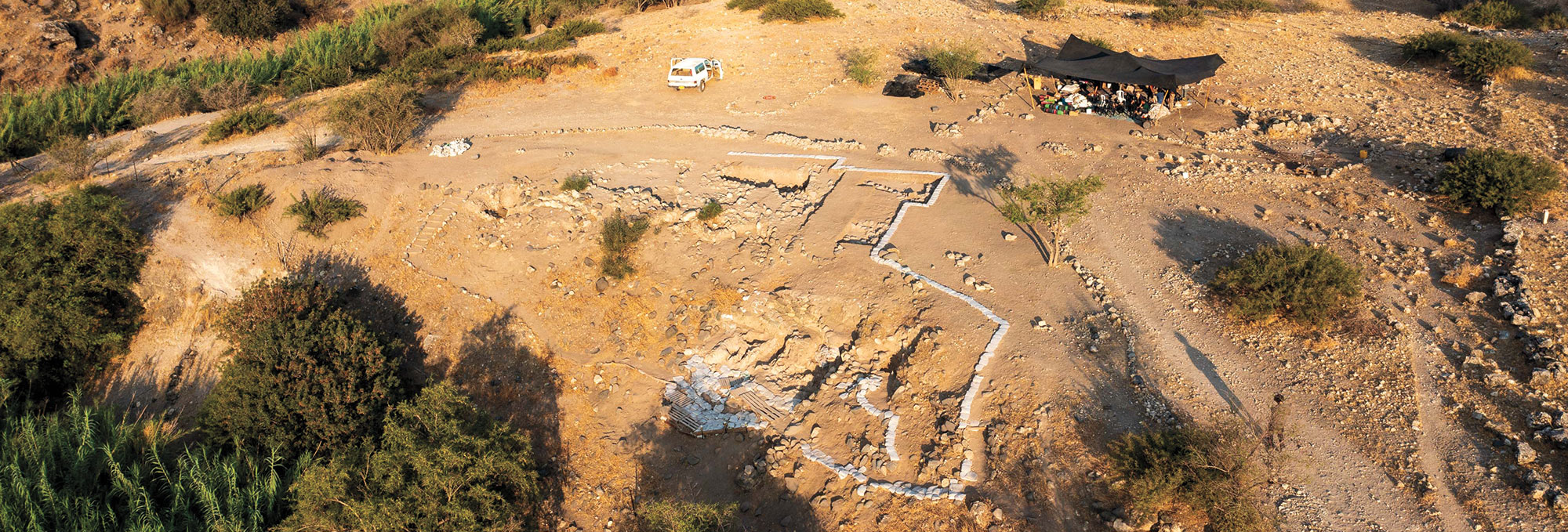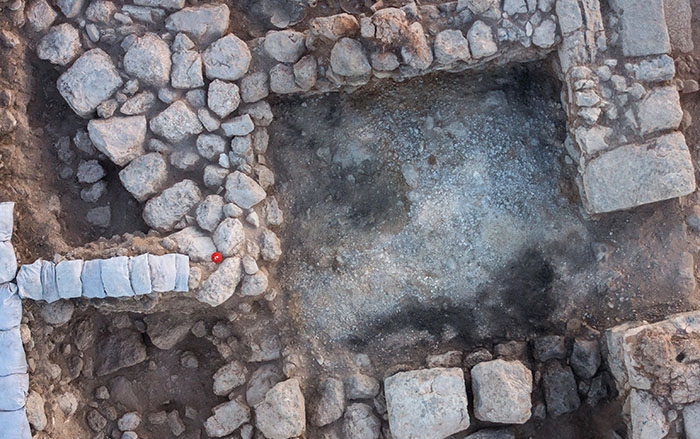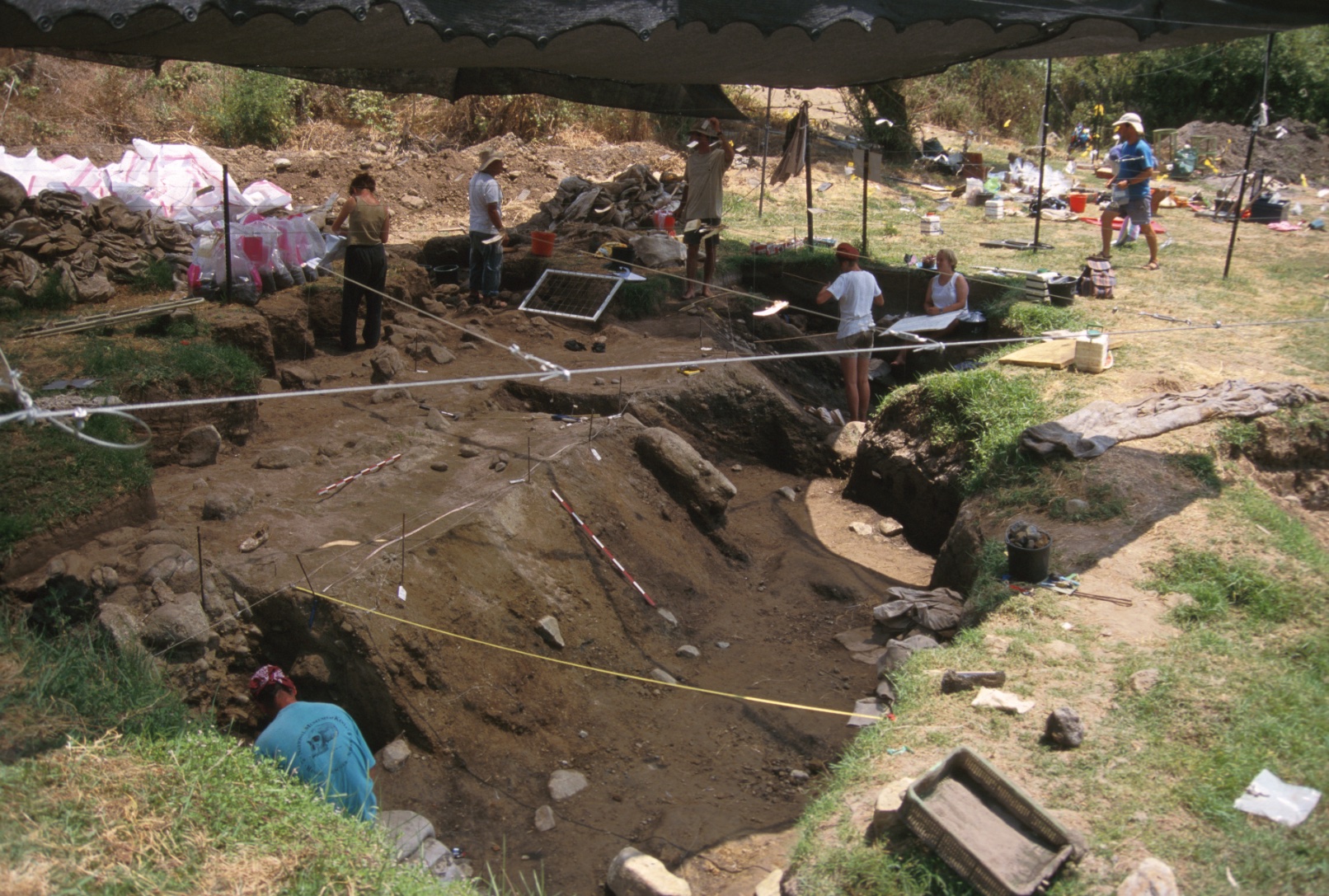
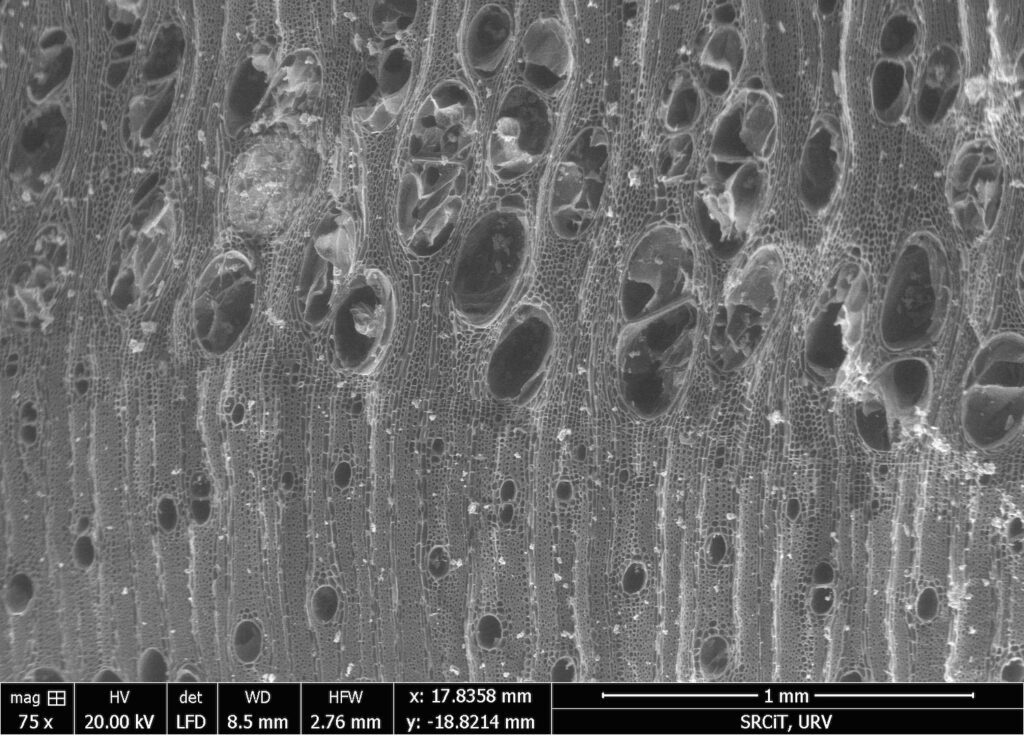
JERUSALEM, ISRAEL—Analysis of charcoal found at the site of Gesher Benot Ya’aqov in northern Israel shows that early hominins used readily available tree species for firewood, according to a statement released by the Hebrew University of Jerusalem. For tens of thousands of years, hunter-gatherers repeatedly returned to Gesher Benot Ya’aqov, which was situated near a lake. Ethel Allué of the Catalan Institute of Human Paleoecology and Social Evolution, Naama Goren-Inbar of the Hebrew University of Jerusalem, and an international team of scientists examined more than 250 pieces of charcoal from an occupation layer at the site dated to some 780,000 years ago. The researchers were able to determine that ash, willow, grapevine, oleander, olive, oak, pistachio, and pomegranate wood were all burned. When compared with the variety of fruits, nuts, and seeds collected for food at the site, Allué and her colleagues found that the charcoal represented a more diverse collection of botanical remains. The firewood was therefore likely picked up as fallen branches and logs from plant species available along the lakeshore and the open Mediterranean woodland. Fish remains, mainly the teeth of large carp, were found among the charcoal, indicating that fish were cooked over what was probably a carefully controlled fire, the researchers concluded. Read the original scholarly article about this research in Quaternary Science Reviews. To read about the world's oldest known rock art, which was made by modern humans nearly 70,000 years ago, go to "Mark of the Human."