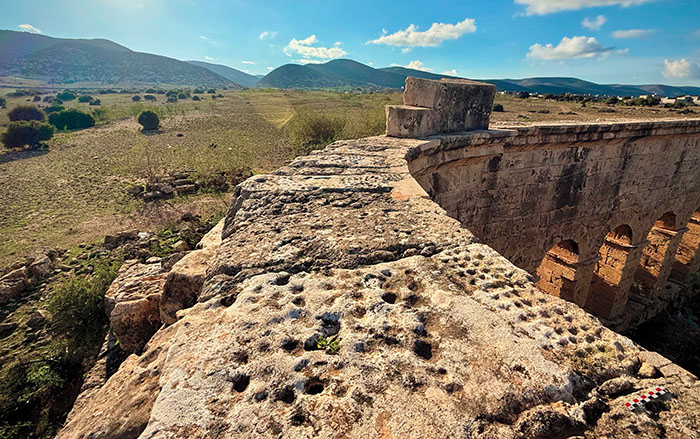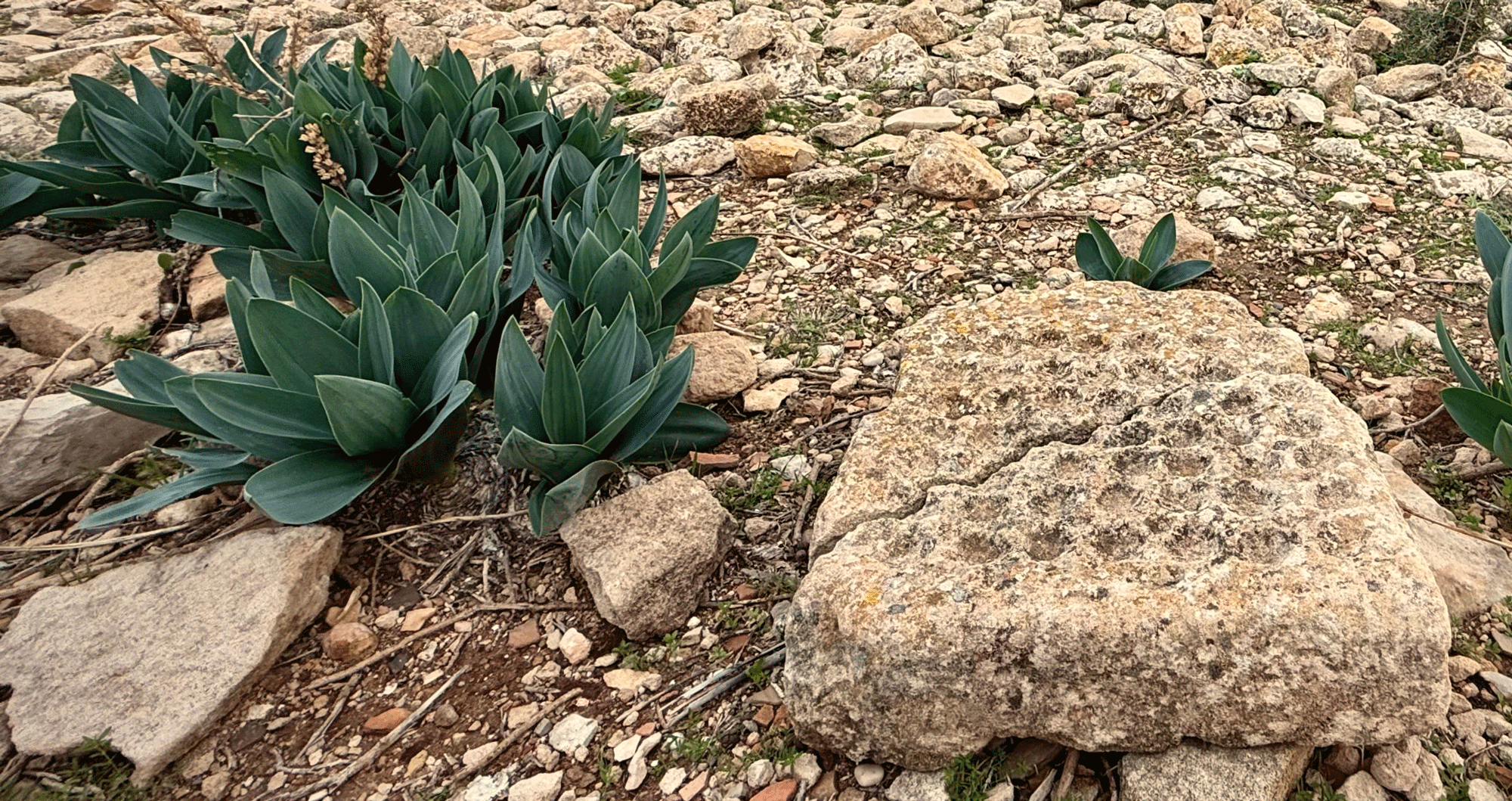
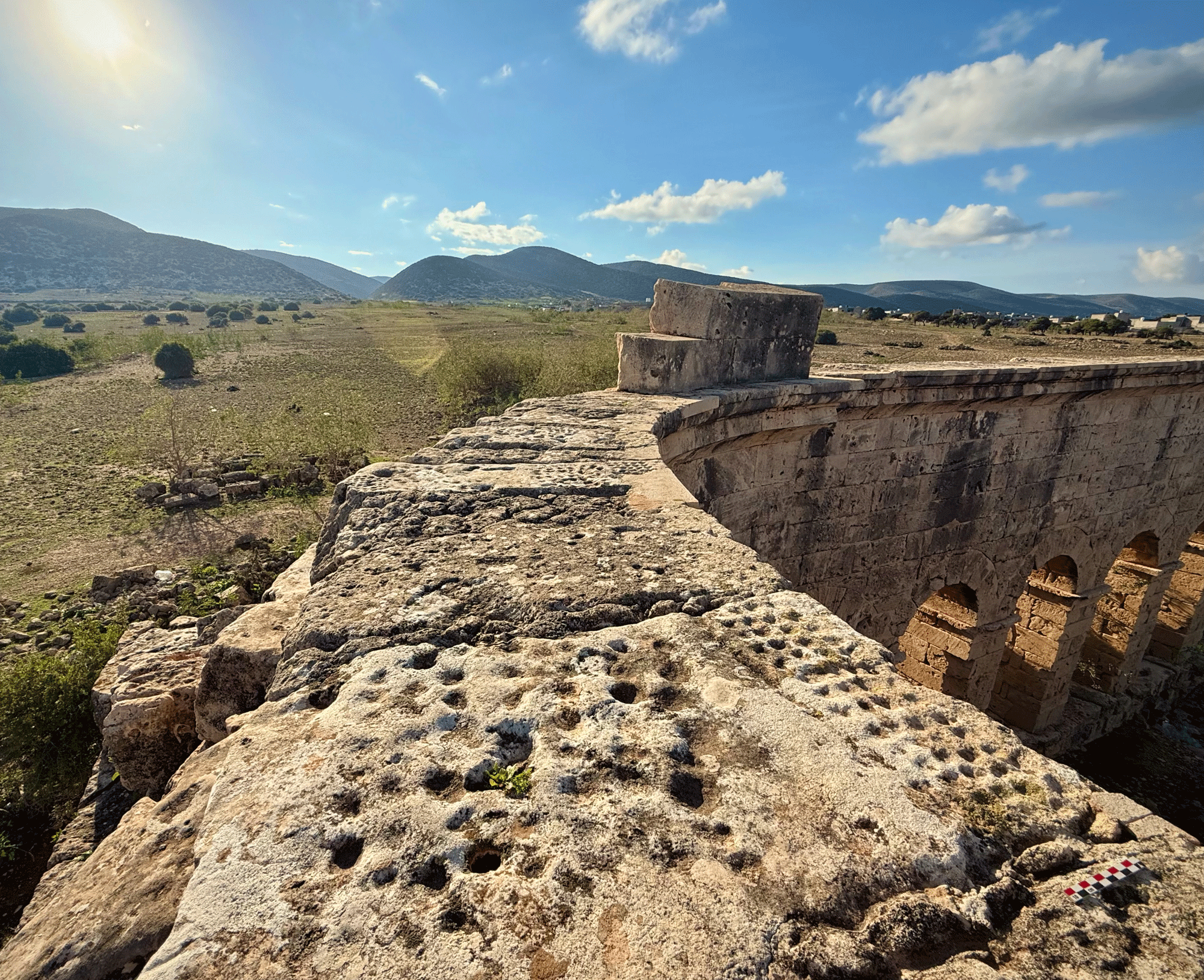
WARSAW, POLAND—According to a La Brújula Verde report, hundreds of grids carved into the ruins of the ancient Greek city of Ptolemais, in what is now northeastern Libya, have been documented by archaeologist Zofia Kowarska of the University of Warsaw. The grids are concentrated on the eastern side of the site and are thought to have been engraved after the Arab conquest of the region in the seventh century A.D., when Ptolemais was abandoned. “Sometimes in a single spot we find a dozen, even 20 or 30 boards right next to each other,” Kowarska said. The boards usually consist of a number of small, circular depressions arranged in a square or rectangle. Local people living now in nearby Tolmeita suggest that the differently sized boards were used for different games. For example, a board featuring nine depressions arranged in a three-by-three pattern might have been used by two people to play a game similar to tic-tac-toe. A larger game board could have accommodated a game similar to checkers, where the goal is to capture the opponent’s pieces. Kowarska and her colleagues suggest that these game boards were mainly used by nomadic or local shepherds who took shelter in the city's ruins. Game boards carved on the remains of buildings with a good view of the surrounding terrain and grazing animals were preferred, she noted. To read about recent efforts to decode the rules of an ancient Roman game, go to "Around the World: The Netherlands."