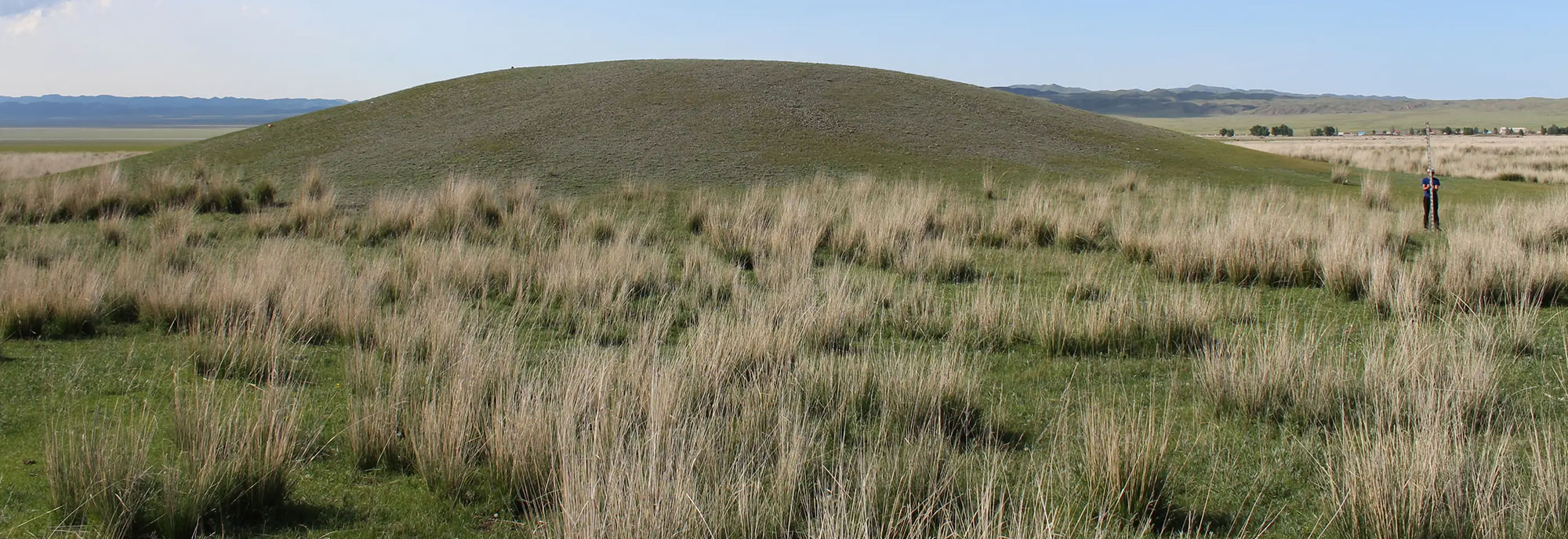
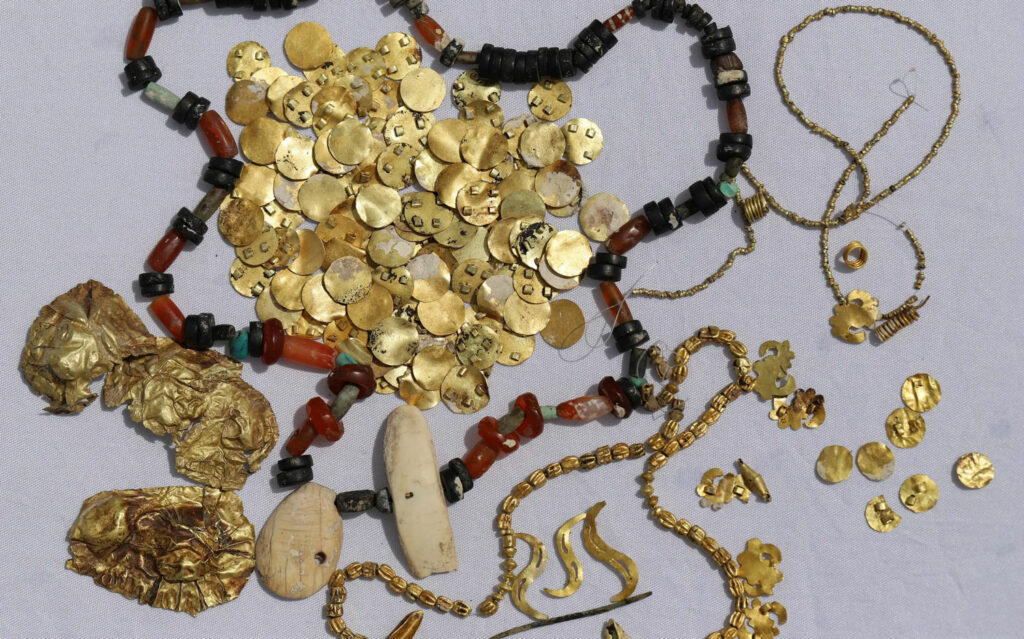
AUSTIN, TEXAS—According to a Live Science report, DNA samples taken from 85 Scythians who lived in central Asia during the Iron Age, between about 900 and 200 B.C., were analyzed by Ayshin Ghalichi of the Max Planck Institute for Evolutionary Anthropology, Ainash Childebayeva of the University of Texas at Austin, and their colleagues. The remains of 38 of the Scythians were recovered from kurgans that also contained elite weapons and gold artifacts, while the other 47 were recovered from smaller kurgans that lacked gold grave goods. The study determined that the elite Scythians were 11 times more likely to be related to each other than to the other Scythians. Two pairs of brothers, a brother and a sister, a parent and a child, and two pairs of grandfathers and grandsons were identified among the elite remains. The two brothers had been buried at different sites, as had the grandfathers and grandsons. Their tombs were also found to be closer to each other than the tombs of the non-elites. “It is possible that this indicates some degree of geographic centralization of the elite burials being on average closer to each other,” Childebayeva said. “Nearly half of the elite individuals in our dataset were female, indicating that women held high social status within Iron Age Scythian society,” added Ghalichi. Read the original scholarly article about this research in Science Advances. For more, go to "Origins of the Scythians," one of ARCHAEOLOGY's Top 10 Discoveries of 2024.