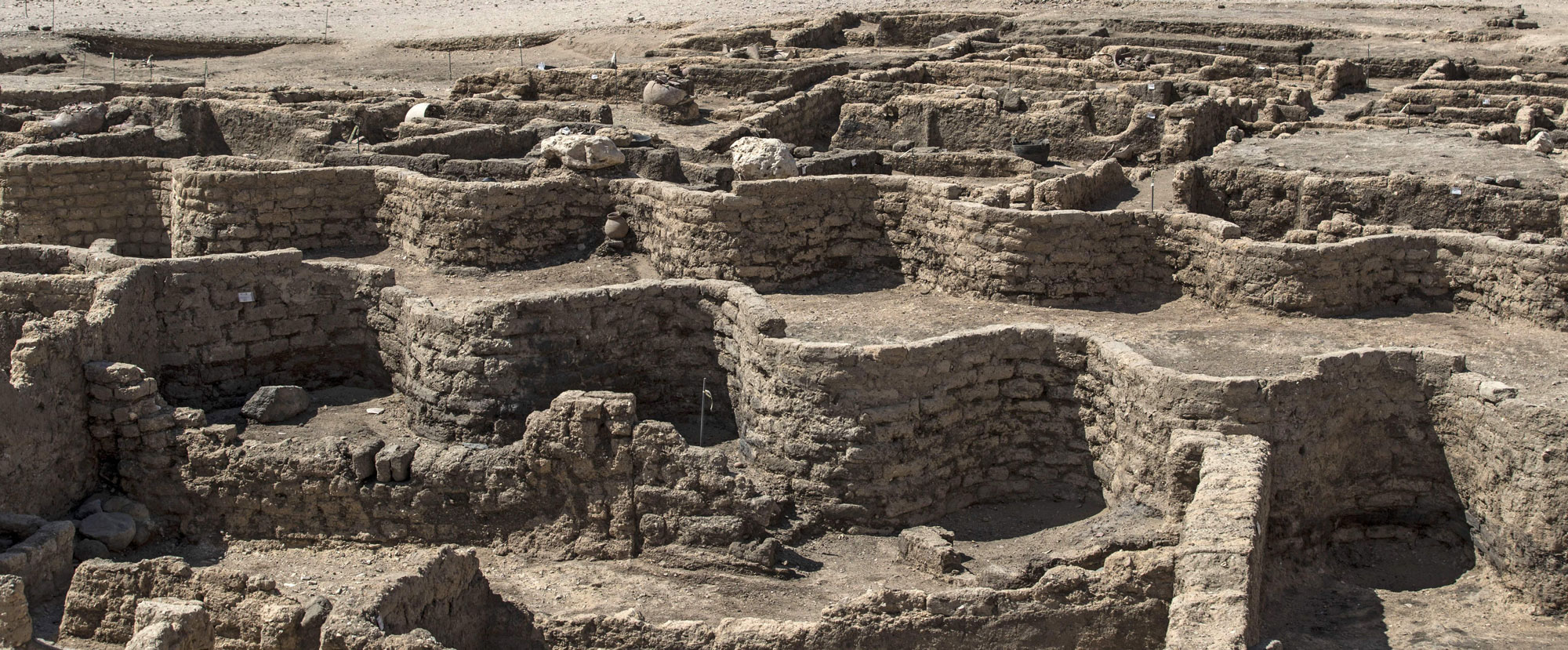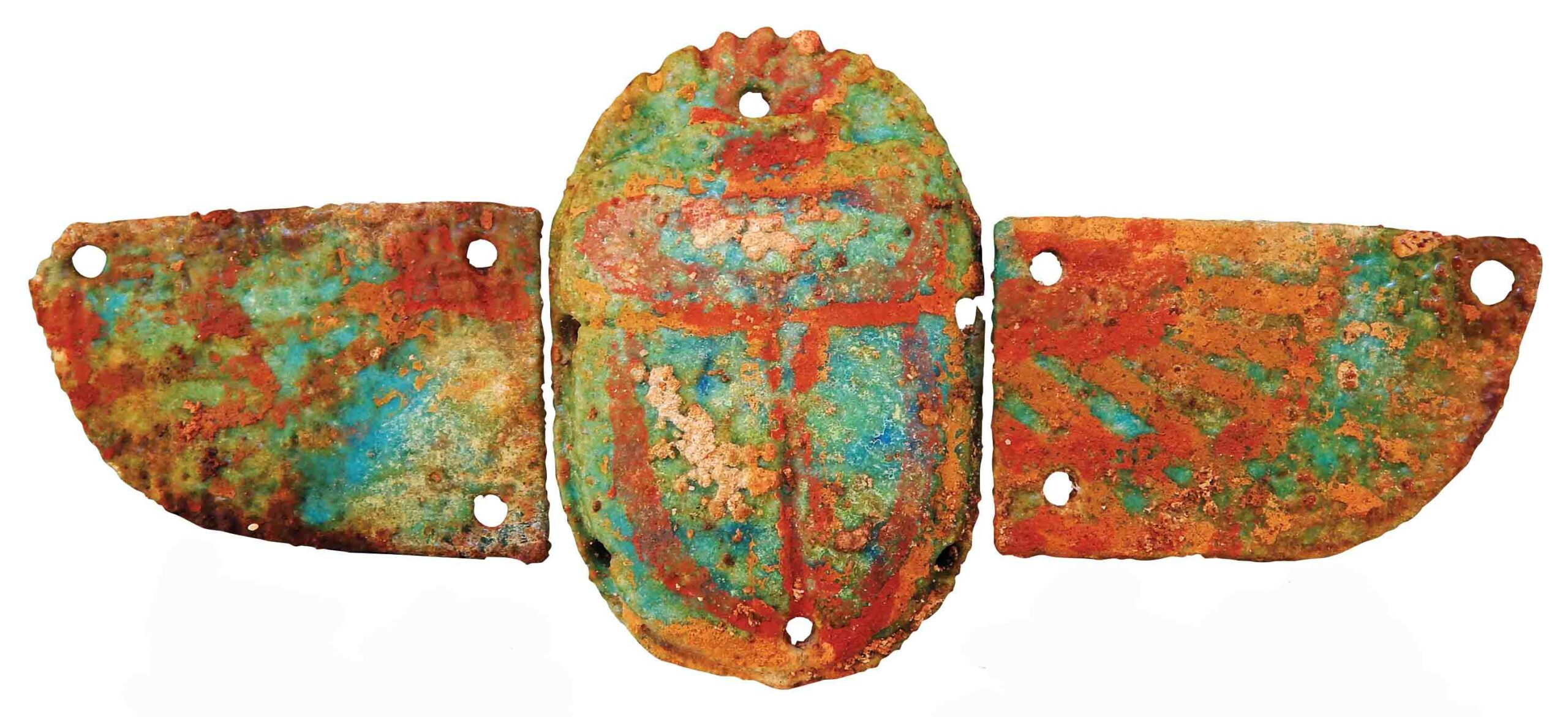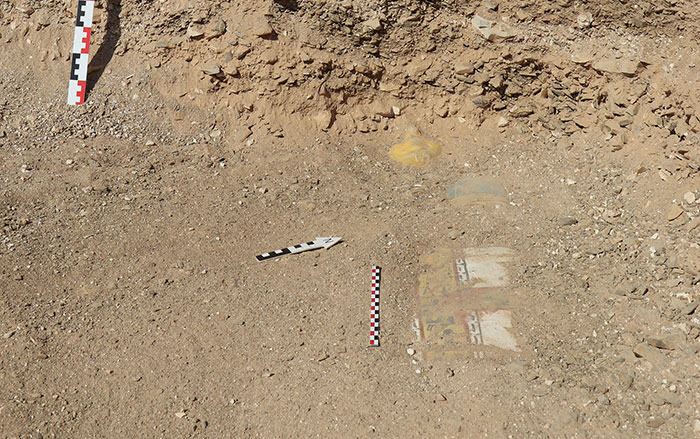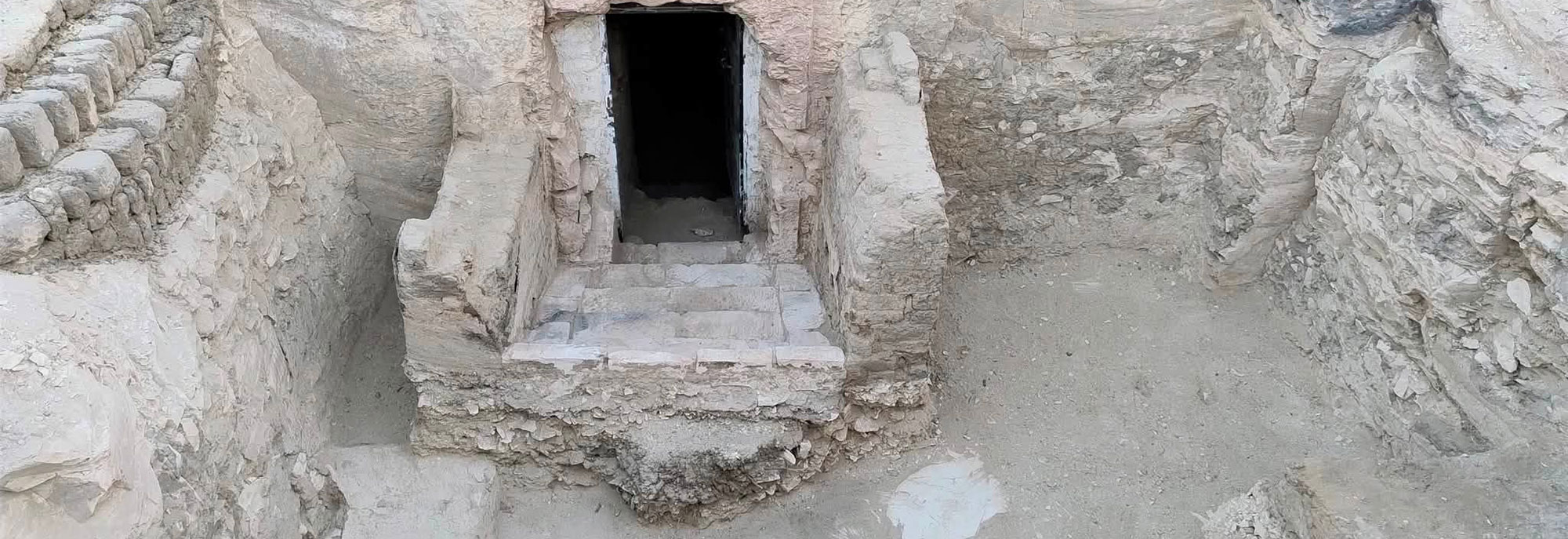
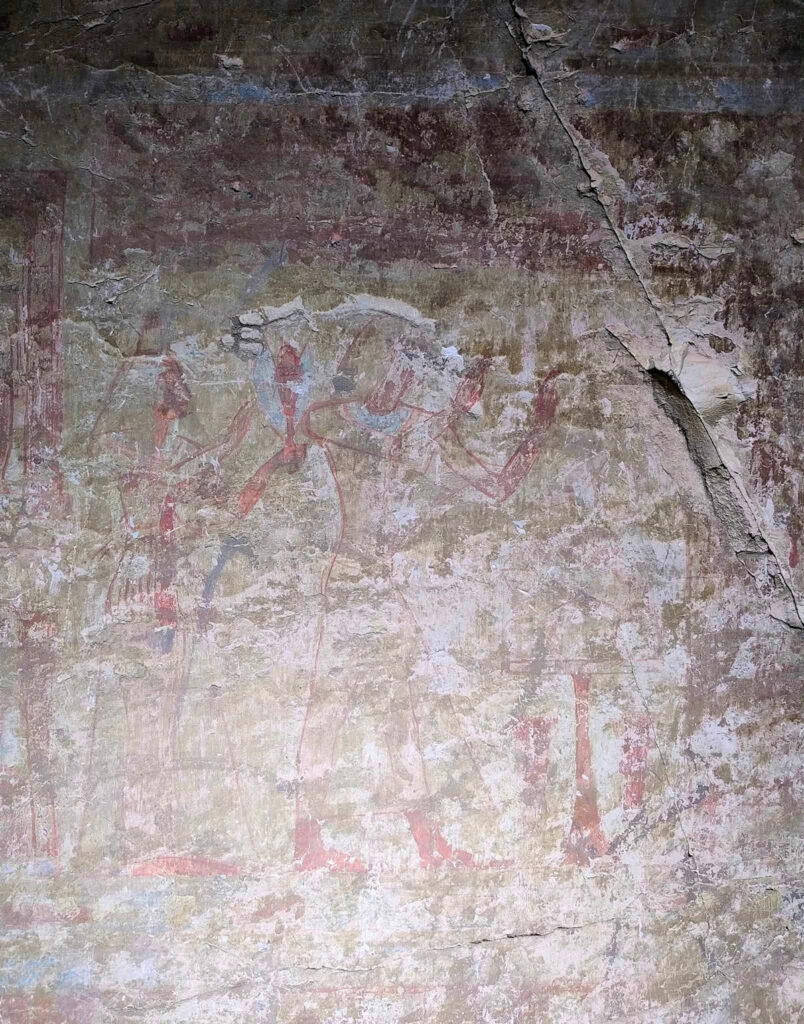
LUXOR, EGYPT—An excavation in the Sheikh Abd al-Qurna area of the Theban necropolis, conducted by a team of researchers led by Carina van den Hoven of Leiden University, has uncovered a tomb dated to the New Kingdom, La Brújula Verde reports. Initial examination of texts on the walls of the tomb indicates that it belonged to an individual named Paser, who lived during the 19th or 20th Dynasty, between about 1295 and 1070 B.C. Mohamed Abdel Badei of Egypt’s Supreme Council of Antiquities said that the tomb follows a pattern established by the Theban elite of the period, featuring an outside courtyard, a main chapel carved into the rock, and a floor plan in the shape of an inverted “T.” A series of underground chambers held coffins and funerary goods. An adobe mastaba and a staircase leading to the tomb entrance were found in the courtyard, Abdel Badei added. Cleaning dust and sediment currently covering the walls of the chapel should help researchers interpret the scenes of Paser and his wife that were carved and painted there. To read about the gilded coffin of Ahhotep that was found in the nineteenth century in the Theban necropolis at Dra Abu el-Naga, go to "Egypt's First Queen."