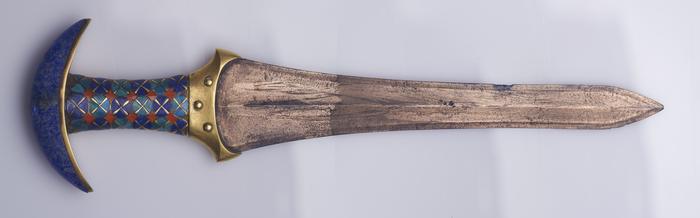
CAIRO, EGYPT—ZME Science reports that Zeinab Hashesh of Beni Suef University and her colleagues examined the bones of six individuals who were buried underneath the pyramids of Dahshur some 4,000 years ago. Four of them were daughters of Pharaoh Amenemhat II, identified as the Princesses Ita, Khenmet, Itaweret, and possibly Sathathormeryt. The other two individuals have been identified as Princess Noub-Hotep and King Hor. Records of nineteenth-century excavations showed that bows, arrows, maces, and an ornate dagger were recovered from the tombs where these remains were found. When Hashesh and her colleagues examined the skeletons with X-rays, they found healed injuries and evidence for repeated archery practice on the bones of several of the royal women. “Our study strongly suggests that members of the royal family, especially the women, were active participants in skilled, physically demanding activities such as archery and hunting,” Hashesh explained. Princess Ita and Princess Itaweret had strong upper-body muscle attachments that may reflect habitual weapons use, she said. And although Princess Khenmet had thinning bones when she died, she retained strong ligament attachments. Analysis of the skeletons of Princess Noub-Hotep and King Hor also suggests that they engaged in weapons training. Hashesh and her colleagues concluded that weapons found in women’s tombs were likely tools that had been actively used, and not just symbolic gifts for use in the afterlife. Read the original scholarly article about this research in Frontiers in Environmental Archaeology. To read about the life of the ruler Ahhotep, go to "Egypt's First Queen."