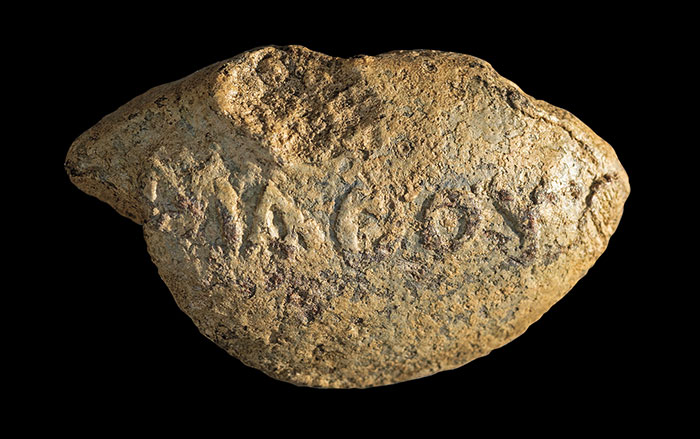
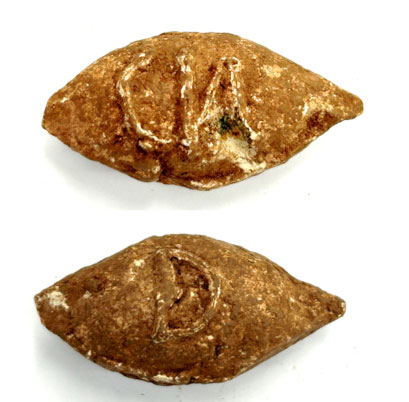
CATALONIA, SPAIN—According to a statement released by the Autonomous University of Barcelona (AUB), a Roman camp linked to the Ceretani revolt in Cerdanya in 39 B.C. was identified in the eastern Pyrenees Mountains during a survey conducted by AUB researchers Oriol Olesti, Joan Oller, and Jordi Morera. The Roman historian Cassius Dio recorded a Ceretani ambush of Roman troops who were forced to retreat. Gnaeus Domitius Calvinus, the governor of Hispania Citerior, punished the Roman soldiers for fleeing and then suppressed the Ceretani uprising. The researchers recorded the points where sling bullets, fibulae, coins, iron studs from the Romans’ sandals, and other artifacts dating to the latter half of the first century B.C. were discovered with GPS. They then plotted the locations of these artifacts on a map. Two sling bullets inscribed with the abbreviated name of Gnaeus Domitius Calvinus allowed for the precise dating of the fighting against the Ceretani to 39 B.C. It had been previously thought that this battle took place farther to the west, but the new evidence shows that it occurred in Ceretani territory. Ceretani settlements in the region were eventually abandoned after the conflict, when the area came under Roman rule. To read more about the use of sling bullets in ancient Greco-Roman warfare, go to "Slinging Insults."