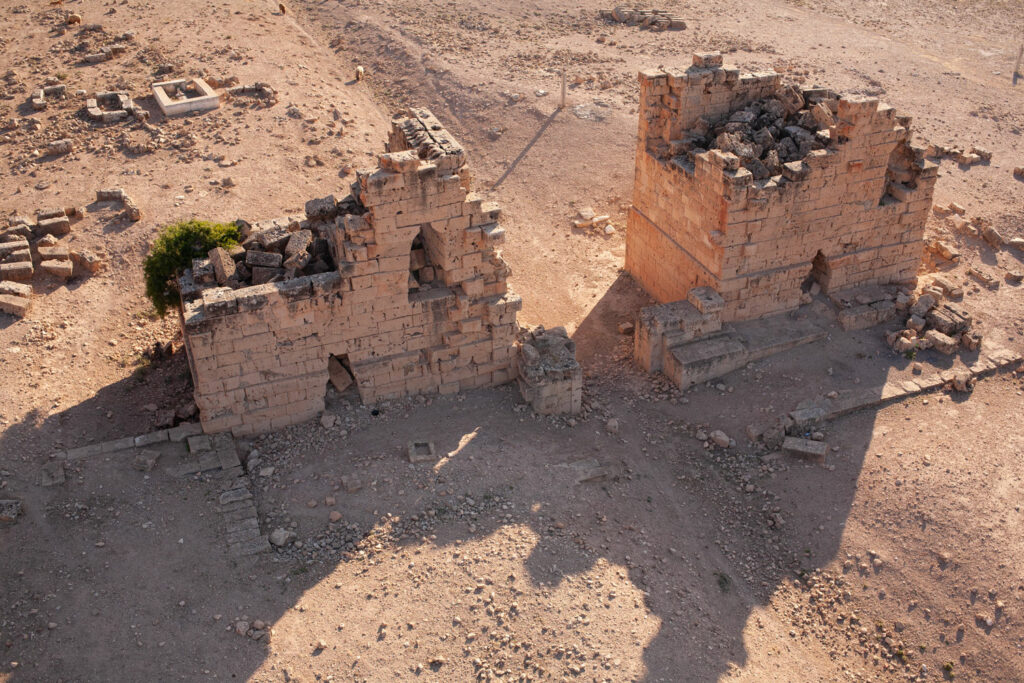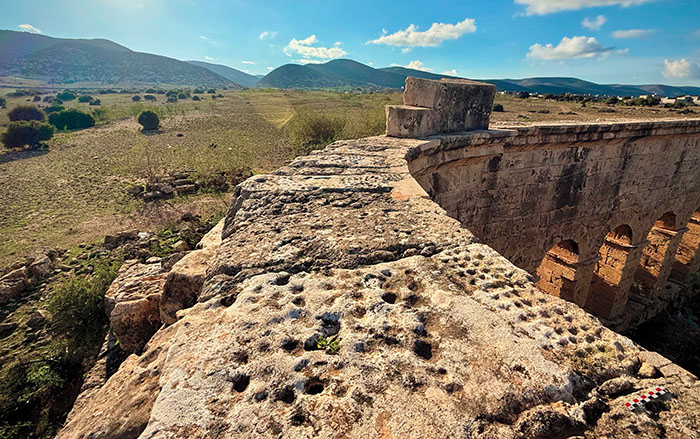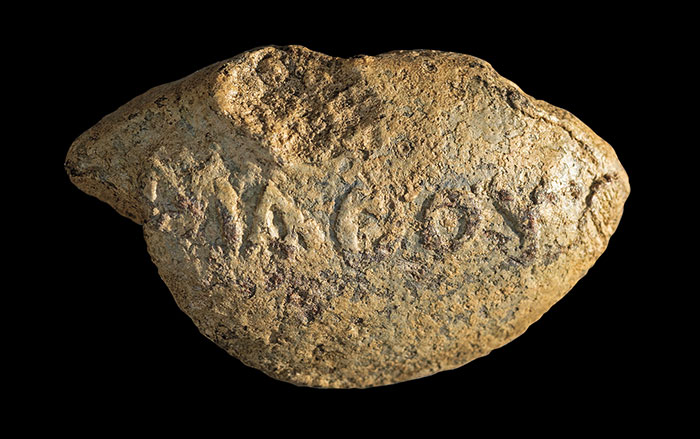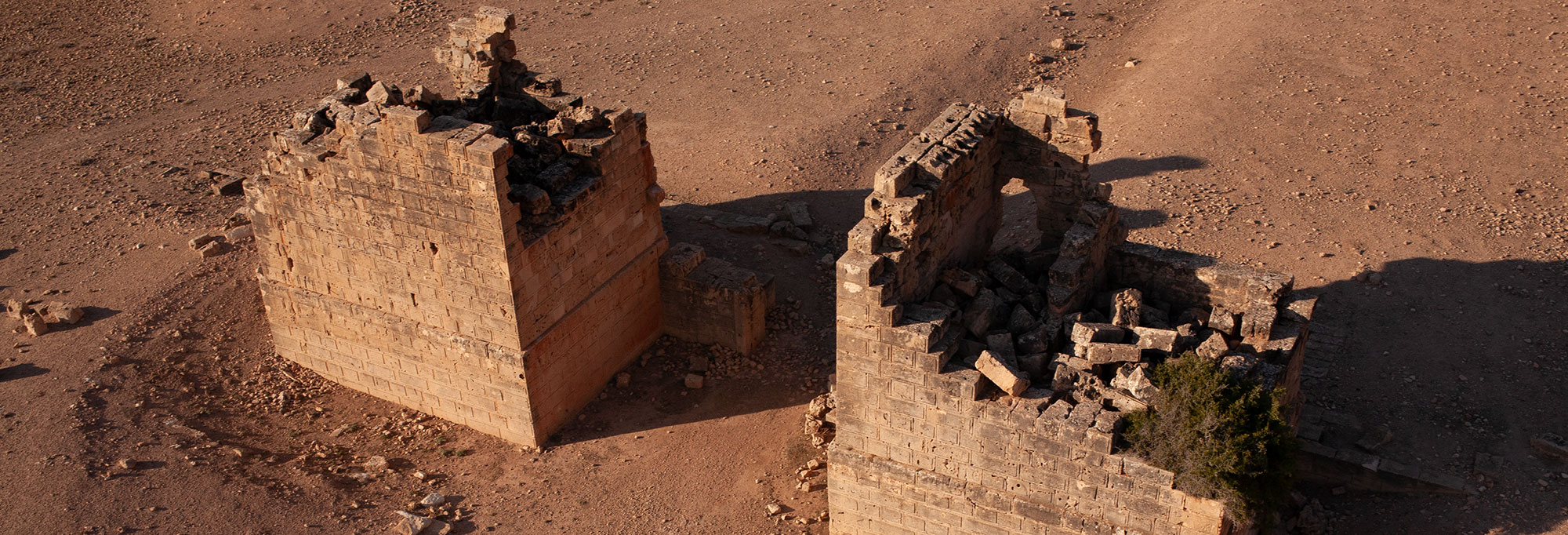
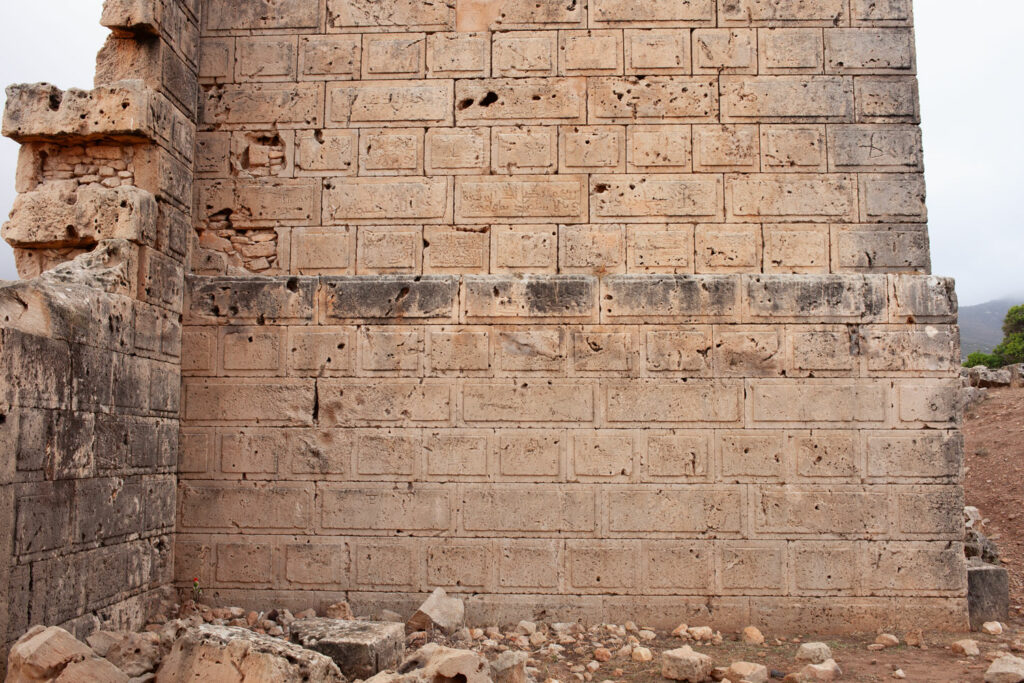
PTOLEMAIS, LIBYA—According the Greek Reporter, University of Warsaw archaeologist Anna Urszula Kordas has decoded hundreds of stonemasons’ symbols inscribed into the Tauchira Gate at the ancient city of Ptolemais. For more than a century, visitors to the site have noticed strange markings on the stone blocks that make up the city’s defenses, but these have never been systematically studied until now. By analyzing photographs and utilizing digital mapping software, Kordas was able to organize the 626 inscriptions into two major groups. Some were rough engravings that randomly appear on unrefined or unfinished blocks. Created before the stones were set in place, these were mostly hidden from view and likely conveyed information about the extraction and transportation of raw materials. Kordas believes that one set of markings, consisting of seven letters of the Greek alphabet (alpha through eta), may represent the seven different construction teams responsible for quarrying, hauling, and setting the blocks into place. A second, more complicated set of symbols may represent the monograms or names of workshop owners or of private donors who helped fund the project. These marks were inscribed after the finished blocks were set into place and appear in locations that would have been more visible to the public. Analysis of the writing style places the Tauchira Gate’s construction in the second century b.c., likely during the reign of Ptolemy VIII, who ruled Cyrenaica between about 145 and 116 b.c. Read the original scholarly article about this research in the European Journal of Archaeology. To read about other marks that archaeologists are currently documenting on the walls of Ptolemais, go to "Game On."