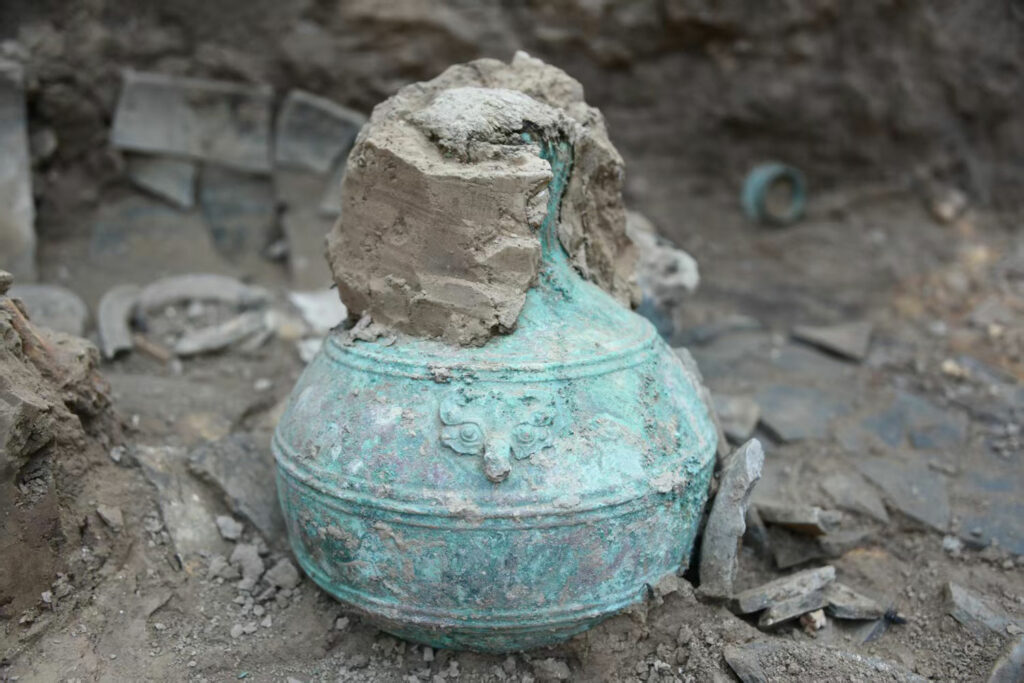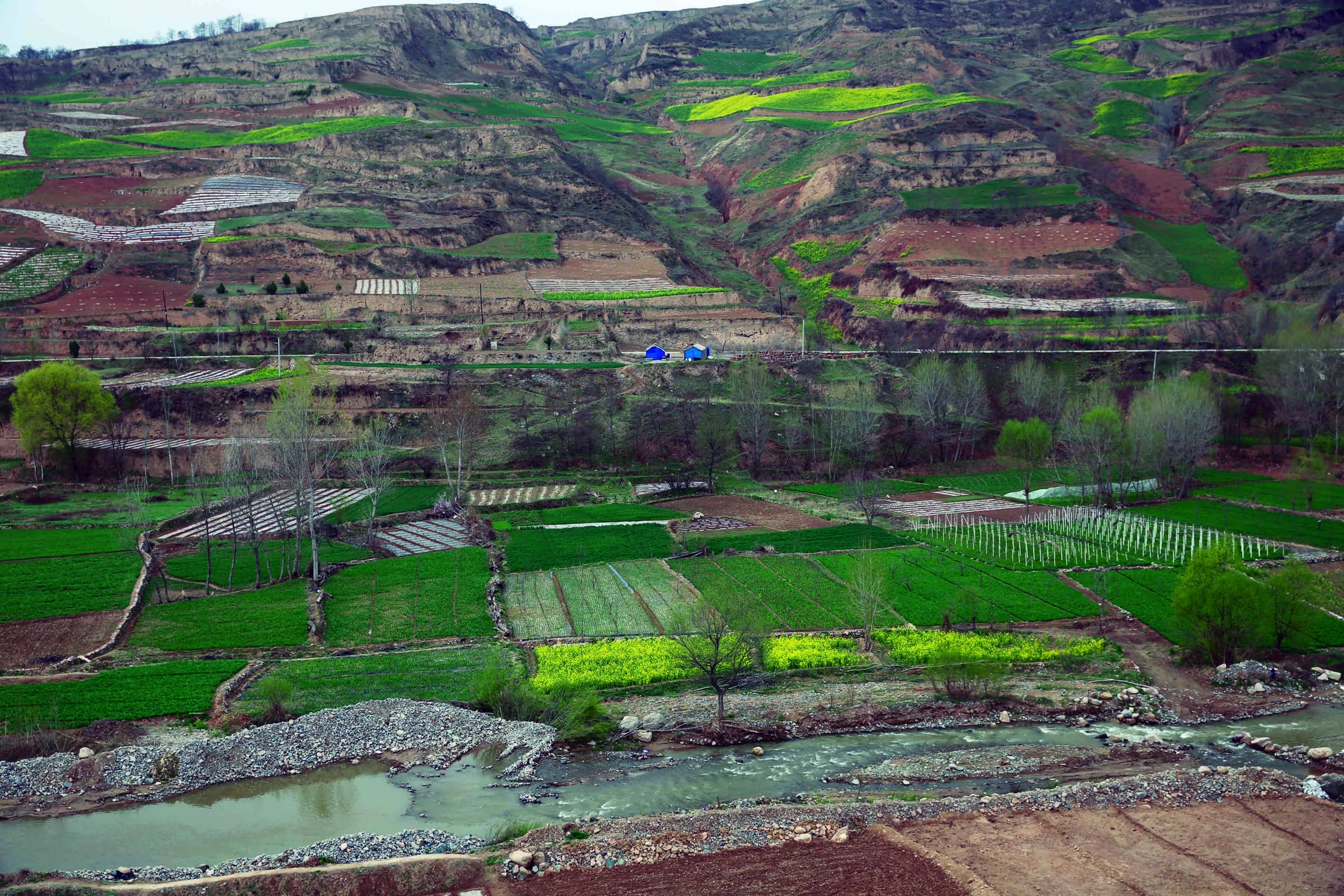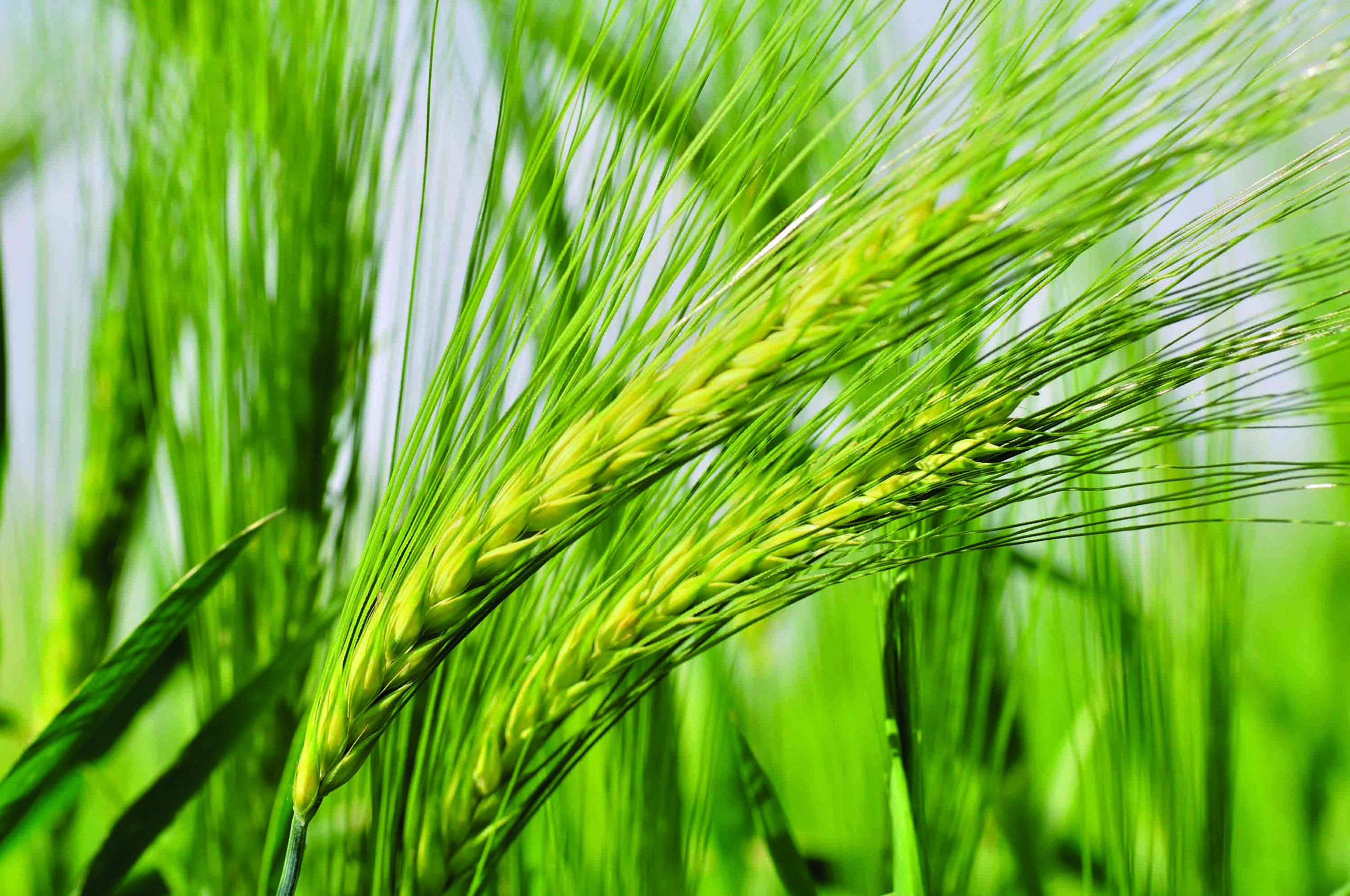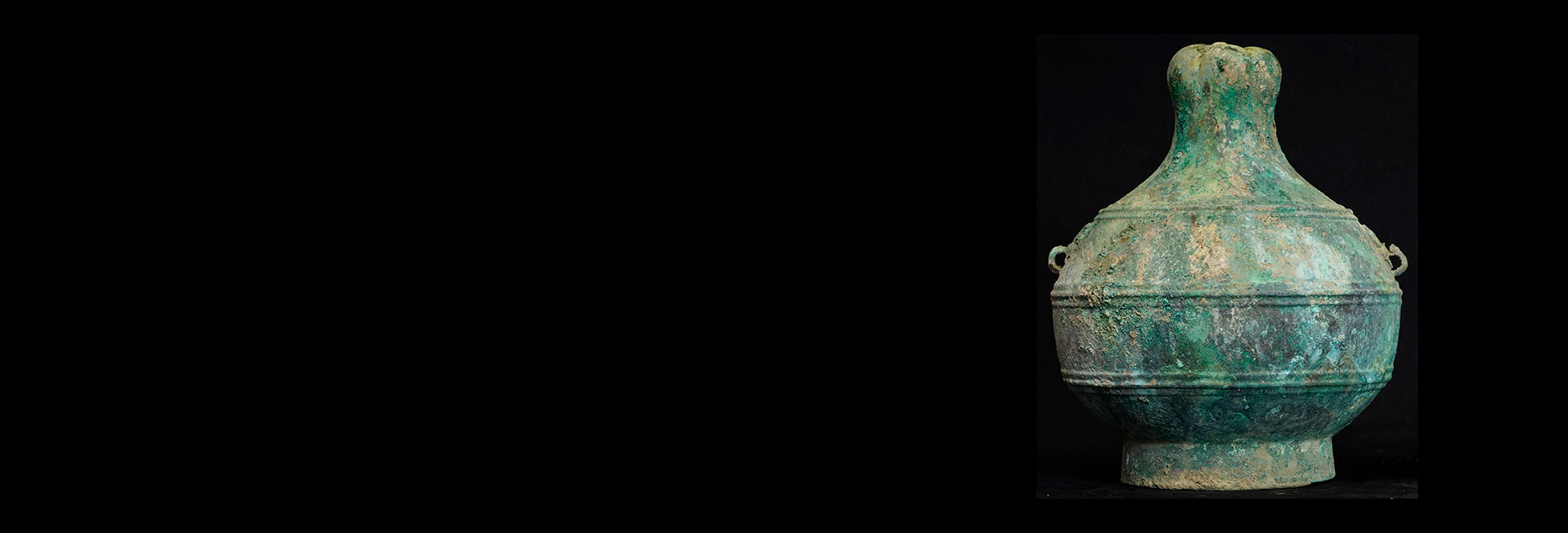
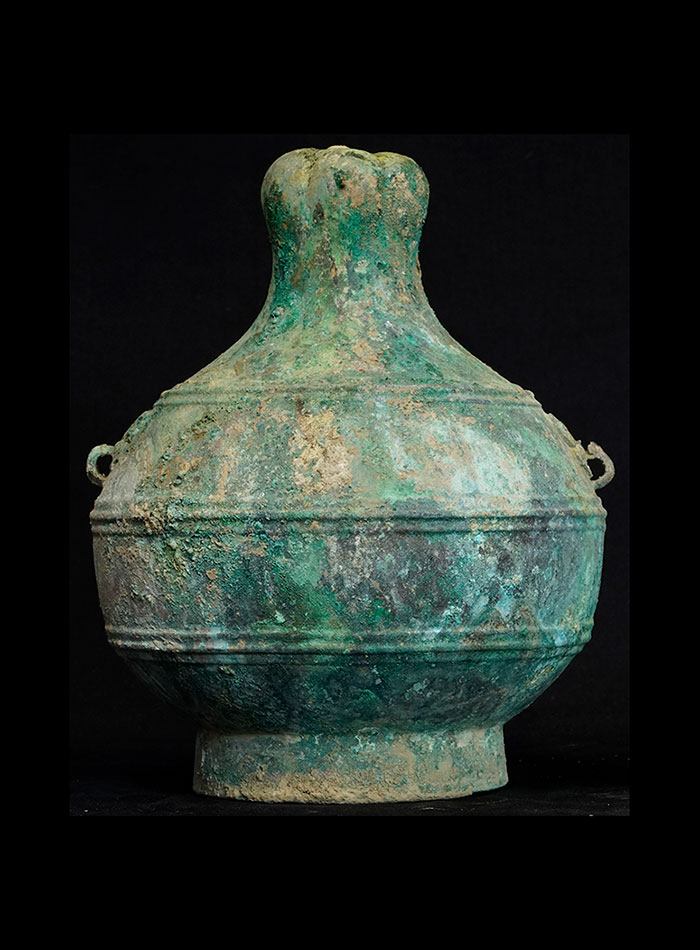
XI’AN, CHINA—The contents of a bronze vessel excavated in northern China have been analyzed and found to contain an alcoholic beverage, according to a report from the South China Morning Post. The vessel was unearthed in the Shanjaibao cemetery in the Yuanzhou District of the Ningxia Hui Autonomous Region by the Ningxia Institute of Archaeology. The cemetery is just over a mile from a 100-mile stretch of the Great Wall constructed by the Qin state during the Warring States Period (475–221 B.C.). It is thought to hold the graves of local residents as well as troops stationed at fortifications along the wall. The vessel was found to contain just under a gallon of liquid, which had been kept intact for some 2,300 years by a double-layer sealing technique including a textile inner lining and an outer coating of clay. Testing of the liquid detected 24 different chemical compounds, including amino acids, fatty acids, and carbohydrates. Based on its components, researchers conclude that the liquid was an alcoholic beverage made primarily from broomcorn millet along with some wheat and barley. To read about evidence of alcoholic beverages from cultures around the world, go to “Alcohol Through the Ages.”