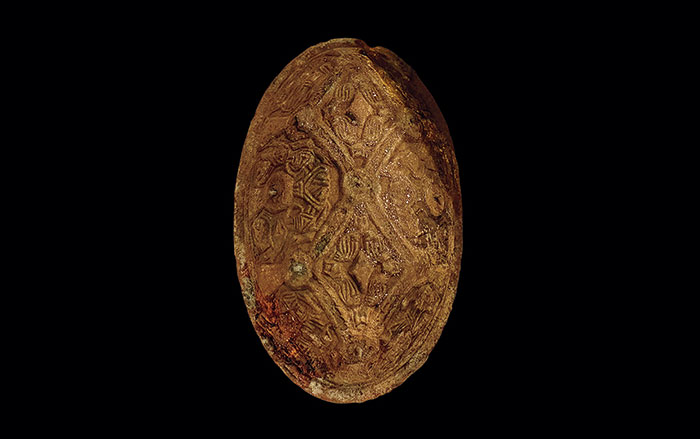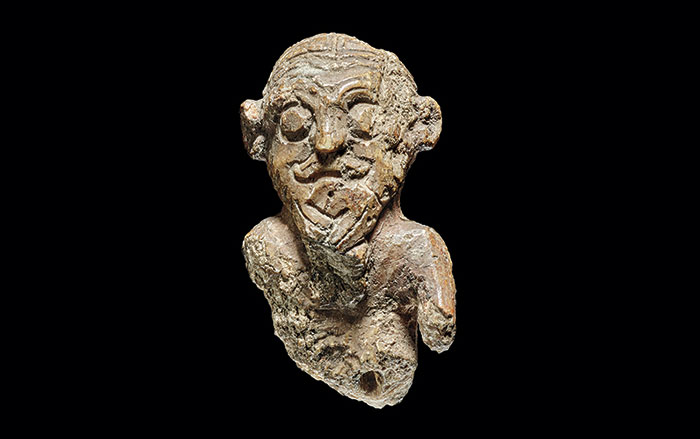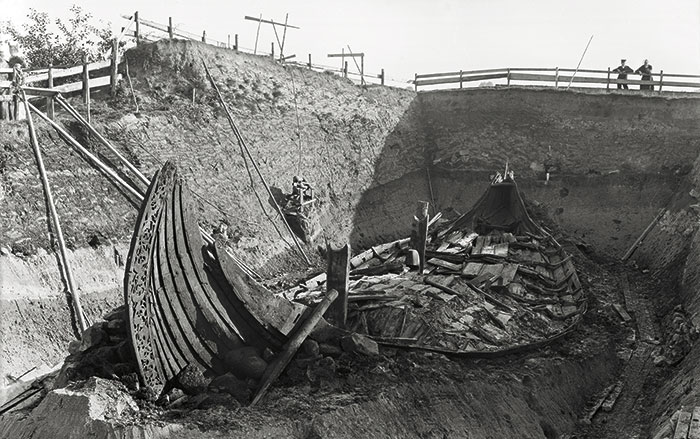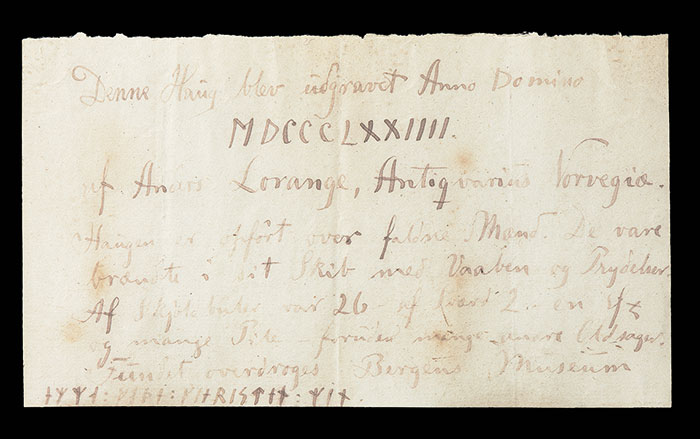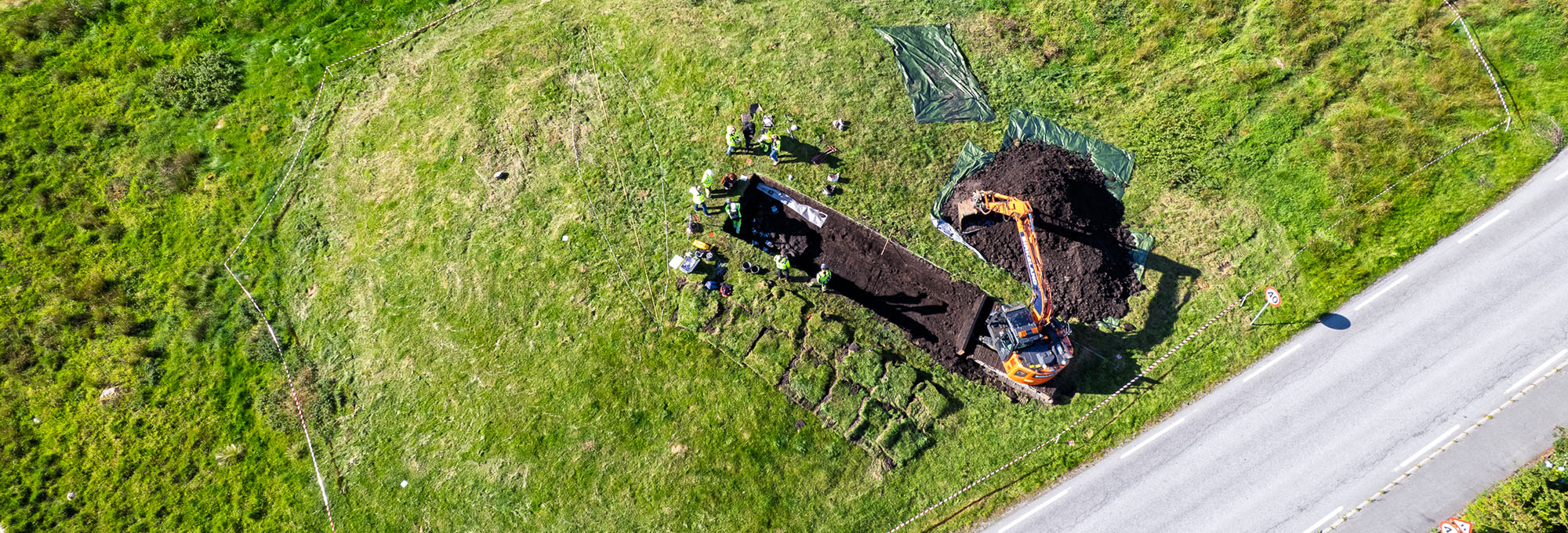
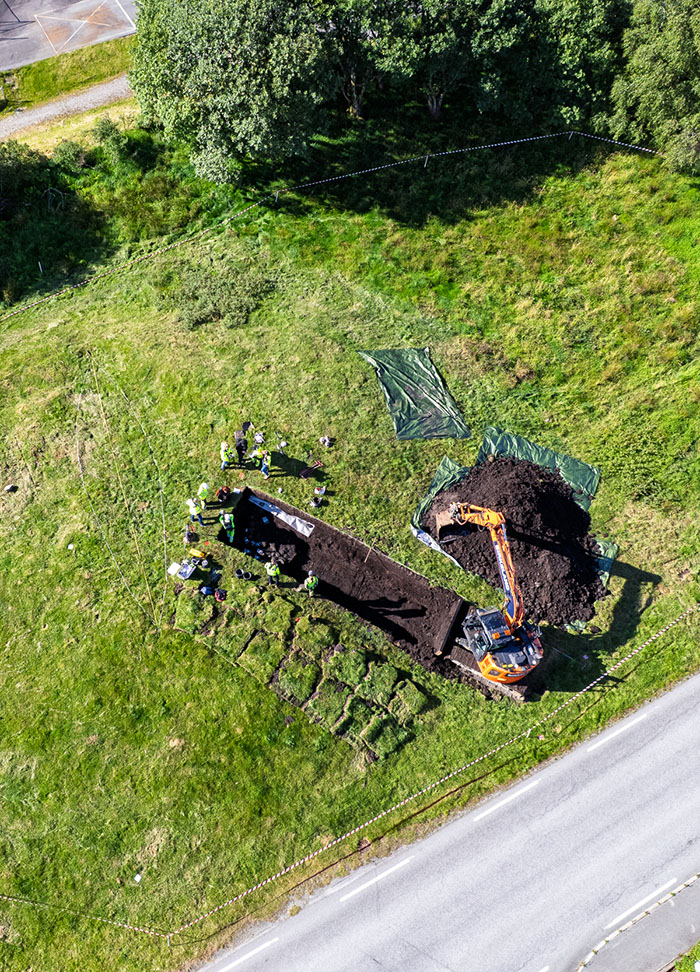
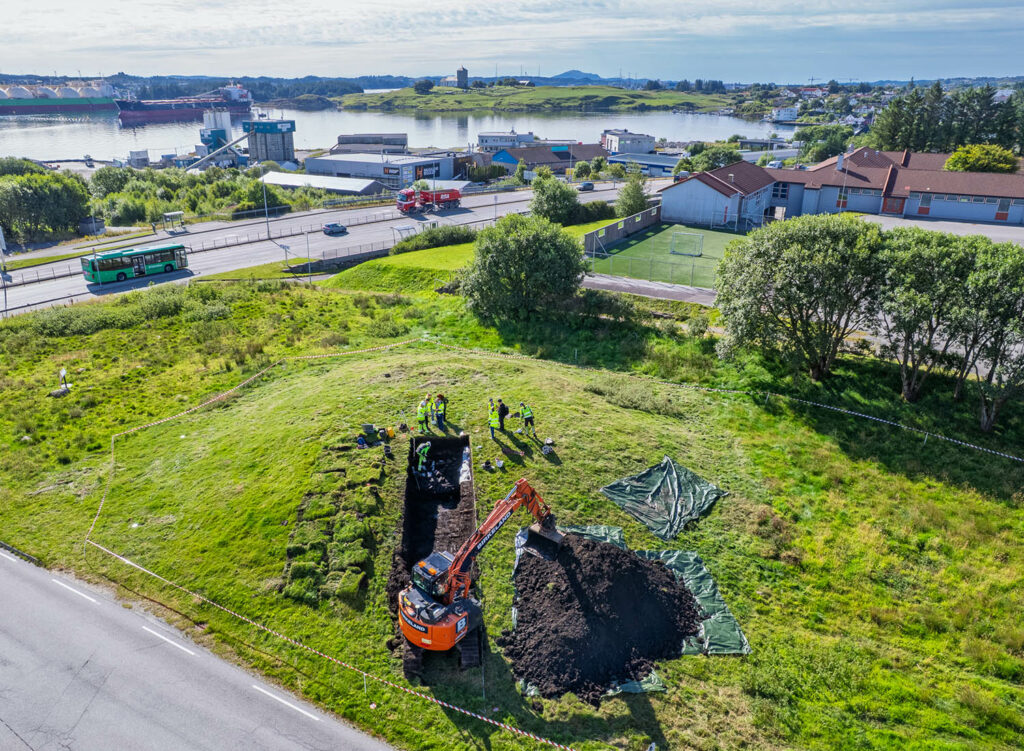
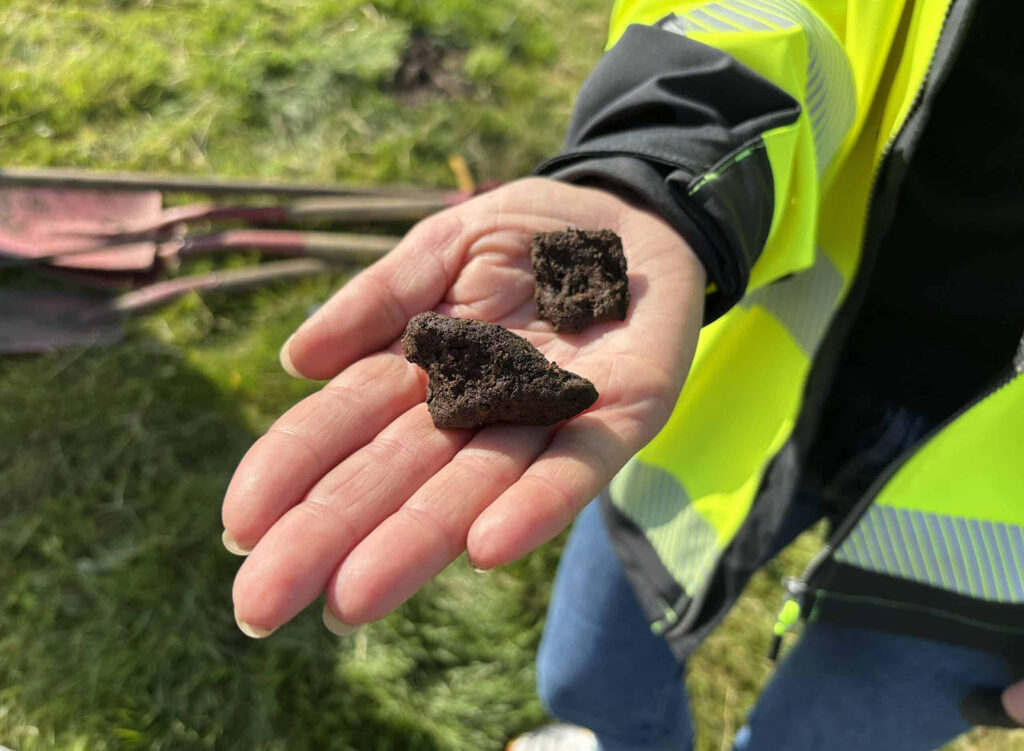
KARMØY, NORWAY—Archaeologists in western Norway have begun excavating a burial mound that first caught scholars’ attention in 1902, Science Norway reports. Researchers from the University of Stavanger opened a trench in the Grønhaug mound on the island of Karmøy, hoping to build on discoveries made during the excavation more than a century ago. At that time, parts of a ship’s hull were removed from the mound. The current excavation team has recovered fragments of iron rivets from the ship and studied a layer of birch bark in the grave, possibly a type of flooring. Recent dendrochronological and radiocarbon dating of previously excavated artifacts suggest that the mound was built around a.d. 864, early in the Viking Age. Now, archaeologists have reached the ground level beneath the mound and found organic matter from vegetation that is nearly 1,200 years old. “The burial was so well preserved that I could see blueberry plants and heather that were growing there when they built the mound in the Viking Age,” said archaeologist Marie Ødegaard. “The plants even still had leaves on them.” Continuing beneath that layer of the mound, the team uncovered a stone cairn with a ring of stones around it. This, said Ødegaard, is likely evidence of a much earlier Bronze Age burial. To read about unusual footprint-shaped rock art made by seafaring people in Bronze Age Scandinavia, go to “Foot Notes.”