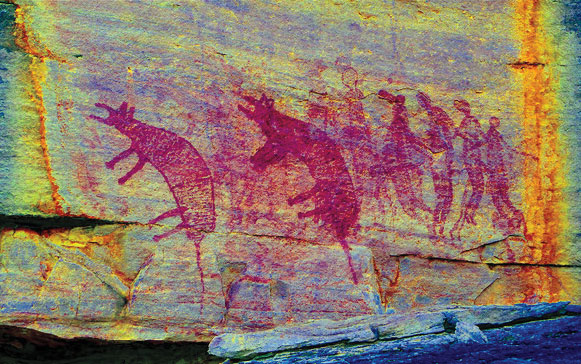
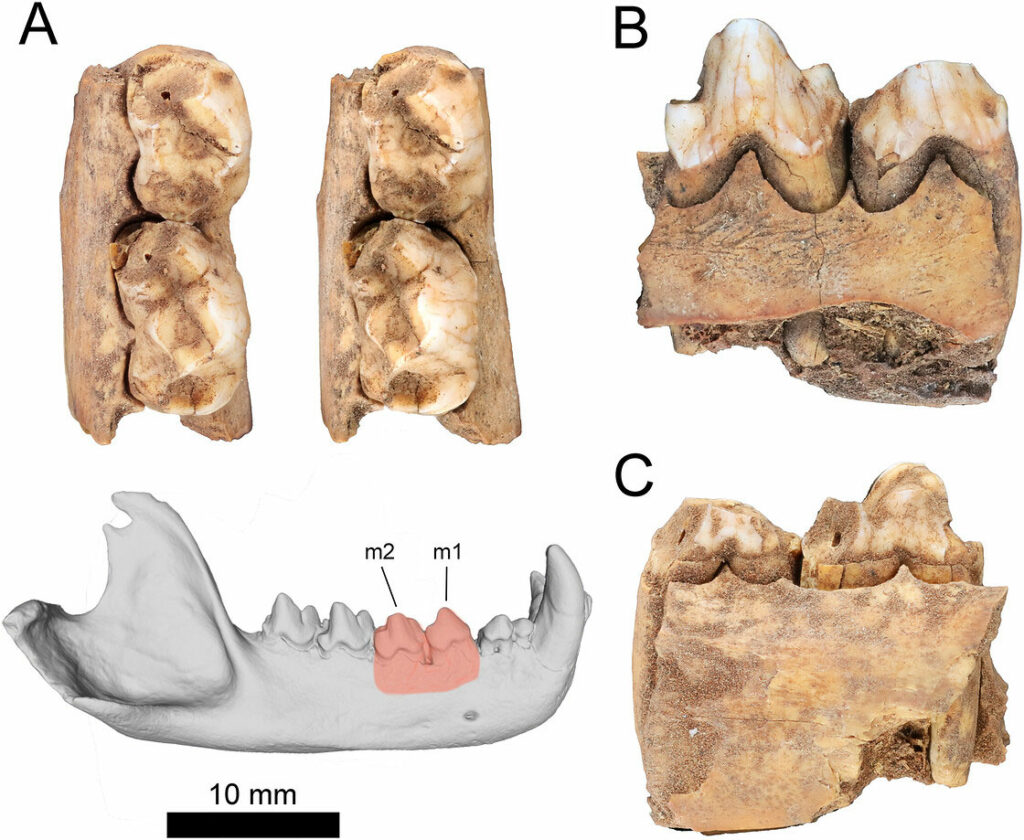
NEW SOUTH WALES, AUSTRALIA—One of Australia’s most distinctive animals, the Tasmanian devil, is today found only on the island of Tasmania off the country’s southeastern coast. This was not always the case, however, ABC News Australia reports. Thousands of years ago, these famously powerful and noisy marsupials roamed across the continent including Western Australia’s Pilbara region, where fossils of the animals were recently identified for the first time. They apparently even lived alongside and interacted with humans. Tasmanian devil teeth and jaw fragments ranging from between 7,000 and 47,000 years old were uncovered at the Jukkan 2 rock shelter in the western Hamersley Plateau, which has been used by Aboriginal peoples since the last Ice Age. This is the only site in northern Australia where Pleistocene faunal remains have been found in association with stone tools and human occupation. Among the more than 8,000 catalogued animal bones were dozens that displayed chew marks left by Tasmanian devils, suggesting that the creatures were scavenging at human camps for tens of thousands of years. “I think that this is what's particularly interesting about this story is that Tasmanian devils may have had a much closer place in the lives of ancient Australians than we previously recognized,” said paleontologist Tim Churchill. Read the original scholarly article about this research in the journal Archaeology in Oceania. To read about rock art depicting Tasmanian devils and other native animals in Arnhem Land, go to "Aboriginal Animal Spotters."