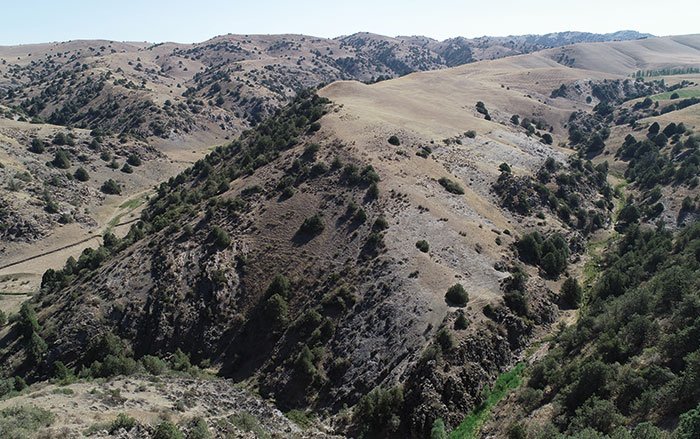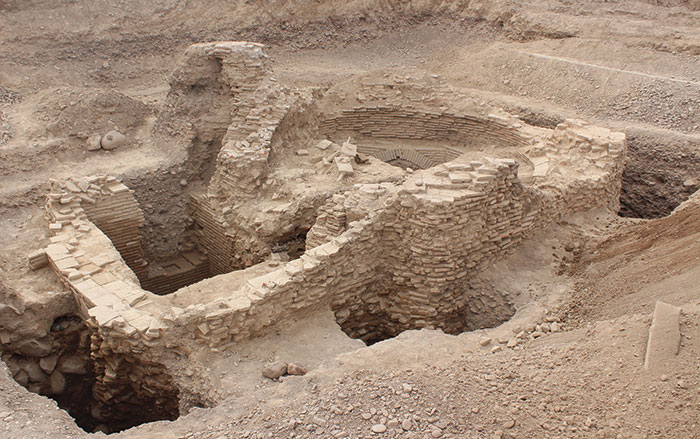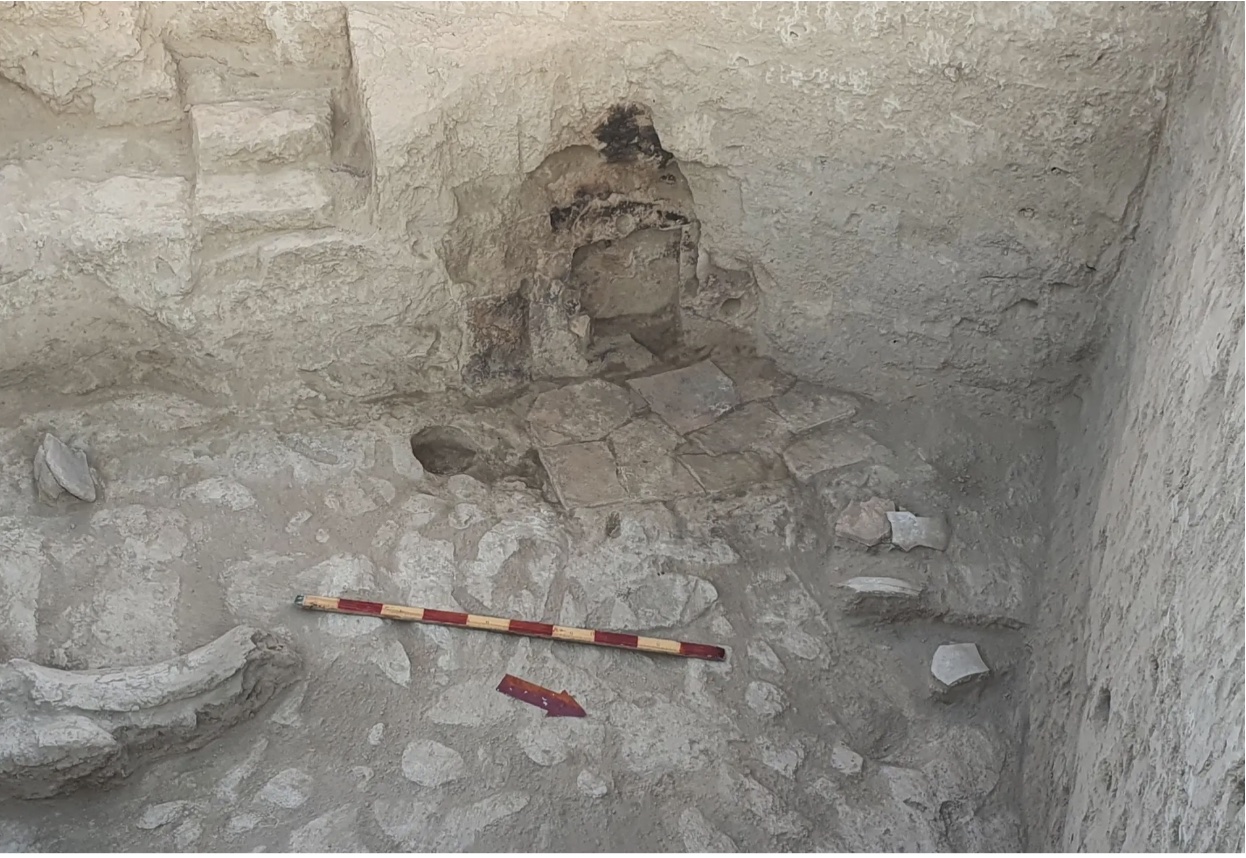
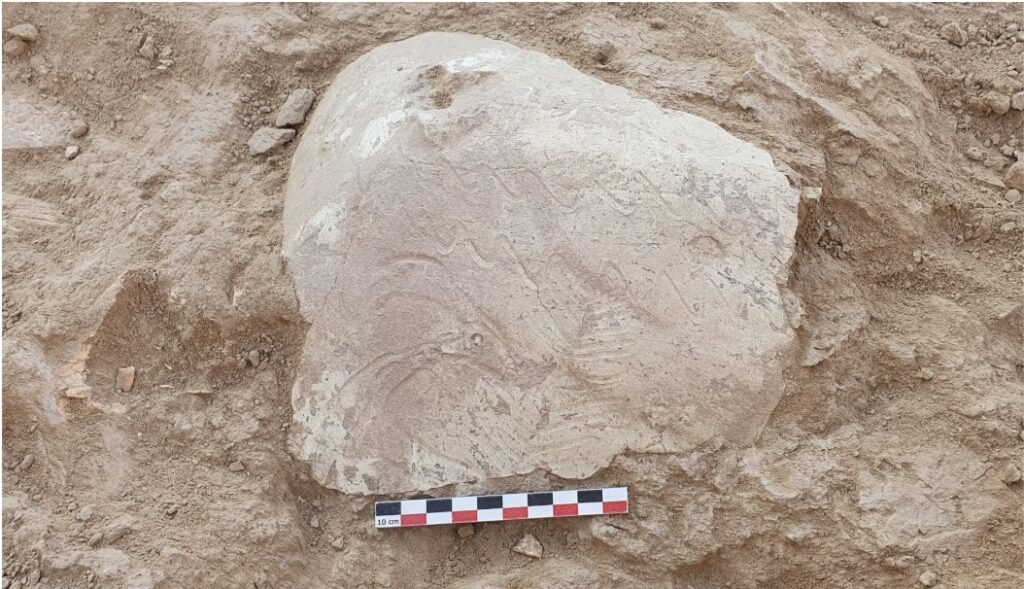
SAMARKAND, UZBEKISTAN—According to a Greek Reporter article, an excavation at the site of the ancient city of Odirmon in southern Uzbekistan has uncovered an altar and an ossuary. Odirmon, which features defensive walls, roads, and a rectangular citadel, was occupied from the third century B.C. to the third century A.D. Researchers led by Sanjar Abduraximov of the Samarkand Archaeological Institute and Uzbekistan’s Cultural Heritage Agency said that the altar and ossuary have not yet been dated. The altar and evidence of burning were found in a room with a brick floor. The walls of the room were covered with a clay plaster that had been reapplied several times. These repairs suggest that the room had been used over a long period. Conservators who are cleaning the ossuary have identified images of a deer and a juniper tree on its surface. Additional images are expected to emerge as the restoration process continues. It is not yet clear how the altar and the ossuary were used, or if they had been used at the same time. Abduraximov and his colleagues suggest that the evidence for fire around the altar may link it to the practice of Zoroastrianism. To read more about Zoroastrianism, go to "Exploring Ancient Persia's Royal Fire Temple."