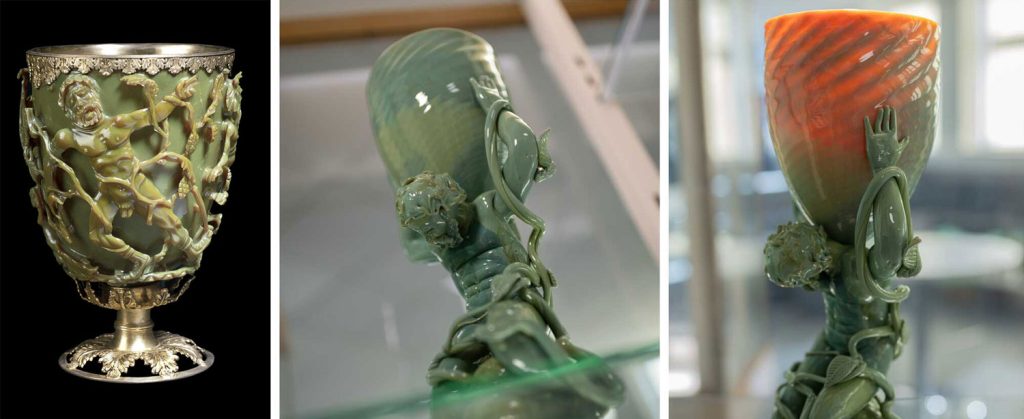

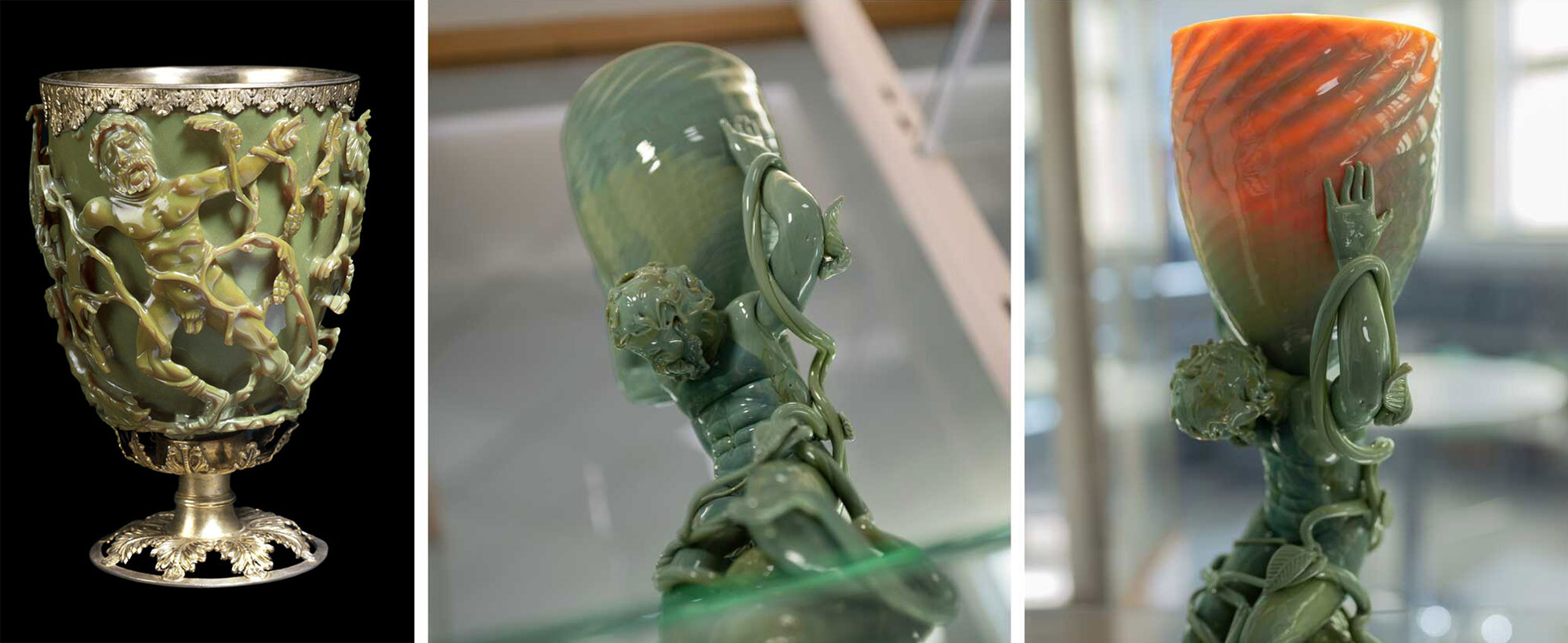
SHEFFIELD, ENGLAND—According to a statement released by the University of Sheffield, technician Lisa Hollands of the University of Sheffield has reproduced the color-changing effect observed in the Lycurgus Cup, a 1,600-year-old Roman glass cage cup that appears jade green in reflected light and ruby red when light is shown through it. The dichroic glass of the cup was cut and ground to produce an image of the mythical Thracian king Lycurgus ensnared in a vine. The Romans are thought to have produced the color-changing effect by adding small bits of gold and silver to the glass. The size and shape of the resulting layers of nanoparticles allow the glass to absorb light and display colors. “I knew that making a glass of this type was likely to be a complex task, as it is not just a case of adding nanoparticles to glass,” Hollands said. She consulted Roman glass expert Caroline Jackson, and then experimented with different furnace types, materials, oxygen levels, and other ingredients until she came up with a successful recipe. Glass artist Elliot Walker was then commissioned to produce a work with the material. “I wanted to keep the sculpture quite classical in form and to carry through the original story of Lycurgus shown on the cup, but we needed a blown element within this to really show the dichroic glass,” Elliot said. His work will debut next month and become part of the university’s collection. To read about research on another Roman cage cup, go to “Before and After.”