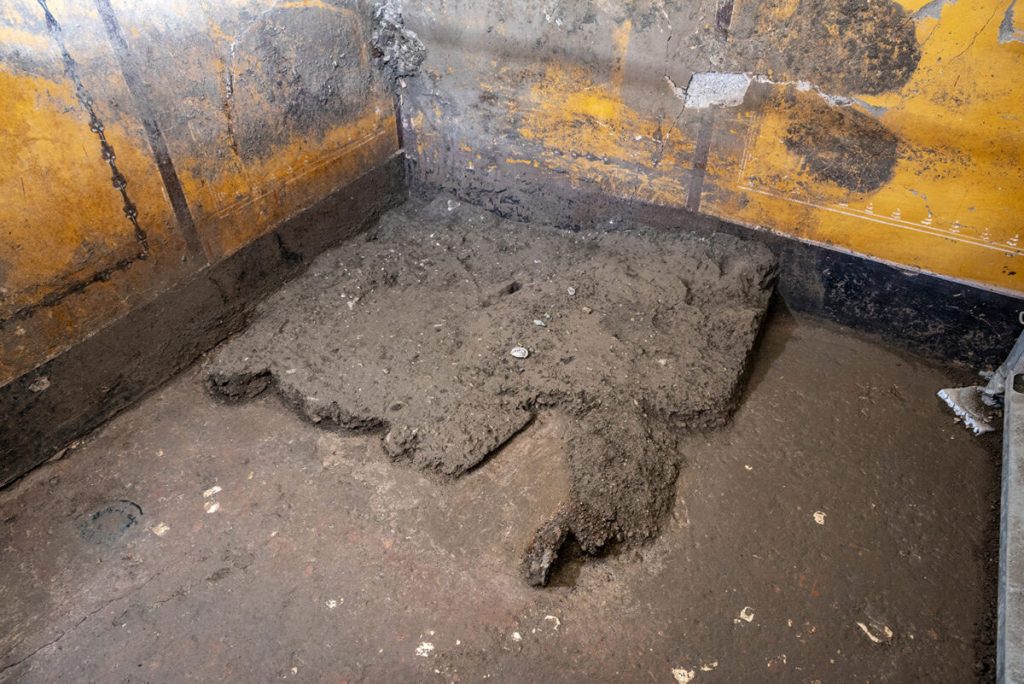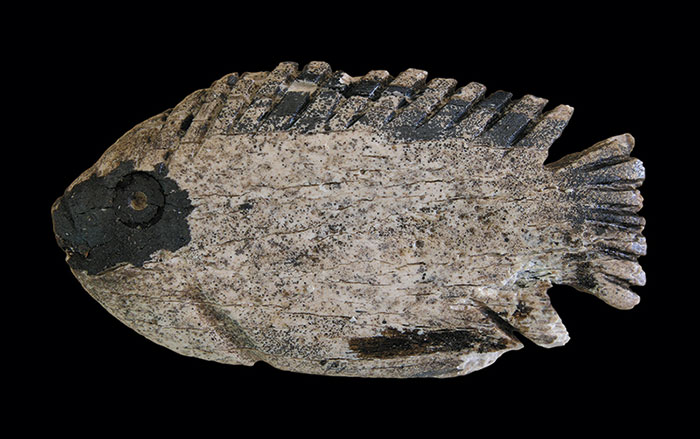

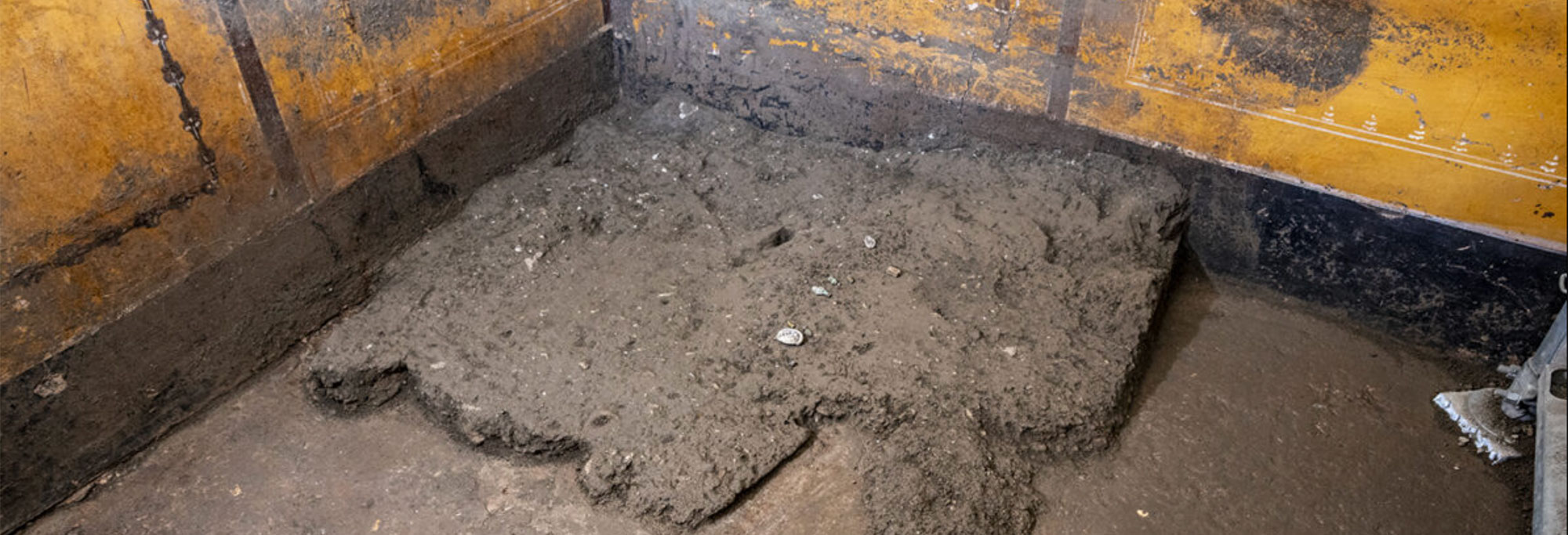
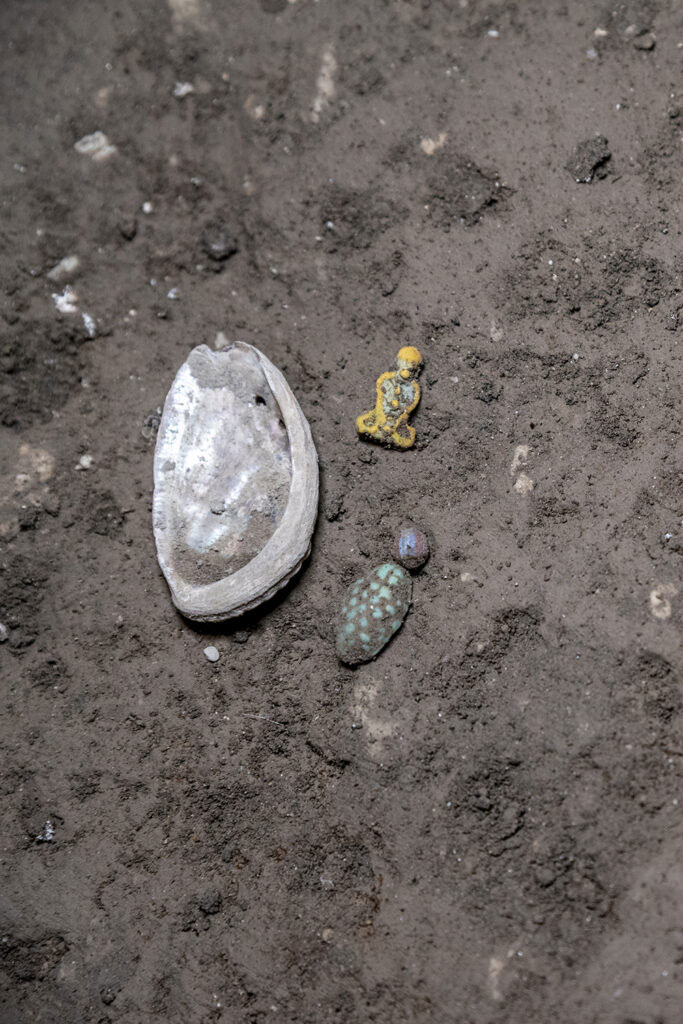
NAPLES, ITALY—Reuters reports that archaeologists have uncovered a wooden cupboard discovered in a house on Via dell’Abbondanza in central Pompeii. Inscriptions in the house suggest that it belonged to Cornelius Maximus. “We cannot reconstruct with certainty the identity of whoever lived in the house, but these fragments bring us closer to their daily life,” said Gabriel Zuchtriegel of Pompeii Archaeological Park. Researchers determined that before it was destroyed by the eruption of Mount Vesuvius in A.D. 79, the cupboard held a necklace made up of at least 24 crepundia, or amulets crafted from bone, glass paste, earthenware, and rock crystal. Some of these objects bear images of the gods Bes and Mercury. Others are in the shapes of miniature hands, feet, pinecones, and bunches of grapes. The necklace was likely worn by a child as a protective amulet, but the sounds it made as it rattled may have also helped caregivers keep track of a youngster. Tweezers, a small glass bottle for perfume or ointment, an incense burner, a cooking vessel, and additional vessels made of bronze, glass, and ceramic were also found in the cupboard. Lead weights in a wooden box are thought to have been used in trading, while a small woven container held 38 bronze coins. “Pompeii is not just a place of great works of art,” Zuchtriegel said. “It is also a place where the most ordinary objects restore the human dimension of the past,” he concluded. To read about other recent discoveries in the ancient city, go to “Pompeii’s House of Dionysian Delights.”