
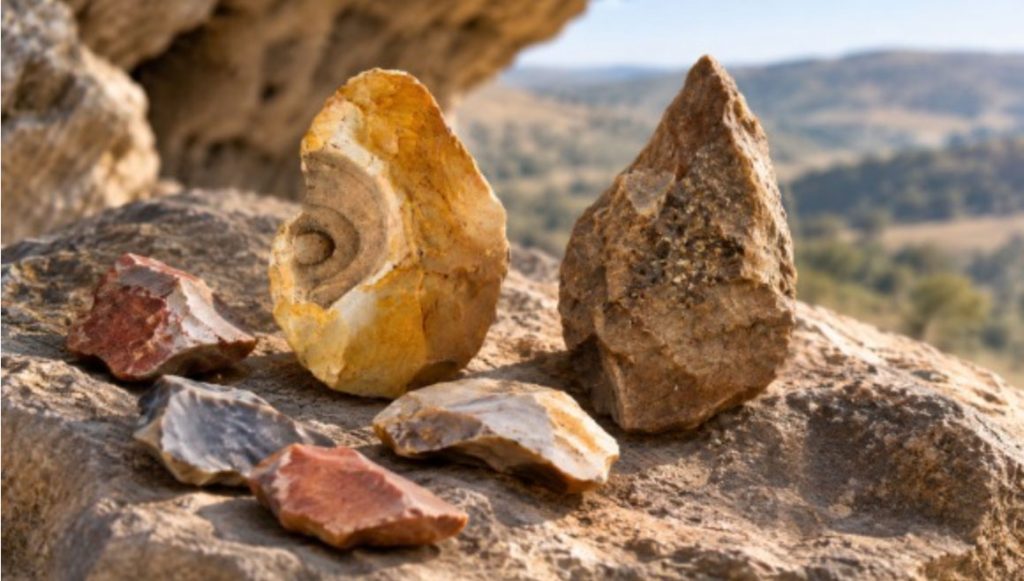
TEL AVIV, ISRAEL—Hominins may have begun collecting relics and keepsakes some 500,000 years ago, according to a statement released by Tel Aviv University. These possible souvenirs include small, colorful pebbles unearthed in Israel’s Qesem Cave, and handaxes made from flint containing fossils or unusual geological formations that were recovered in the Sakhnin Valley. Ran Barkai and Ella Assaf of Tel Aviv University and their colleagues said that tools showing signs of heavy use, whether resharpened or not, have been unearthed at several sites, such as Revadim, Jaljulia, and Qesem Cave. These objects may have been kept for their aged appearance, the researchers explained. Just like modern keepsakes, the objects may have been retained in order to trigger memories of a place or personal experience. Use of such items over many generations may have increased evolutionary pressures on brain mechanisms involved with memory and sense of self, the researchers argue. Read the original scholarly article about this research in Evolutionary Anthropology. To read about stone balls found in Qesem Cave, go to “Around the World: Israel.”