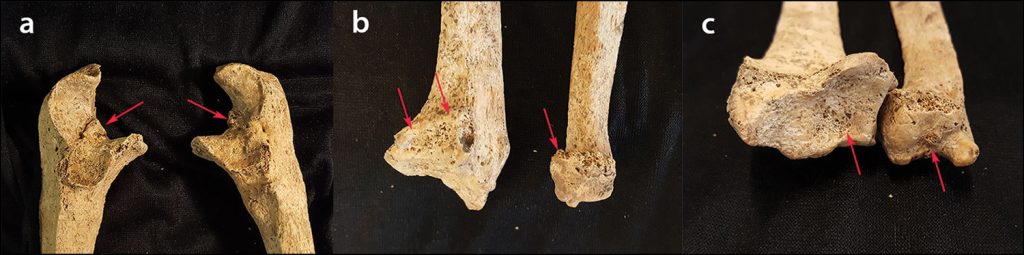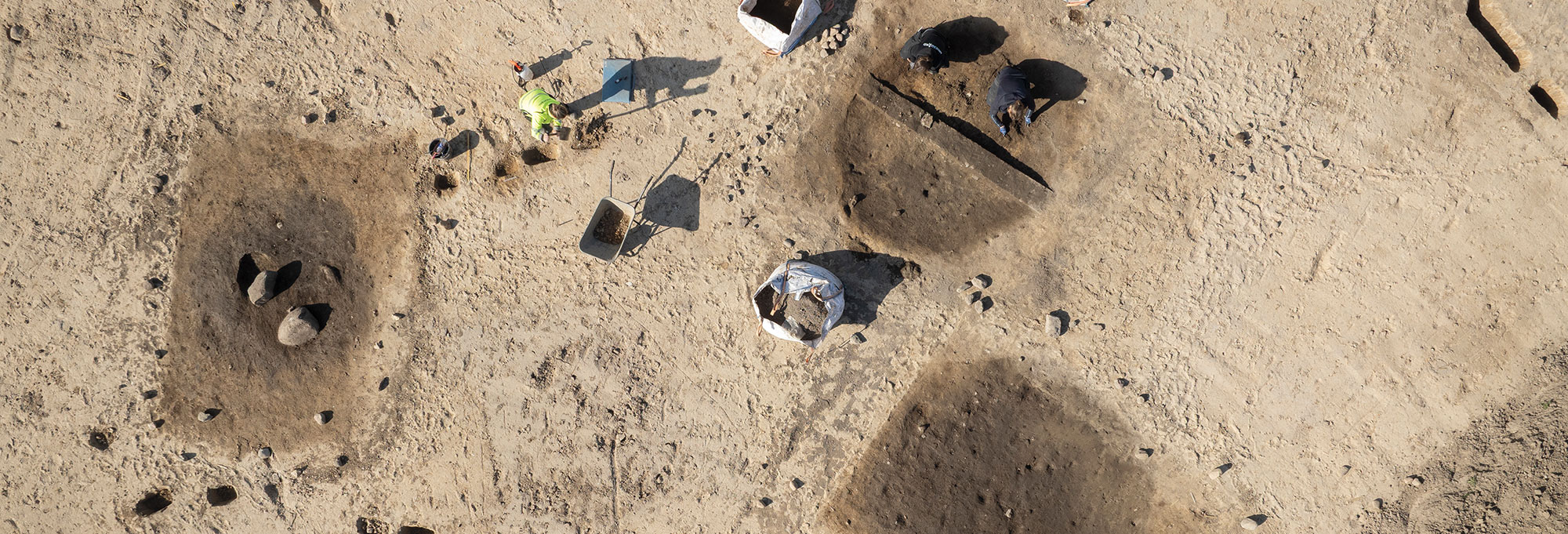


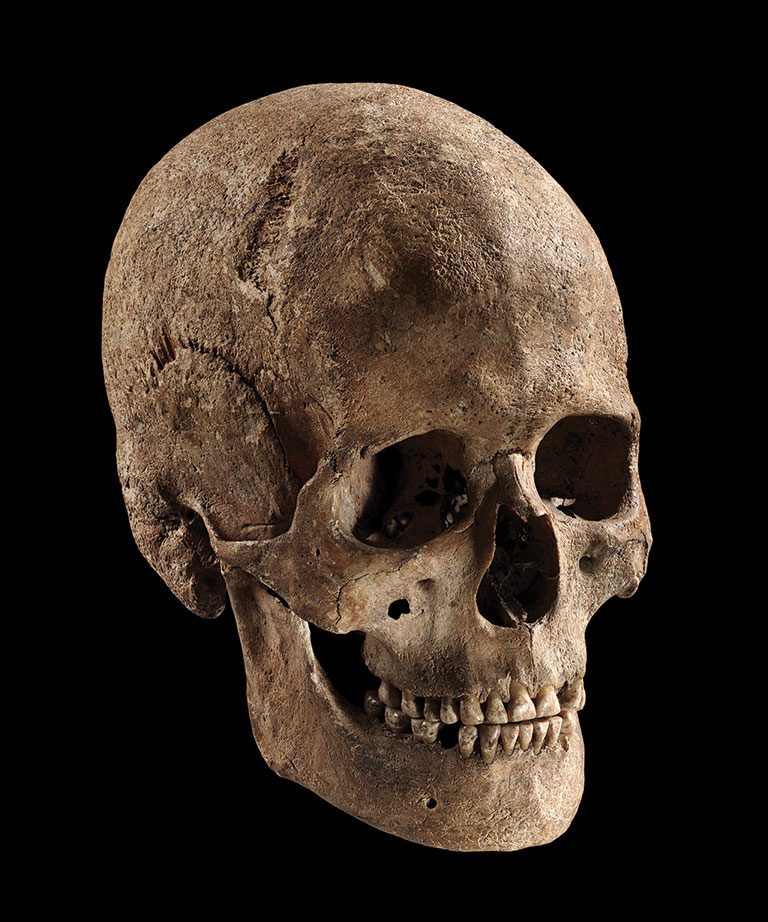
GOTHENBURG, SWEDEN—According to a report in La Brújula Verde, a team led by Anders Fischer of the University of Gothenburg and John Meadows of the Leibniz Centre for Archaeology has analyzed Rødhals Man, the 6,000-year-old skeletal remains recovered from a midden on the Danish island of Sejerø in 1956. Previous genetic study of the bones revealed that Rødhals Man belonged to a group of western European hunter-gatherers. Analysis of carbon and nitrogen isotopes in his bones and teeth indicates that he ate a diet heavy in marine fish. Adjusting for the “old” carbon acquired through consumption of marine fish, the bones were radiocarbon dated to between about 3890 and 3770 B.C., around the time that the first farmers appeared in Denmark. Layers of dentine in Rødhals Man’s teeth yielded additional information about his diet over time. During childhood, he consumed marine shellfish, flatfish, and eels. But in adolescence, the amount of protein from land sources in his diet increased beyond that usually observed in the remains of other Mesolithic hunter-fishers found in Denmark. It cannot be determined if this land food came from hunting and gathering, or from eating cows, sheep, and cereals raised and grown by farmers. The researchers suggest, however, that the land food was provided by farmers, since Rødhals Man was not also consuming freshwater fish, as inland hunter-gatherers were likely to do. Additionally, the team notes that the burial of Rødhals Man resembles that of the first farmers, including a frame made of flat stones. The researchers concluded that Rødhals Man may have adopted some of the farmers’ way of life, though he kept many of his ancestors’ traditions. Read the original scholarly article about this research in Antiquity. To read about population shifts between the Mesolithic and Neolithic periods in Denmark, go to “Ancient DNA Revolution: Danish Turnovers.”