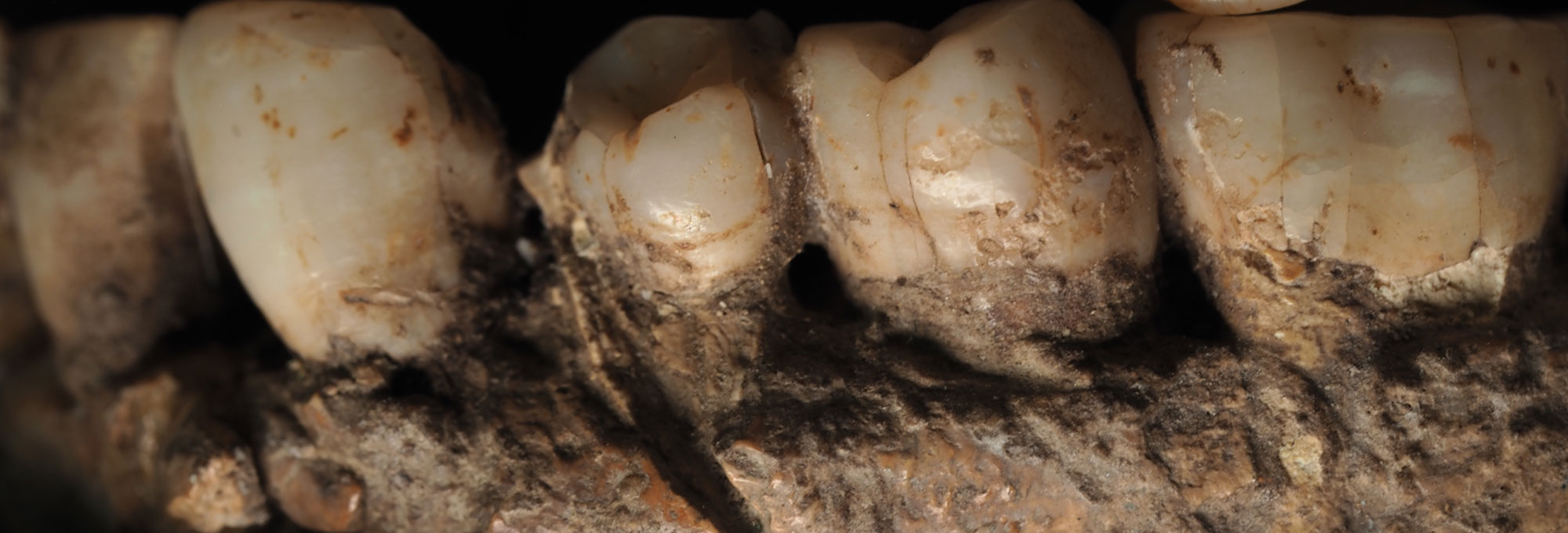
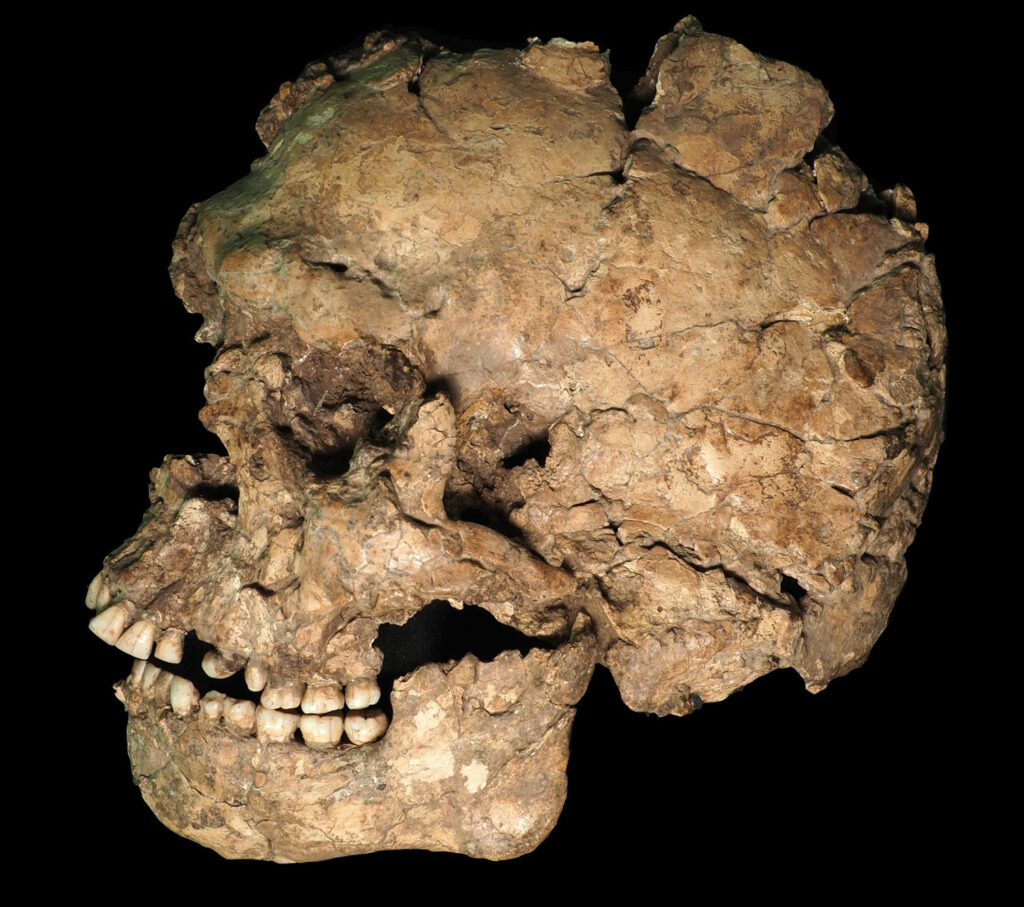
BURGOS, SPAIN—According to a statement released by the Spanish National Research Centre for Human Evolution (CENIEH), a micro-computed tomography examination of Qafzeh 25, a set of fossilized modern human remains found in Israel’s Qafzeh Cave that have been dated to between 92,000 and 145,000 years ago, has identified lesions in the upper and lower jaw consistent with sharp-force trauma. Researchers led by Ana Pantoja Pérez of CENIEH determined that the injury to the bone had started to heal, indicating that the individual had survived the blow for a time. They suggest that the injury may have been caused by an accident but is more likely a result of violence. The study also identified previously undocumented decay in a lower premolar and defects in the tooth enamel. The absence of carnivore damage to the remains, combined with a lack of signs of exposure to the elements, suggest that the body had been deliberately buried, the researchers added. “These findings provide new evidence in the ongoing debate about the origins of complex behaviors such as interpersonal violence, the care of injured or ill individuals, and funerary practices—fundamental aspects for understanding the social and cultural evolution of our species,” Pérez explained. Read the original scholarly article about this research in Scientific Reports. To read more about evidence for prehistoric violence, go to "The Roots of Violence."