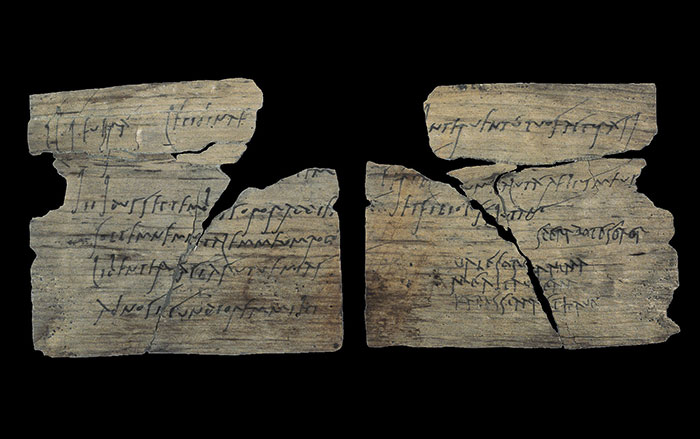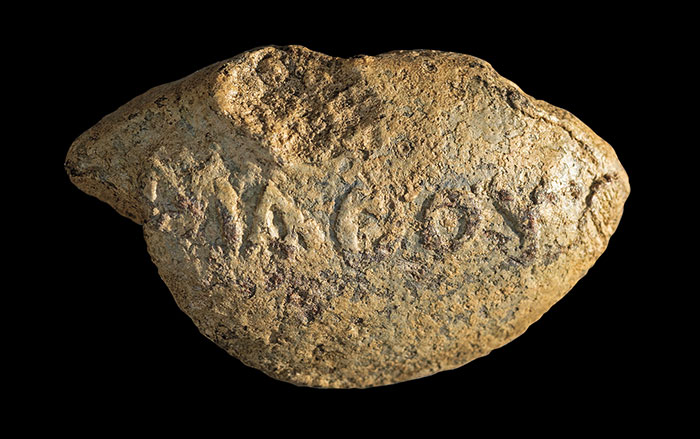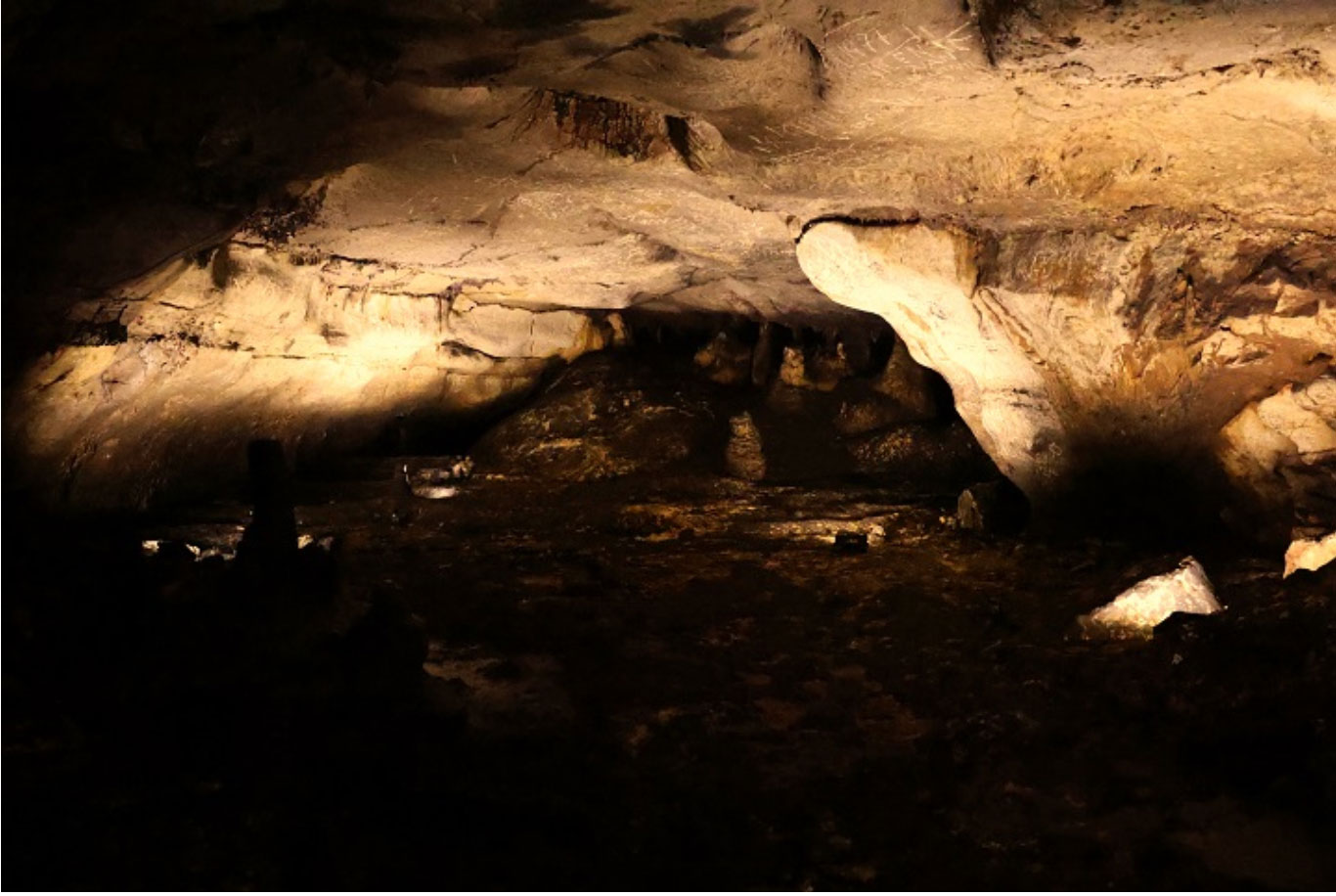
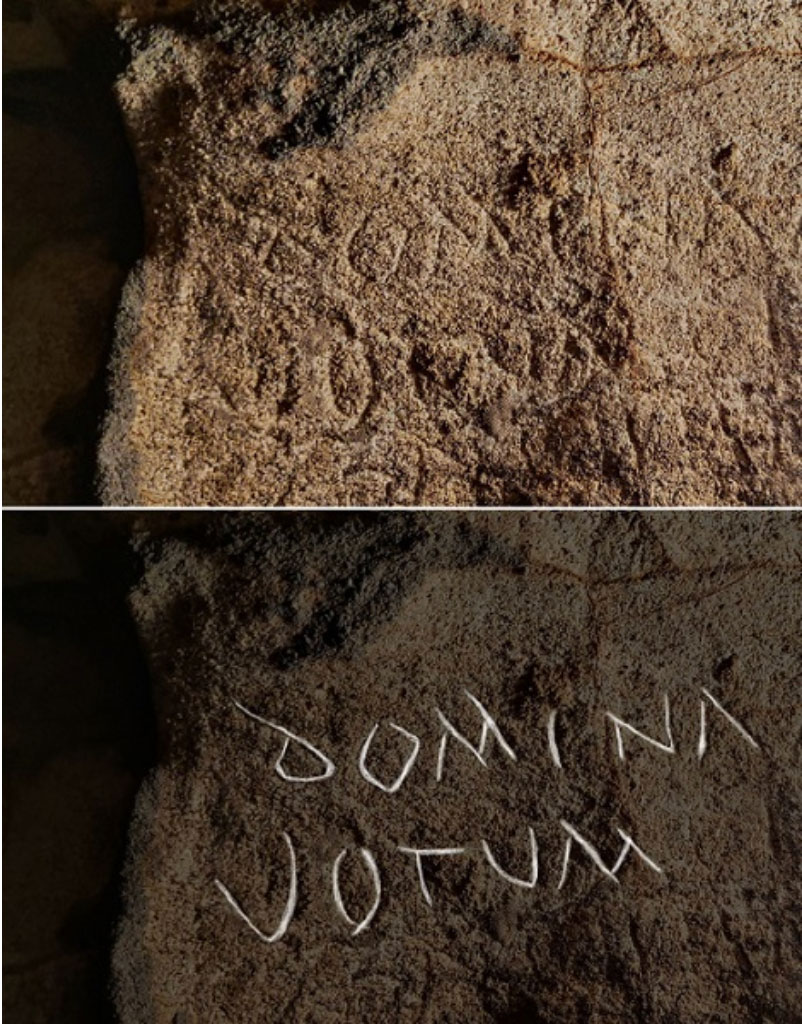
VALENCIA, SPAIN—Some 120 Latin inscriptions on the walls and ceiling of Cova Dones, an underground cave in southeastern Spain, have been recorded by Virginia Barciela of the University of Alicante and Aitor Ruiz-Redondo of the University of Zaragoza, according to a report in La Brújula Verde. The cave is thought to have been a Roman cult sanctuary used primarily by women for ritual practices. The researchers determined that most of the graffiti dates to the first and second centuries A.D. Women’s names appear in the inscriptions, and many spindle whorls, thought to have been deposited as offerings, have been recovered from the cave. Some of the offerings had been placed in small, natural pools of water in the floor. Other objects found at the site include bronze rings, a bracelet, chalice-shaped vessels, ceramic fragments, and faunal remains. Five of the inscriptions refer to a goddess as “Domina,” or “the Lady.” Three of these graffiti also use the word “MALACI,” thought to be the name of an unknown goddess. To read about 25,000-year-old paintings and engravings discovered deep inside Cova Dones, go to "Paleo Palette."