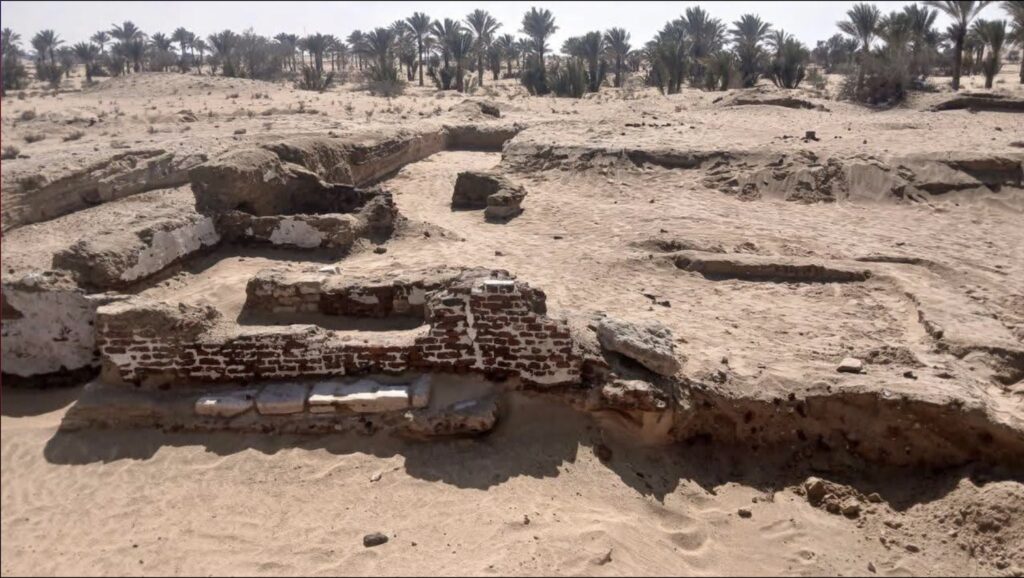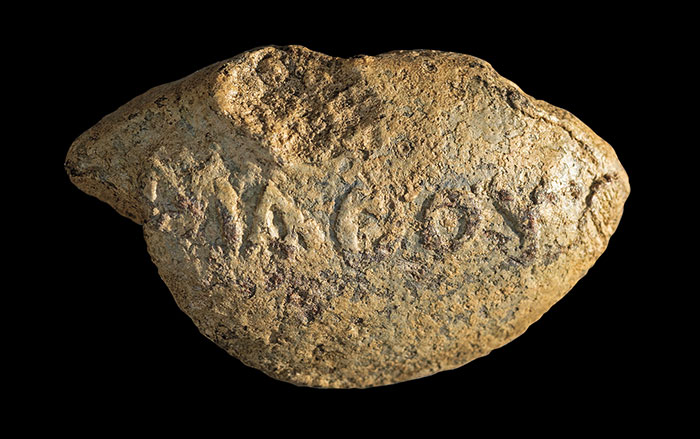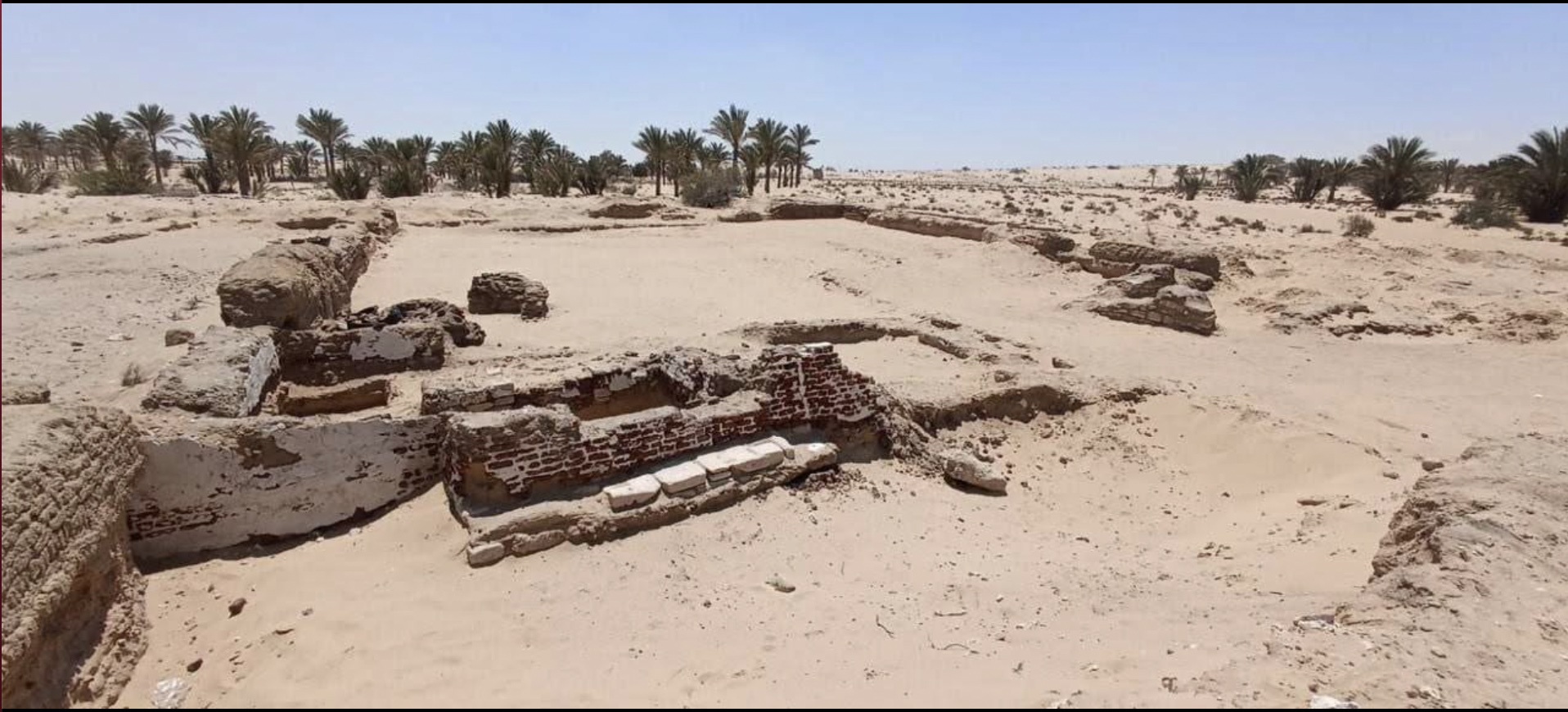
ASILA, EGYPT—According to an Ahram Online report, traces of a small roadside caravansery have been uncovered in North Sinai. It is one of several similar structures that have been found across the desert. Merchants, mail carriers, and military forces traveling on the Sultan’s Road would have stopped for rest at the caravansery before continuing on to destinations in Egypt, the Levant, and the Arabian Peninsula. Pilgrims traveling along the road could have also stopped to rest on the route to Mecca. Hisham El-Leithy of the Supreme Council of Antiquities (SCA) said that the walls of this structure were made of mudbrick and red brick, while the foundation was reinforced with large limestone blocks. The position of the walls suggests that there may have been shops attached to the lodging areas. Vessels for storing water and food as well as fragments of lamps were used to date the building to the period of the Mamluk Sultanate. In particular, some of the writing and decorations on these objects have been tentatively dated to the reign of Sultan Al-Nasir Mohamed Ibn Qalawun, who ruled from A.D. 1285 to 1341. “The finds reinforce the importance of the site for understanding Sinai’s role as a major corridor between Egypt and the eastern Arab world,” explained Diaa Zahran of the SCA. For more on the Mamluk Sultanate, go to "A Painted Prayer," one of ARCHAEOLOGY's Top 10 Discoveries of 2023.