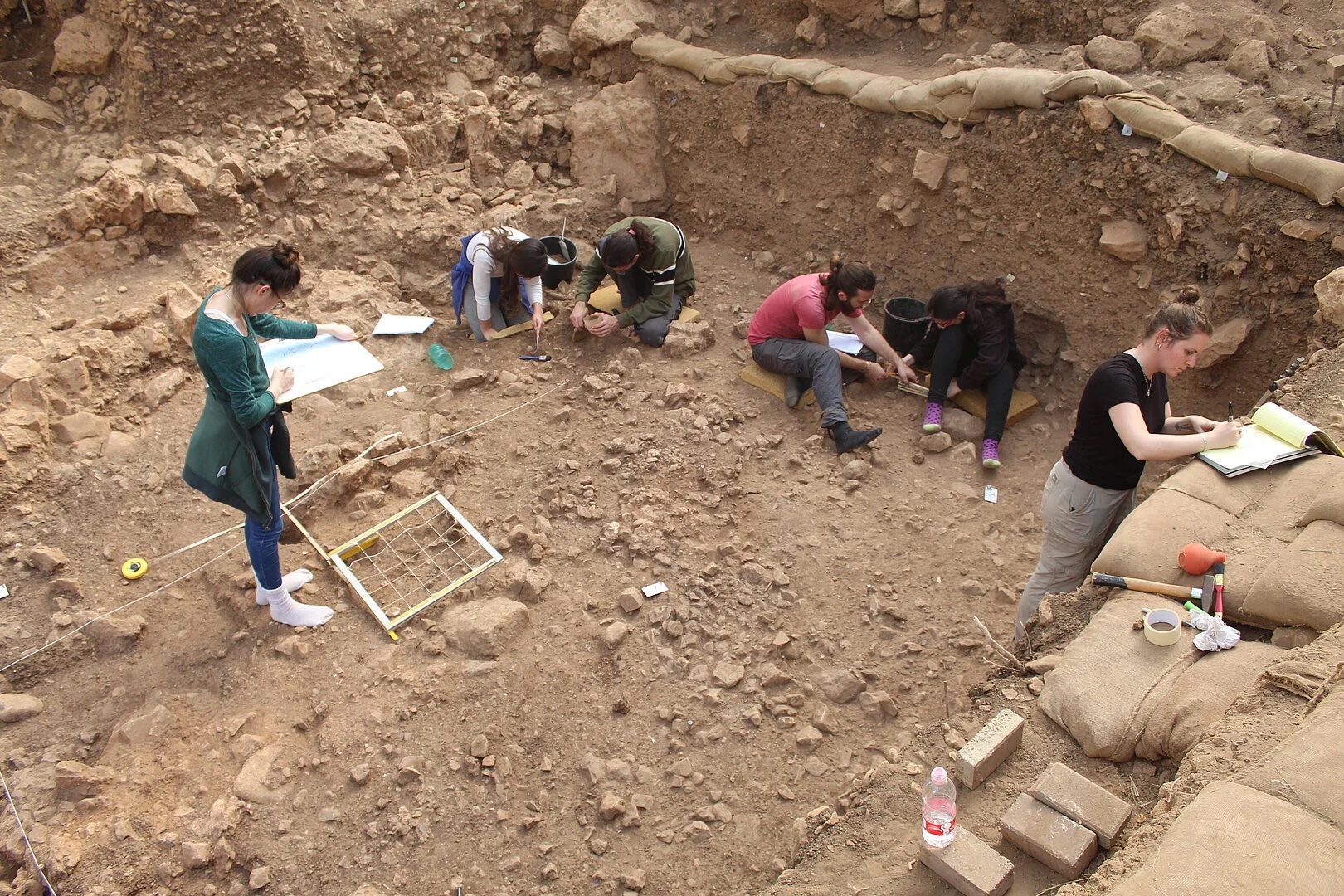
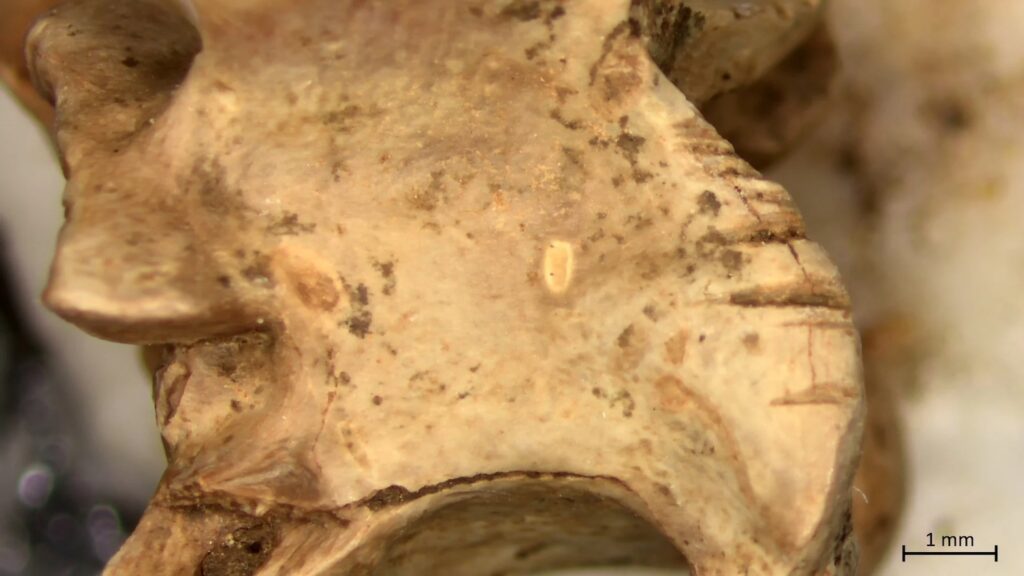
KIEL, GERMANY—According to a statement released by Kiel University, analysis of cut marks on bones suggests that hunter-gatherers living in a small settlement on northern Israel’s Mount Carmel some 15,000 years ago hunted and consumed reptiles. “Lizards and snakes became an important part of [the Natufian] diet during this period,” said Maayan Lev of Kiel University. As these hunter-gatherers became more sedentary, they may not have had such a wide variety of food choices as when they had been nomadic, Lev explained. Along with Mina Weinstein-Evron and Reuven Yeshurun of the University of Haifa, Lev examined thousands of lizard and snake bones recovered from settlement layers at the site of ‘el-wad Terrace. Using microscopes, they were able to distinguish between the bones of reptiles that had died naturally, those that had been eaten by other mammals and birds, and those that had been butchered by people using flint knives. The marks were found at consistent locations on the bones of large snakes, Lev explained. There is also evidence to suggest that the European glass lizard (Pseudopus apodus), which has hard scales, was also consumed. “Our hypothesis is that the Natufian people preferred to catch reptiles that were relatively large, relatively slow, and not dangerous,” Lev said. “Venomous snakes, such as vipers, were rarely caught,” she added. Read the original scholarly article about this research in PNAS. For more on the Natufians, go to "An Avian Connection."