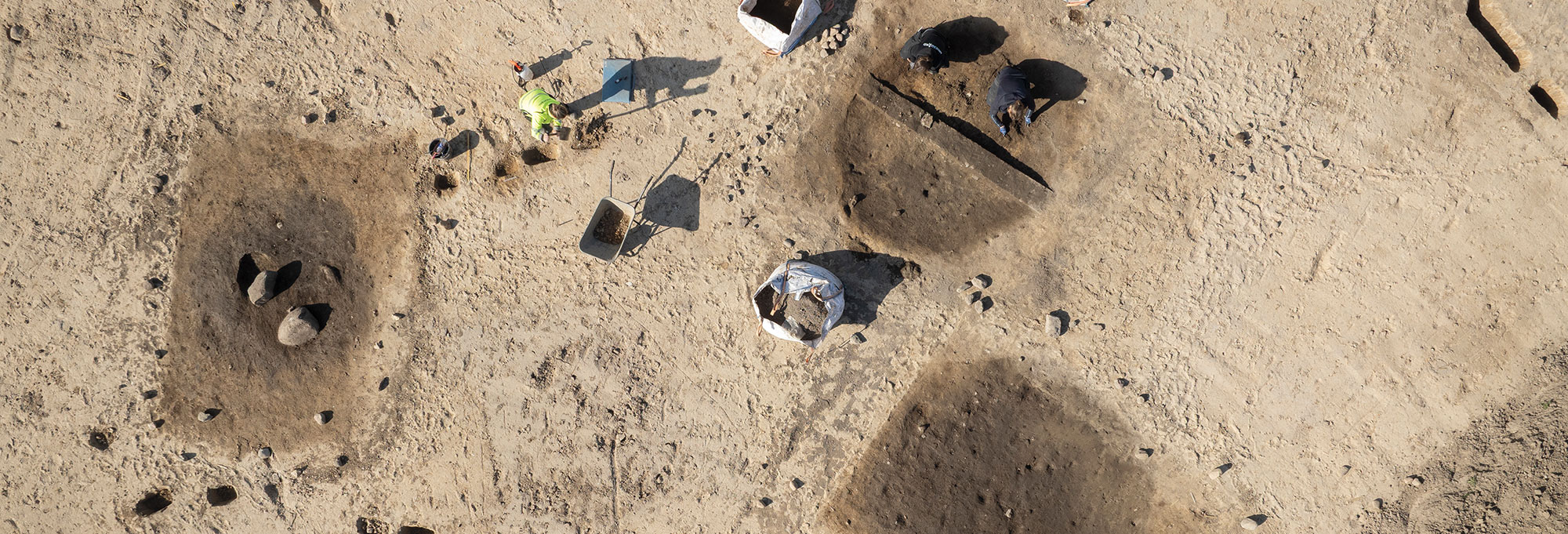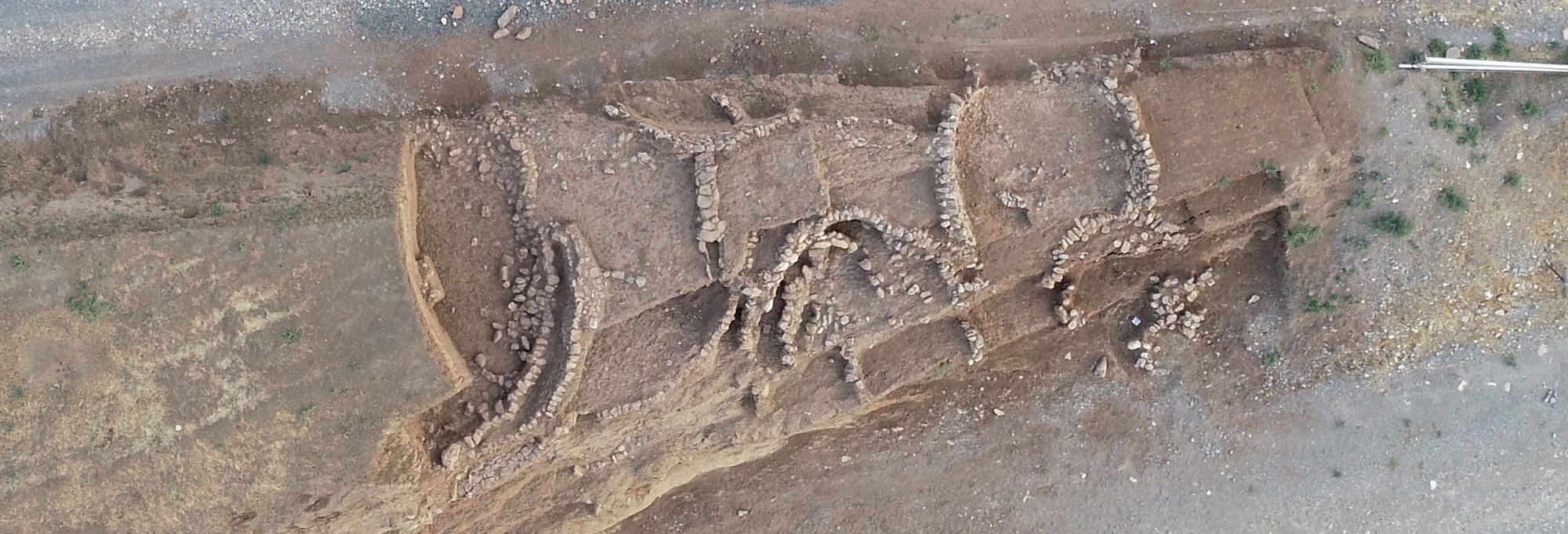
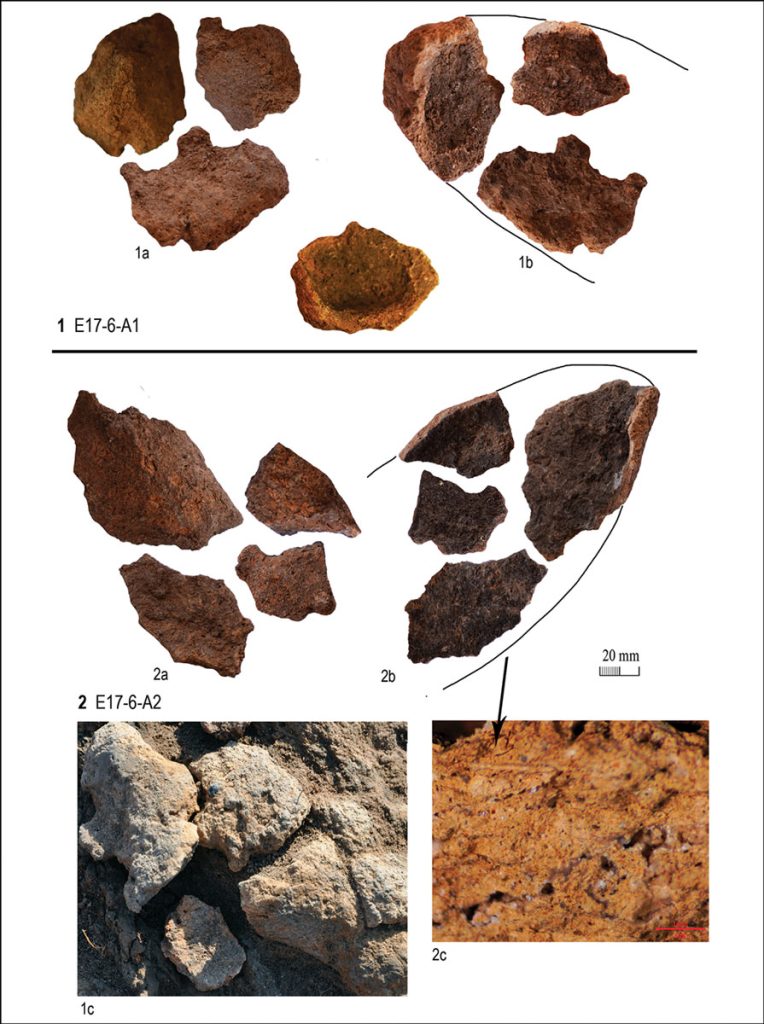
ISTANBUL, TURKEY—According to a report in La Brújula Verde, 46 fragments of fired clay unearthed near the Tigris River at the site of Çemka Höyük in southeastern Turkey have been dated to about 11,400 years ago, making them some of the oldest fired clay in the Near East. Ergül Kodaş of Mardin Artuklu University, Natalia Petrova of the Russian Academy of Sciences, and Maria Daghmehchi and Rana Özbal of Koç University said that the clay fragments were recovered from the floors of several houses in an archaeological layer at the site that has been dated to about 9350 B.C. with charcoal samples. The fragments are thought to have come from nine separate objects. Some of the pieces have been identified as clay coverings applied to oval organic objects about the size of a tennis ball. The outer sides of these coverings had been burned, perhaps during food preparation. One of the fragments, measuring about 15 inches across, had a concave base and a body that widened toward the top. It may have been attached to one of the limestone containers found at the site, perhaps to make it larger or to secure a lid, the researchers suggest. The rest of the fragments are thought to have been parts of thick-walled vessels made by stacking slabs of clay tempered with straw and crushed plants. Animal dung was detected in two of the pieces. Microscopy and X-ray diffraction also found that some of the fragments had undergone chemical changes consistent with exposure to high temperatures. Yet the black cores and reddish surfaces of the fragments indicate that the firing had been short and incomplete, as if these early potters had been experimenting with their materials. Read the original scholarly article about this research in Antiquity. To read more about this era in southeastern Turkey, go to “Discovering a New Neolithic World.”