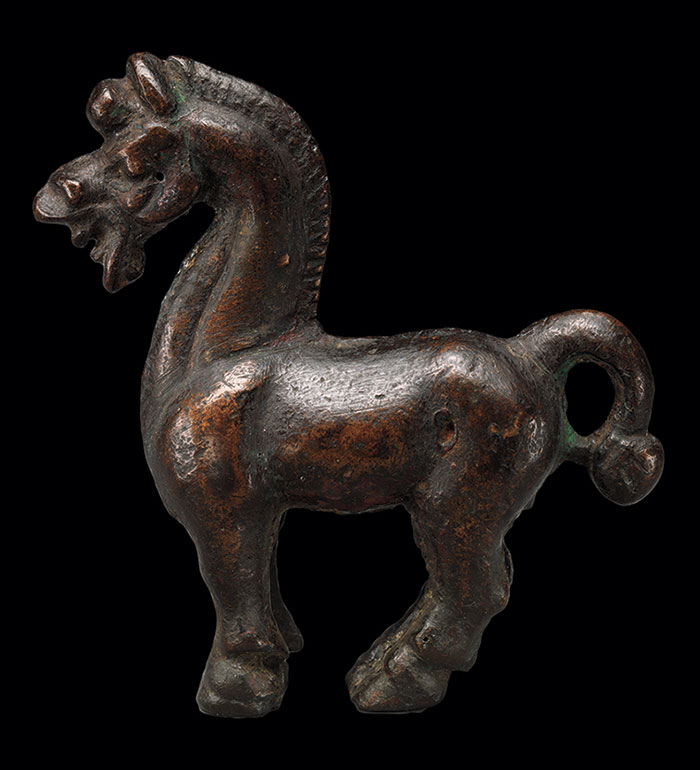
Ancient China’s “Pony Express”

Digs & Discoveries July/August 2026

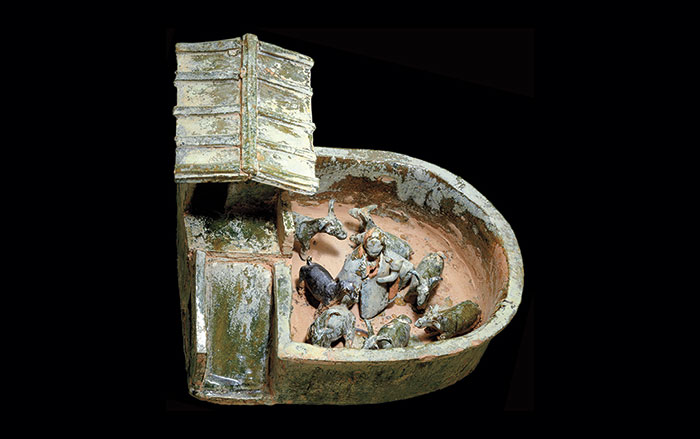
The Metropolitan Museum of Art, New York/Gift of George D. Pratt, 1928
SHARE:

Bamboo slip and infrared image

As part of a push to expand their empire into Central Asia in the second century b.c., the rulers of China’s Han Dynasty (206 b.c.–a.d. 220) established a string of postal stations in a narrow pass between the Tibetan and Mongolian Plateaus known as the Hexi Corridor. Each station was home to a fleet of around 40 horses tasked with carrying missives across this frontier territory. The postal horses were generally steppe ponies that were significantly smaller
Become a Digital Subscriber Today

Get full access to all content on the ARCHAEOLOGY website and our PDF archive going back to the first publication in March 1948.

Already a Subscriber? Sign In

  • Features July/August 2026

    Secrets of the Serpent

    Is a Native American origin story embedded in Ohio’s colossal earthwork?

    Read Article
    Serpent Mound
    Timothy E. Black
  • Features July/August 2026

    Slinging Insults

    Greek and Roman soldiers fired pointed barbs at their enemies

    Read Article
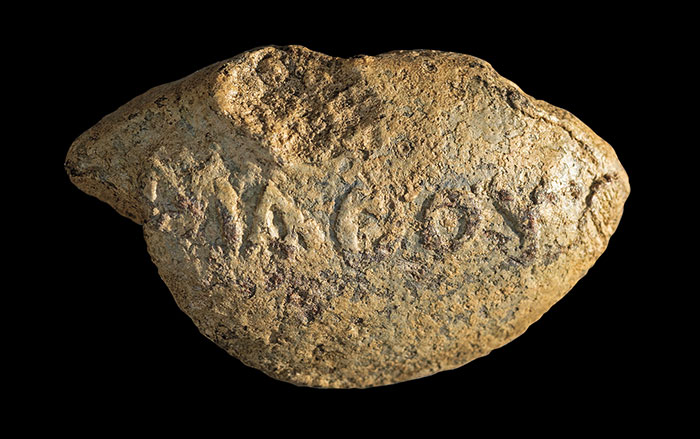
    Lead sling bullet inscribed with the Greek inscription MATHOU
    Courtesy Michael Eisenberg
  • Features July/August 2026

    Inside Africa’s Houses of Stone

    Archaeologists are rethinking how kings shared power beyond the great capitals of medieval Zimbabwe

    Read Article
    Ad/AdobeStock
  • Features July/August 2026

    Tennis, Anyone?

    Discovering the origins of the peculiar racket game that swept sixteenth-century France

    Read Article
    King Louis XIII's jeu de paume court at the Palace of Versailles
    © Denis Gliksman, Inrap