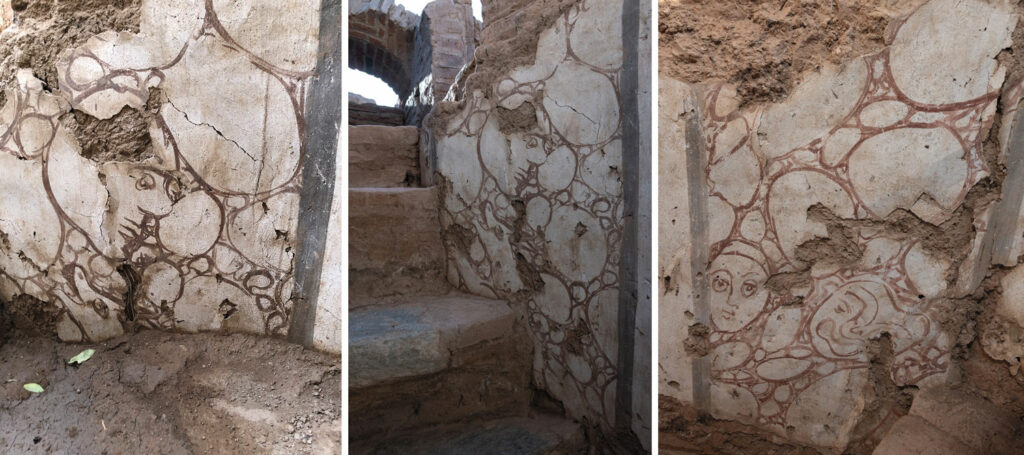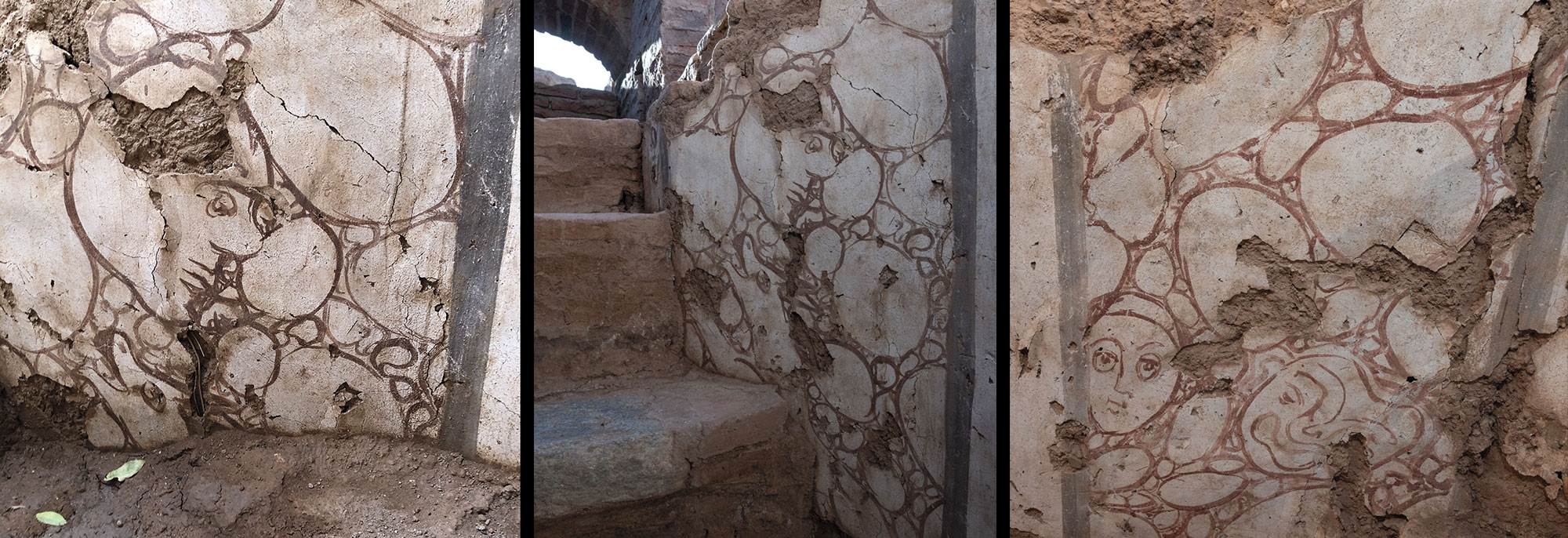
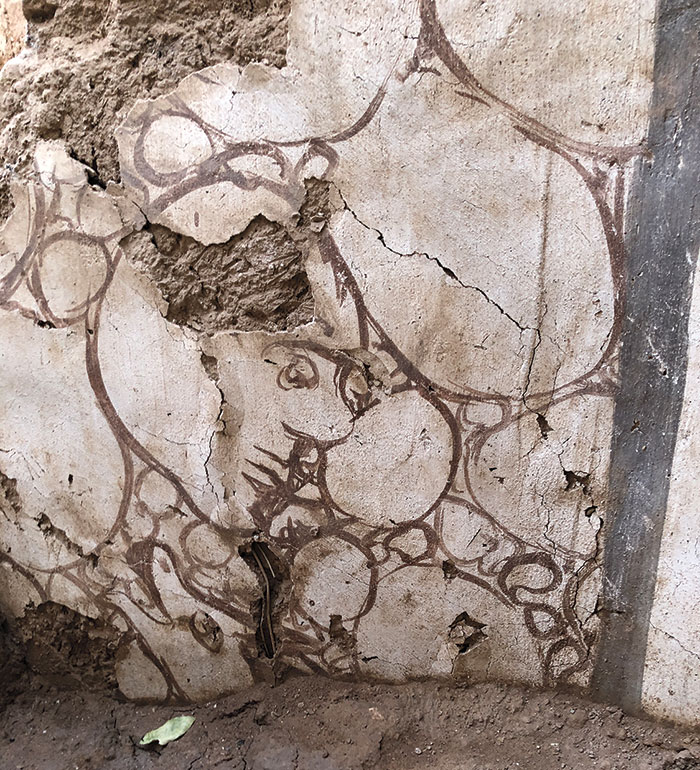
Roman painters were masters of illusion, and many opulent homes were decorated with frescoes imitating marble that could easily pass for the real thing. Artists working in the House of Cybele, a large residence in the city of Aphrodisias in southwestern Anatolia, went a step further, embedding images of human faces or masks, and even a leaping animal, in their faux marble decoration. A team of archaeologists discovered the images while excavating a staircase that led to a second story in the house, which largely dates to the fifth and sixth centuries a.d. Although similar in many ways to other Late Antique mansions, says archaeologist R. R. R. Smith of the University of Oxford, the house also had a large underground hall where the team found evidence of feasting, drinking, and practicing secret rites—in particular the worship of Cybele, a goddess of nature. Archaeologist Ine Jacobs, also of the University of Oxford, notes that exact parallels for the type of decoration on the staircase are rare, but that the style had its roots almost 1,000 years earlier in the Hellenistic period. “The tradition of embedding figural motifs within the veining of faux marble likely originated in the awe inspired by naturally occurring patterns revealed when cutting stone such as marble,” she says.
Other rooms in the House of Cybele were designed to appear as part of the natural landscape rather than as constructed spaces, Jacobs explains. In these spaces, the artist evoked rock through architecture and decoration. “If the masks and the jumping animal relate to Hellenistic and early Roman traditions of imitating nature,” she says, “their inclusion may have served to heighten the sense of wonder associated with the natural environment.”