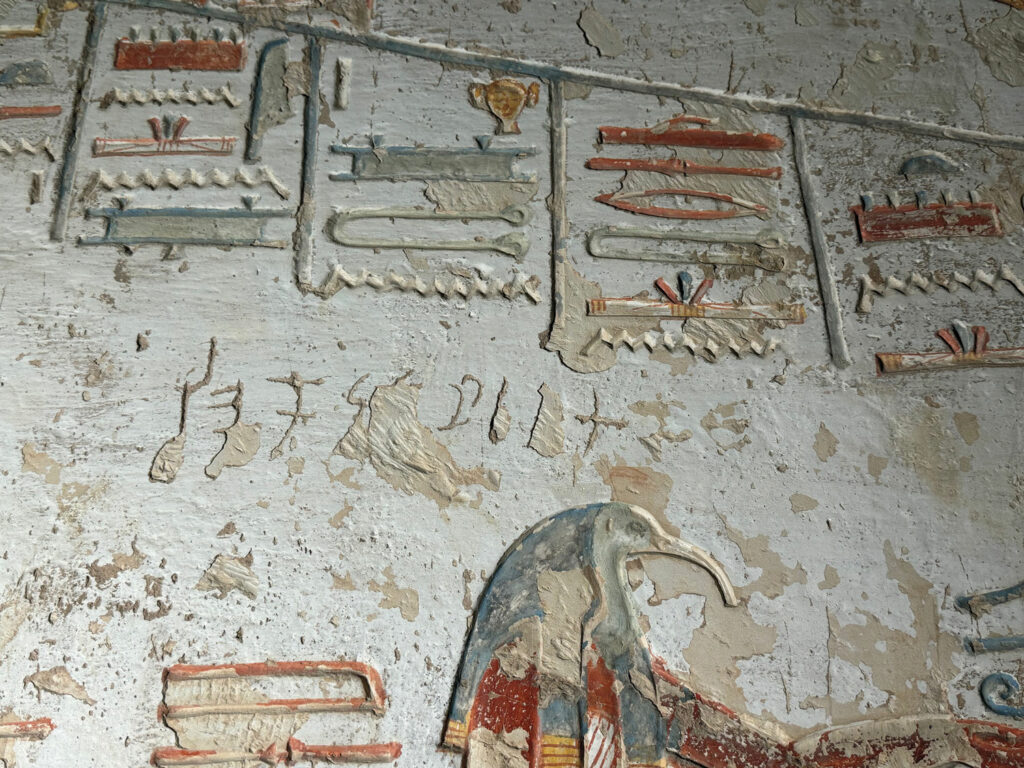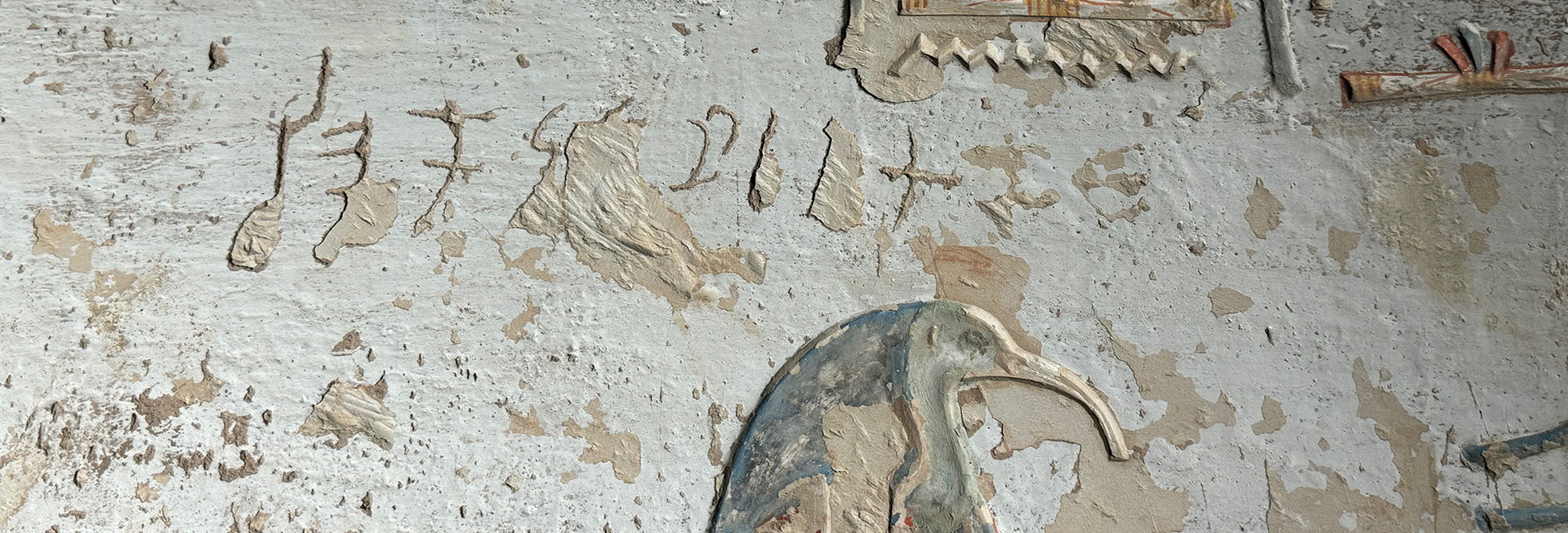
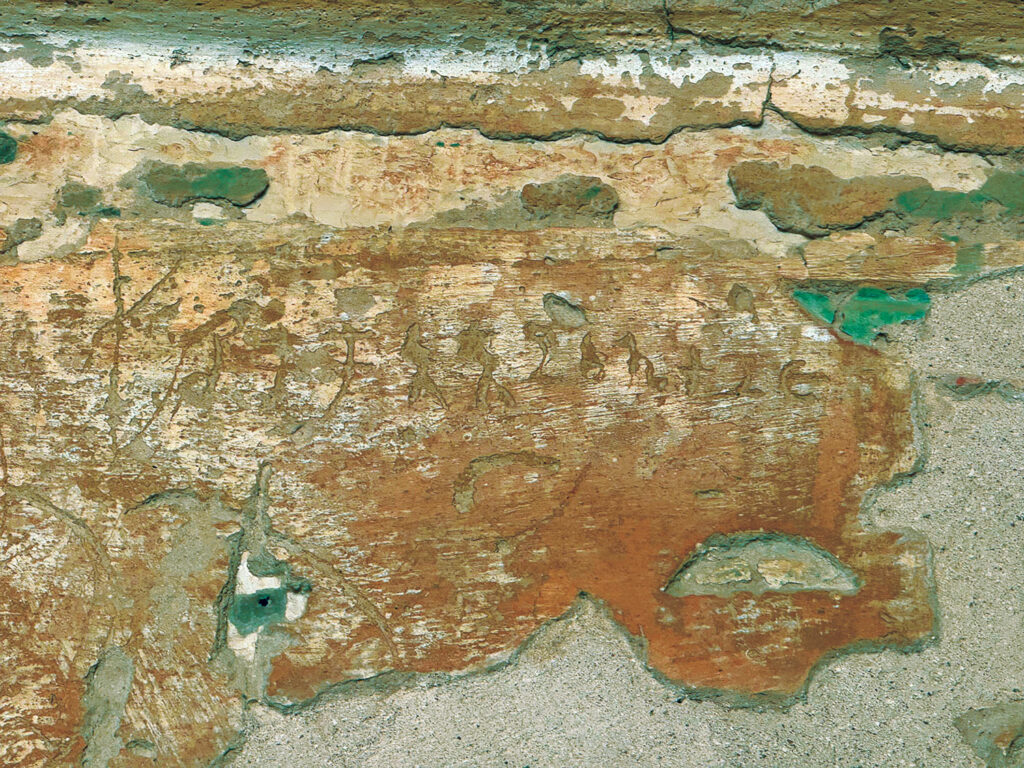
A number of Indian visitors to Egypt’s Valley of the Kings commemorated their travels some 2,000 years ago by carving their names on various monuments. Epigraphers Charlotte Schmid of the French School of Asian Studies and Ingo Strauch of the University of Lausanne have identified some 30 examples of such graffiti on the walls of six tombs belonging to pharaohs of the 19th (ca. 1295–1186 b.c.) and 20th (ca. 1186–1070 b.c.) Dynasties. Most of these inscriptions date to the first through third centuries a.d. The majority are written in Old Tamil, a language that originated in southern India; the rest use other Indian languages and scripts. The Indian merchants and military officers who visited the tombs wrote their names next to earlier Greek graffiti dating to the Ptolemaic period (304–30 b.c.). “It’s clear that people from India mastered several Indian languages,” Schmid says, “but they also knew Greek, which was necessary if you were involved in trade relations with Egypt across the Indian Ocean.”
One particularly enthusiastic Indian tourist, Cikai Korran, inscribed his name high above others in five pharaohs’ crypts—in a few instances, multiple times within a single tomb. One of his Old Tamil tags reads, “Cikai Korran, having come, has seen.” According to Schmid, the Indian traveler’s carvings imitate the style of a common type of Greek inscription found in the tombs. “He wanted his name to appear next to the Greek graffiti already inscribed there,” she says, “and also wanted to find a place alongside the kings buried there.”