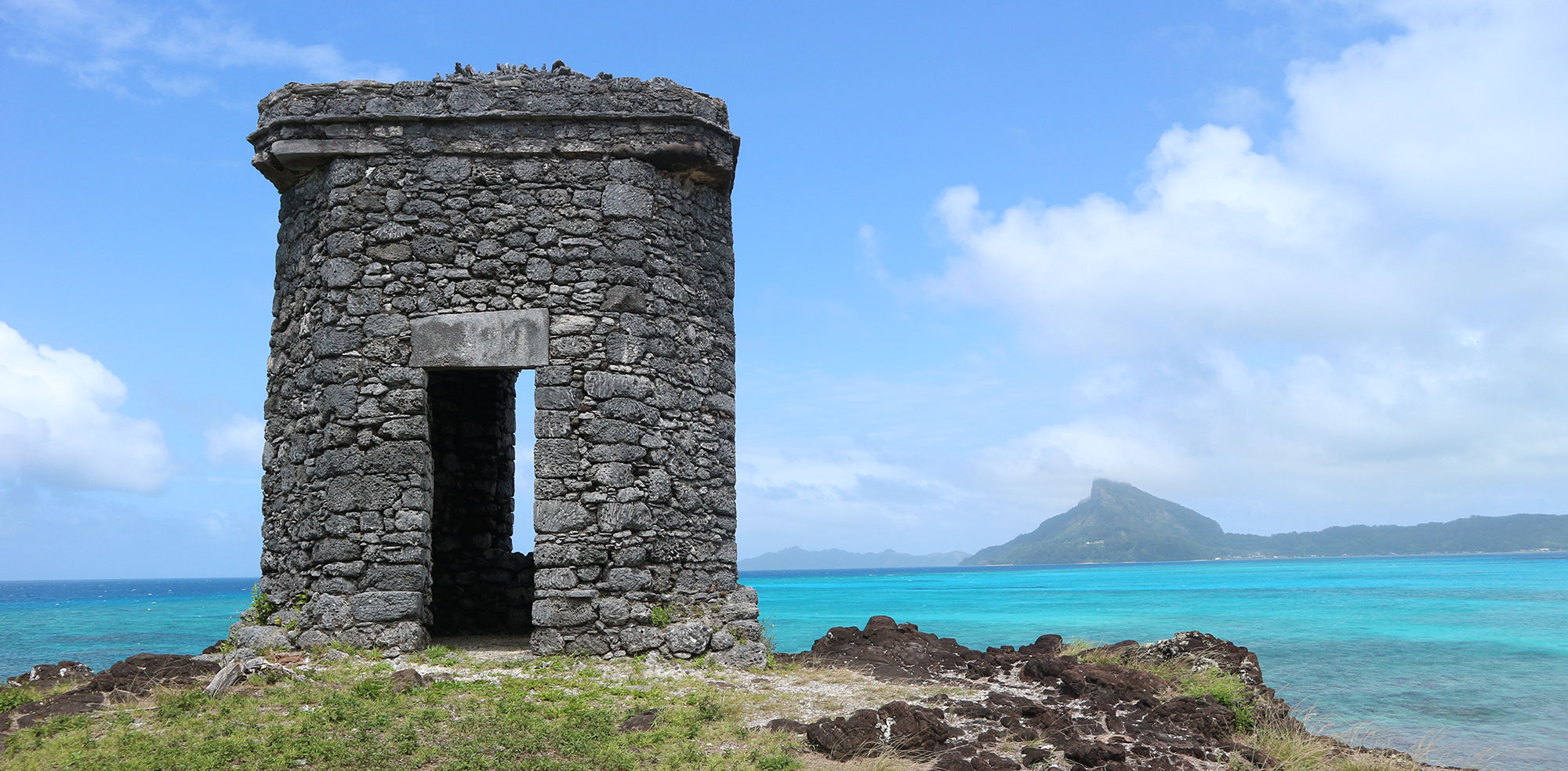
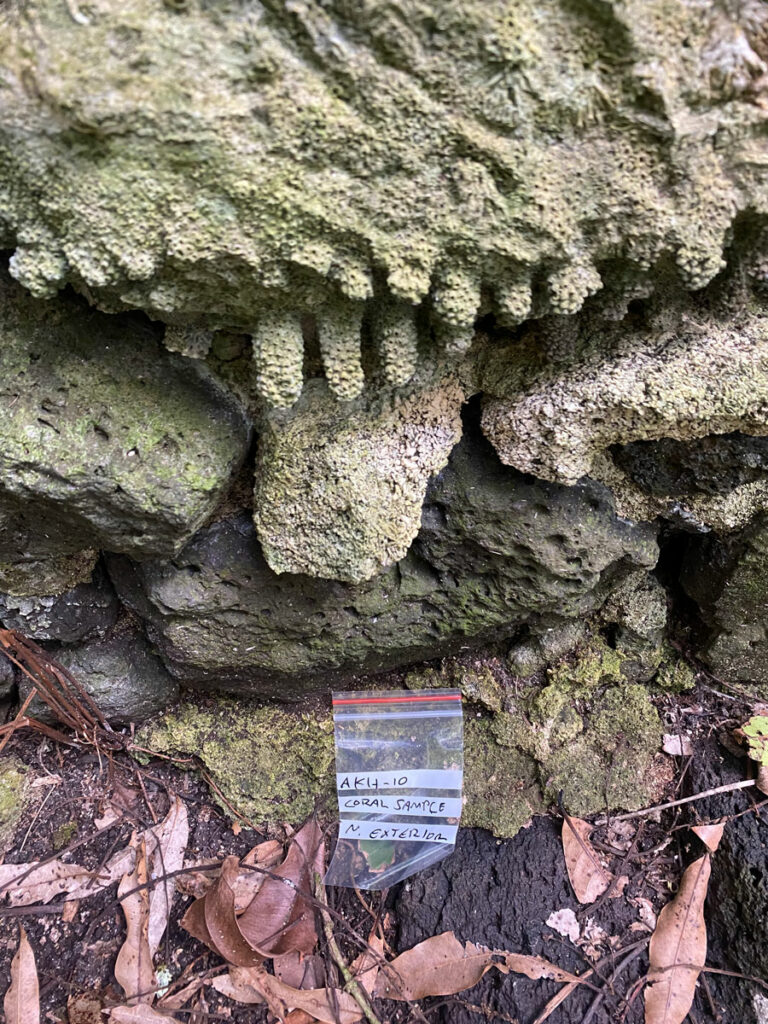
SYDNEY, AUSTRALIA—According to a statement released by the University of Sydney, uranium-thorium dating has been used to date coral architecture on the islands of Mangareva in the South Pacific. Coral was the main building material on the islands prior to the 1870s, when the use of wood became common. “Mangarevan people learned the building technique from French Catholic missionaries who arrived on the island in the 1830s and commenced a large construction program,” said James Flexner of the University of Sydney. “They built cathedrals, churches, schools, communal bread ovens, watch towers, and small stone cottages out of locally sourced coral from nearby shore reefs, as well as beach rock corals from exposed formations on land,” he explained. Detailed records exist for the European buildings, he added, but not for the homes built by Mangarevan families for themselves. Samples from 10 of these dwellings were dated at the University of Queensland. “A few pre-dated European arrival, suggesting the builders may have reused older coral taken from nearby sites,” Flexner said. “But none of the examples showed centuries-long age differences, challenging earlier theories that coral from ancient structures was widely repurposed for nineteenth-century buildings,” he concluded. Read the original scholarly article about this research in Antiquity. To read about a mid-nineteenth century object that illustrates a changing marine ecosystem in the South Pacific, go to "Artifact: Pacific Islands Trident."