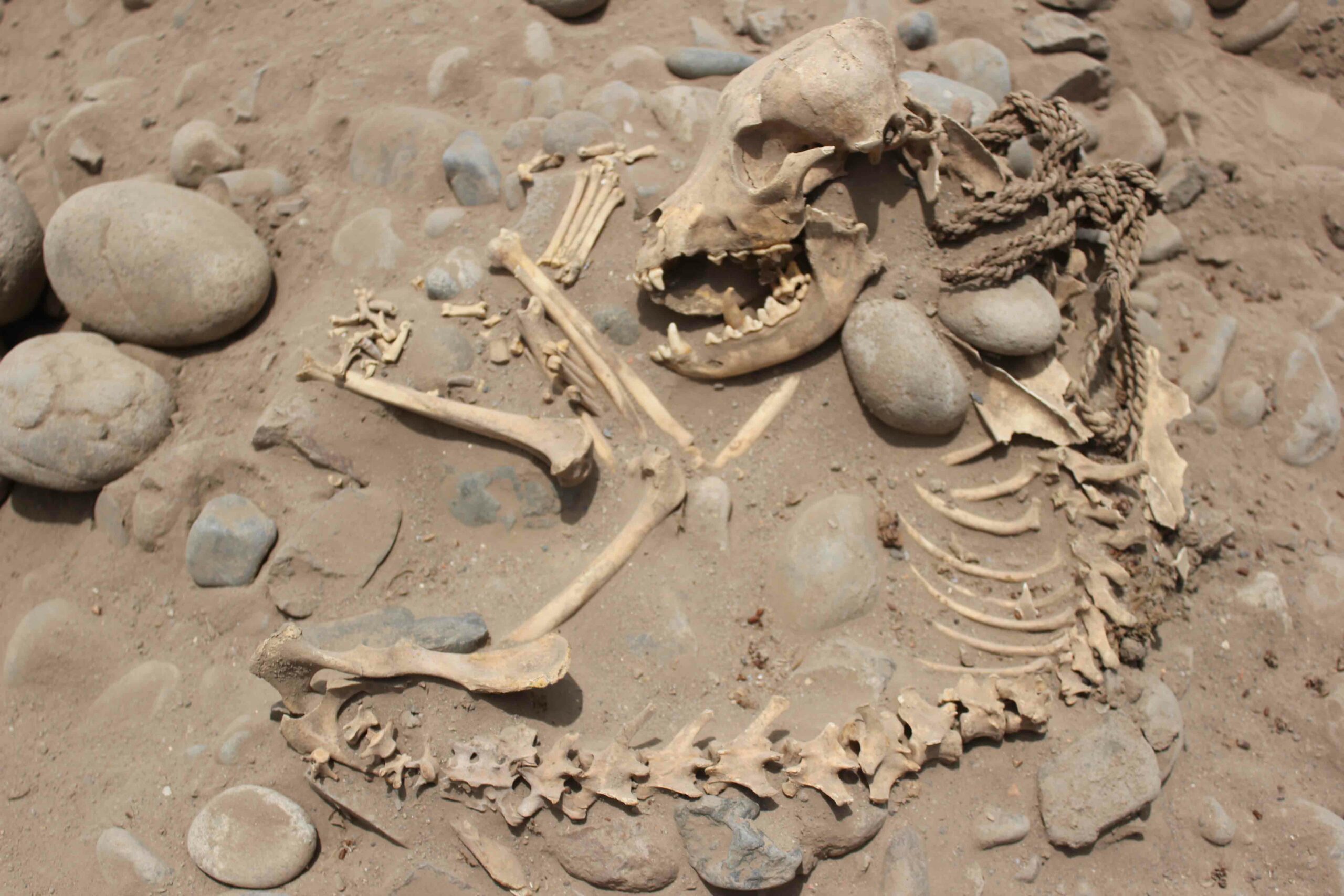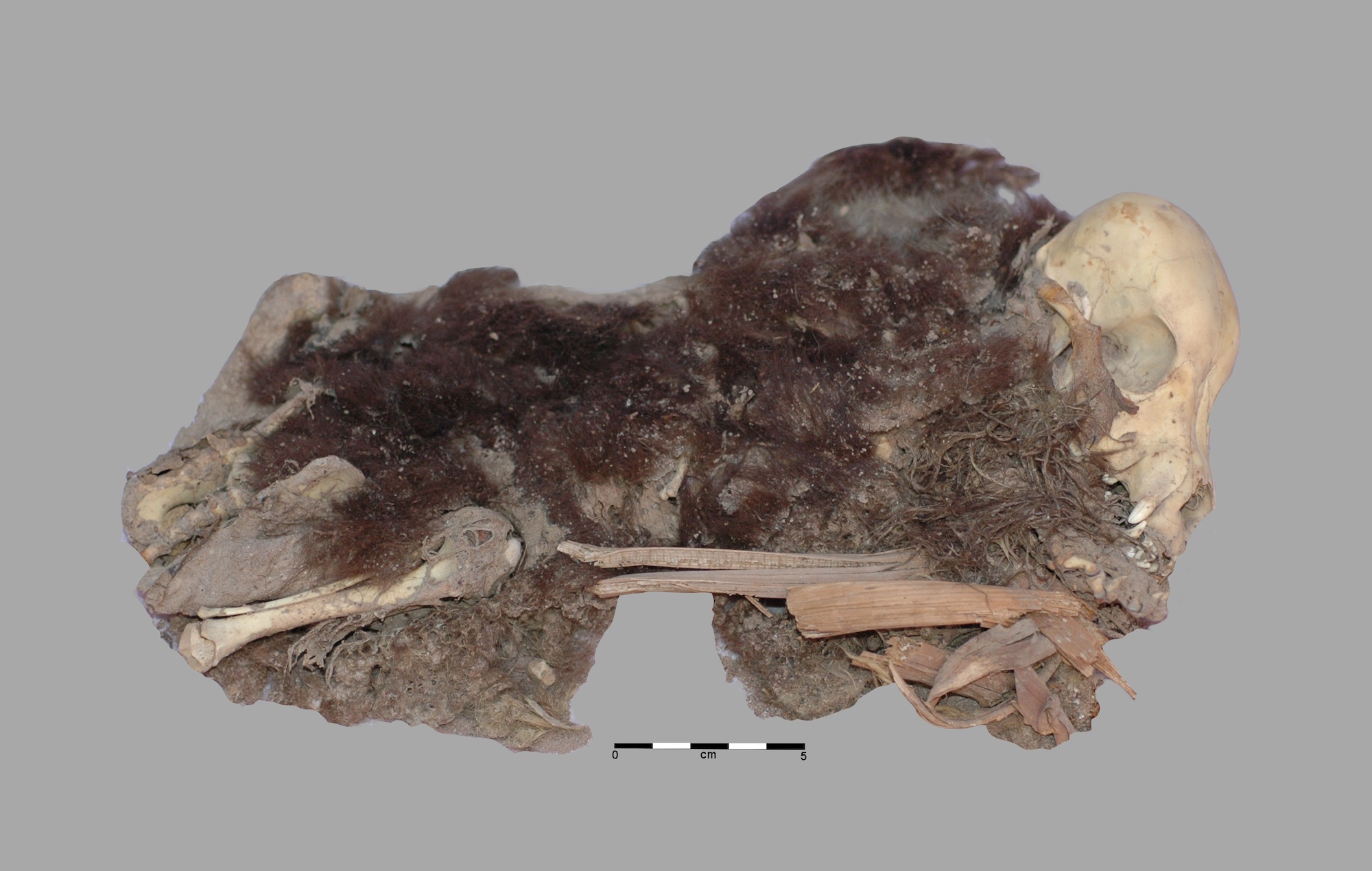
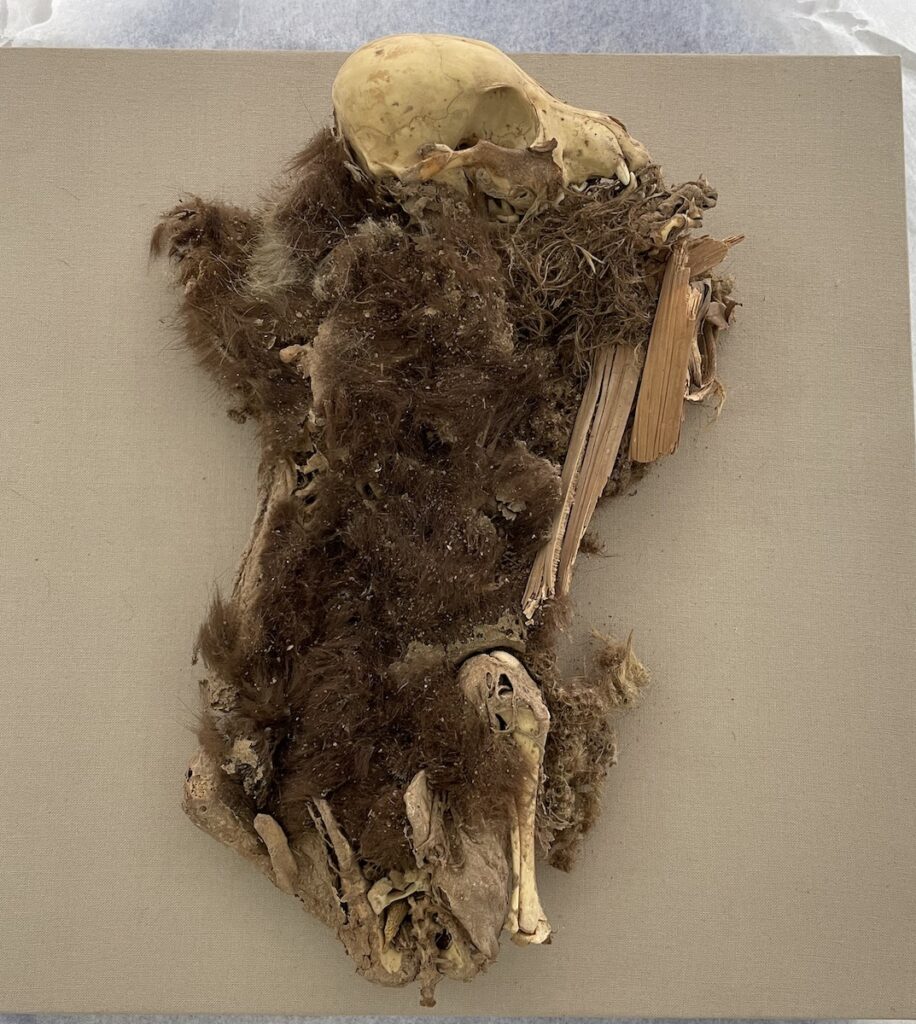
GAINESVILLE, FLORIDA—Phys.org reports that Susan deFrance of the University of Florida and her colleagues analyzed the remains of two dogs whose burials were excavated in southern Peru's Moquegua Valley. The remains of the dogs, buried some 1,100 years ago by people of the Tiwanaku culture, were naturally mummified. The first dog, a female with brown and white fur, was less than one year old at the time of death. She had been placed on a woven mat, perhaps wrapped in twine, and buried in a small pit at the village site of Rio Muerto. The second dog was a puppy no more than three months old at the time of death that had been buried in Omo, a ceremonial center. The researchers note that the dogs were buried with great care near the homes of people. Analysis of isotopes in the dogs’ bones, teeth, and hair shows that both canines had lived locally for their entire lives. The dog from Rio Muerto ate a diet of plants and meat similar to that consumed by the villagers, indicating that she lived alongside people and had been fed scraps or leftovers. The puppy buried in Omo ate more meat, suggesting that it may have scavenged for food away from residential areas. To read about the Tiwanaku people's sacred city, go to "Rise and Fall of Tiwanaku."