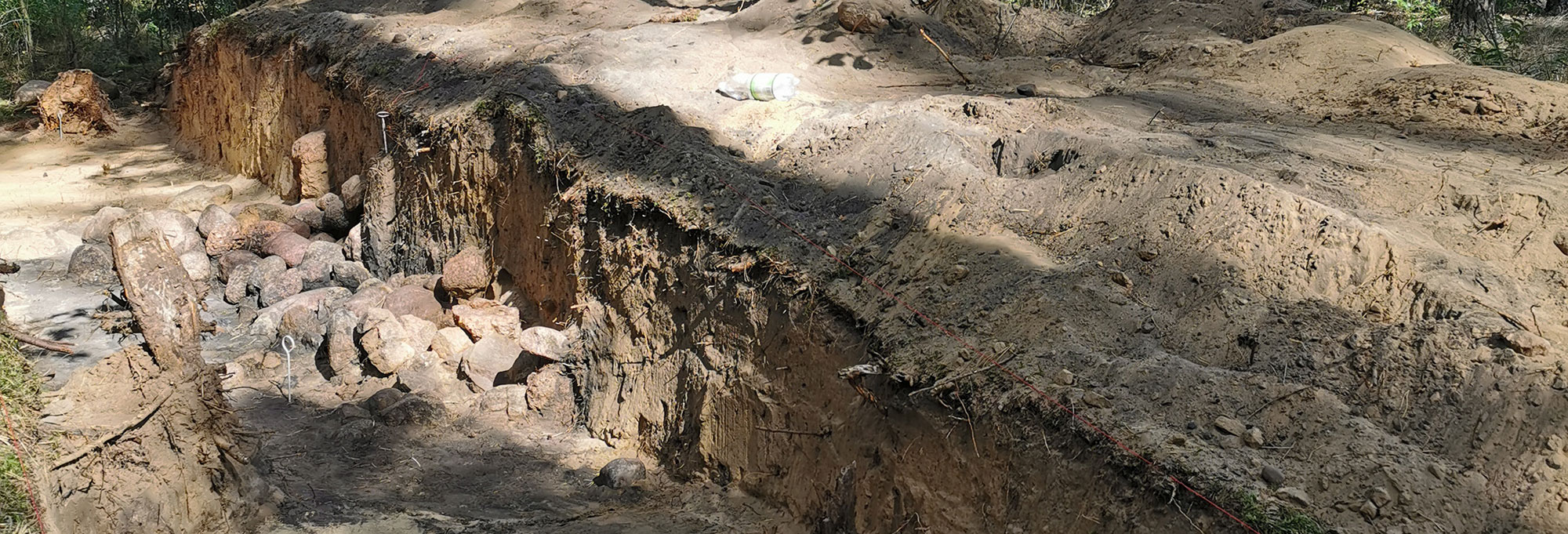
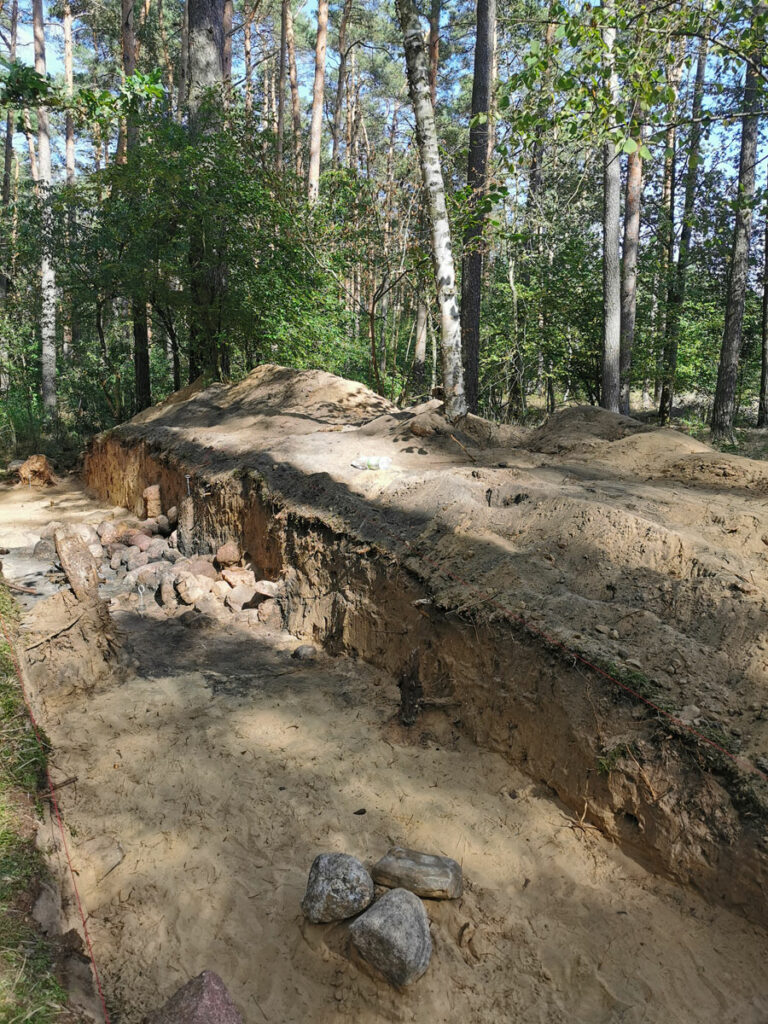
POZNAŃ, POLAND—According to a Science in Poland report, analysis of charcoal and pollen in ancient lake sediments collected in western Poland, near the site of a cemetery belonging to the Funnelbeaker culture, suggests that Neolithic farmers did not burn large swaths of forest. Rather, the farmers removed young trees and shrubs, which opened gaps in the forest canopy and increased the amount of sunlight able to reach mature trees. This resulted in an increase in pollen production for several centuries, said Danuta Żurkiewicz of Adam Mickiewicz University. The farmers also employed a rotational system of land use, reflected in the presence of spores and fungi associated with animal dung. Soil erosion eventually filled in the lake, creating a wetland. The study also suggests that people had been clearing vegetation from the area for more than 100 years before the cemetery’s monumental tombs were constructed around 3660 B.C. Żurkiewicz and the team of researchers concluded that the construction of monumental tombs in central Europe did not necessarily result in drastic environmental degradation. Read the original scholarly article about this research in the Journal of Archaeological Science. To read about theories concerning the spread of agriculture, go to "Neolithic Neophytes."