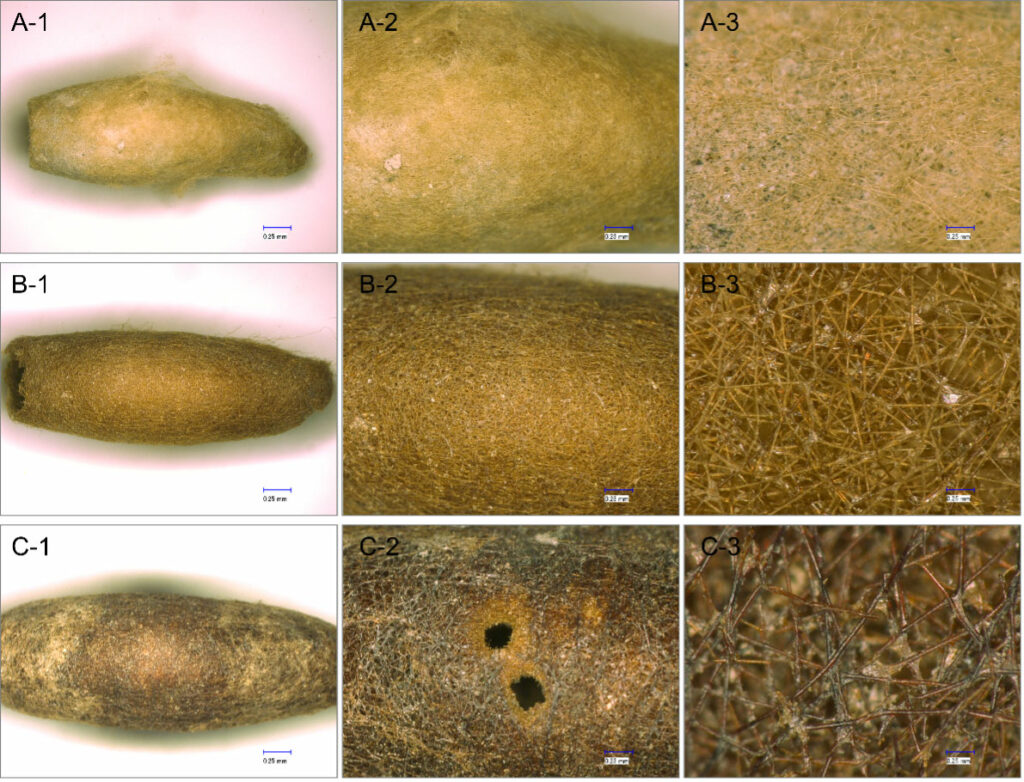
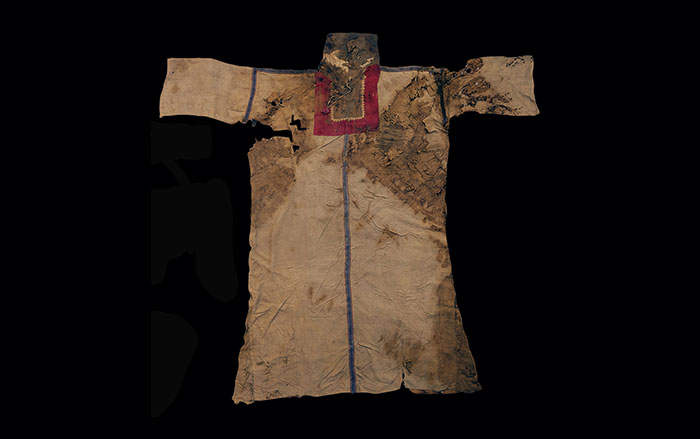
ST. LOUIS, MISSOURI—According to a statement released by Washington University in St. Louis, Chinese and Uzbek archaeologists found the earliest known evidence of silkworm cultivation outside of China. The team was excavating the Bronze Age site of Sapalli Tepe in Uzbekistan when they uncovered three well-preserved cocoons. Silk proteins subsequently extracted from the cocoons were confirmed to belong to the Bombyx mori silkworm moth species and dated to around 2000 b.c. “This is the oldest reliable archaeological record of preserved silkworm cocoons with direct radiocarbon dates,” said Washington University archaeologist Xinyi Liu said. “Even in China, where the silkworm moth was domesticated, we don’t have preserved cocoons as old as this, in part because of challenges with archaeological preservation.” Until the recent discovery, researchers believed that silk products and silk-making technology only arrived in the region around 2,000 years later, after the development of the Silk Road, but this new evidence suggests that it long predates the establishment of the storied trade route. Read the original scholarly article about this research in Science Advances. To read about a 2,000-year-old silk robe uncovered in China's Tarim Basin, go to "Ancient Look Book."