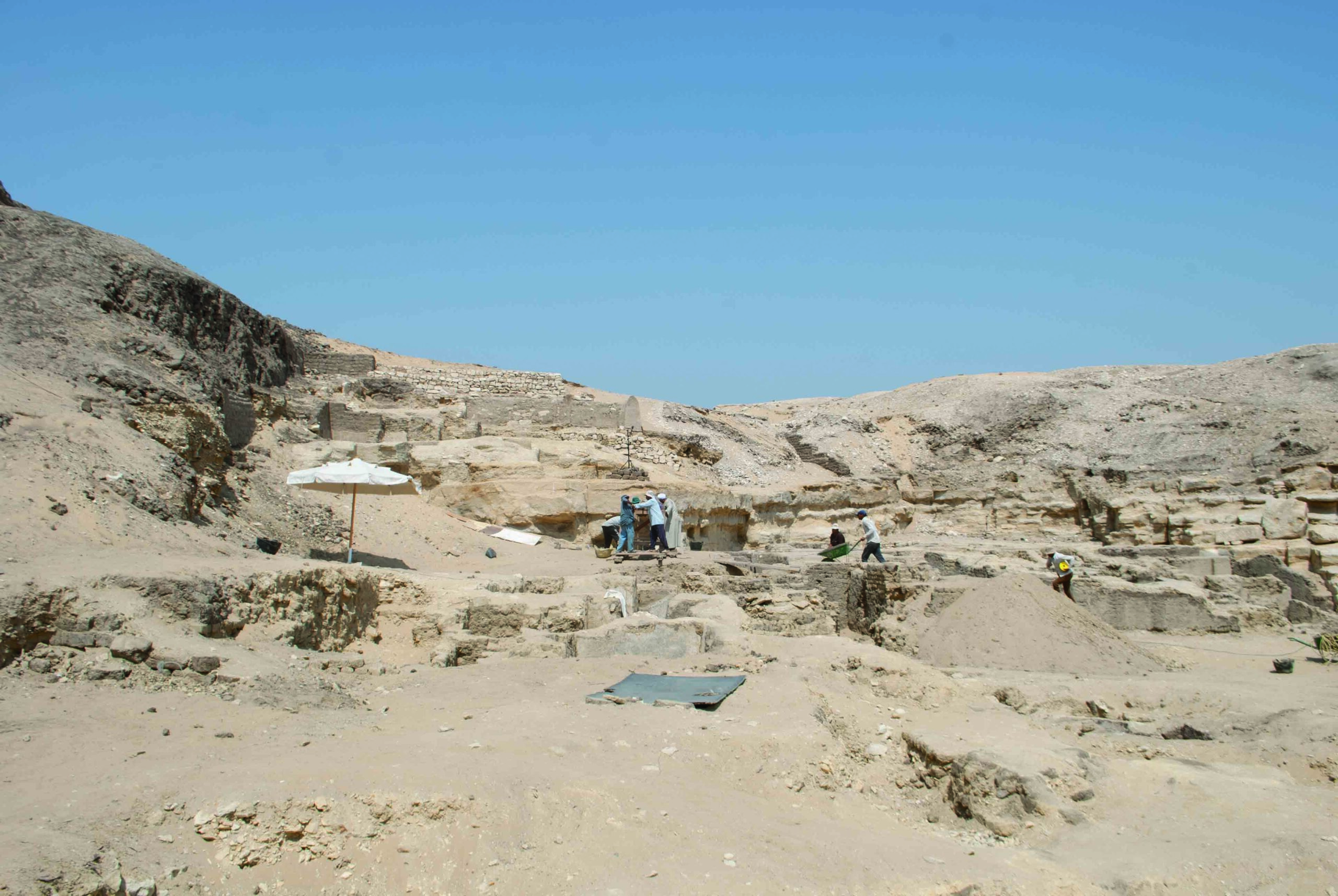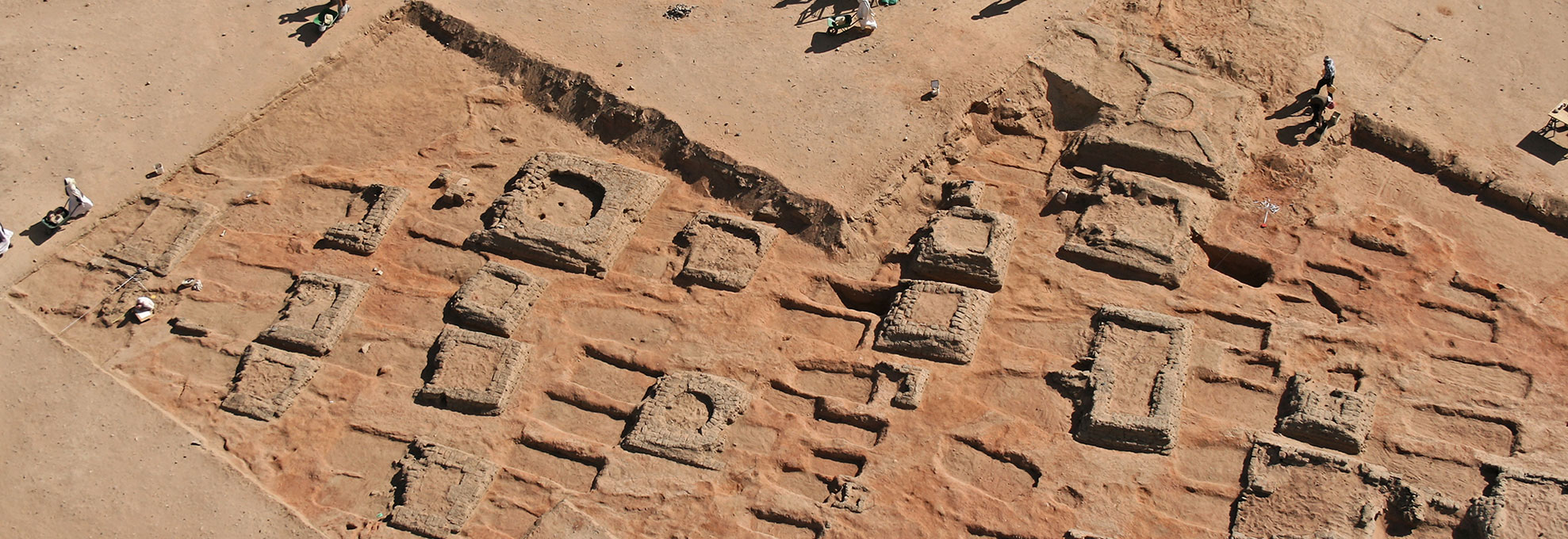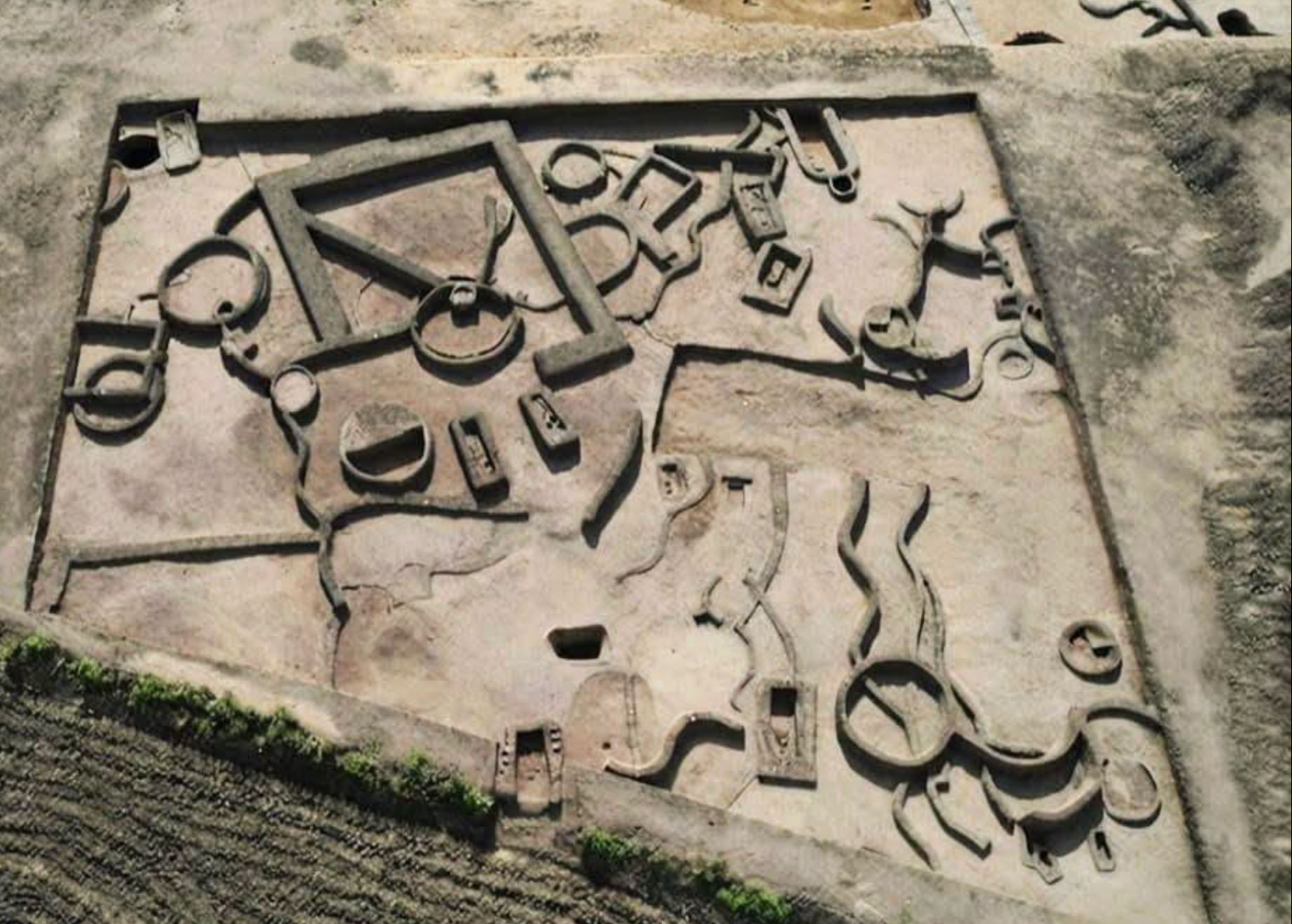
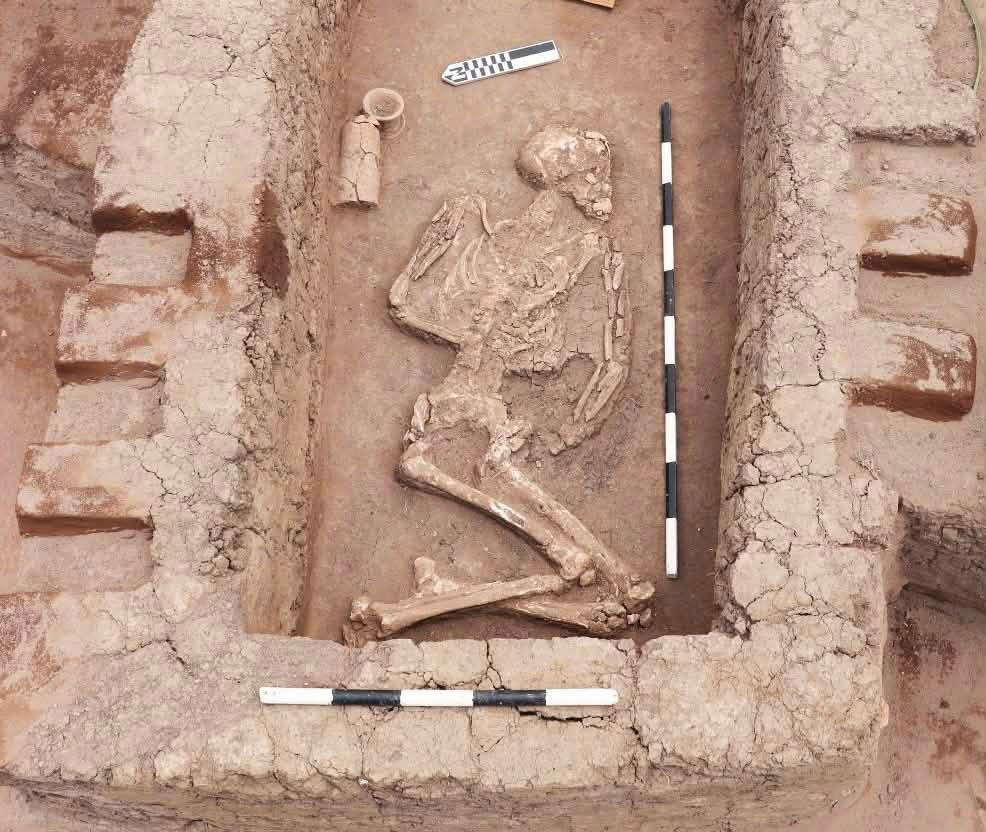
DAKAHLIYA, EGYPT—Ahram Online reports that a necropolis containing burials dating from the Predynastic period through the Greco-Roman era has been found at the site of Kom El-Khelgan in the eastern Nile Delta. Hisham El-Leithy of Egypt’s Supreme Council of Antiquities (SCA) said that the range of the burials documents changes in settlement patterns, funerary traditions, and the relationship between the communities and the environment over thousands of years. The earliest burials, dating to the fourth millennium B.C., consist of oval-shaped graves in the sand. Bodies were placed in these graves in different positions, reflecting variations in early funerary practices. Archaeologists also uncovered pottery and shells in these burials. Other tombs and a nearby settlement have been dated to the Second Intermediate Period (1640–1540 B.C.). Traces of mudbrick buildings, silos for grain storage, ovens, and hearths were found in the settlement. Mohamed Abdel Badie of the SCA added that a series of curved walls surrounded these residential and funerary structures. Simple burials, including the remains of a child found in an amphora, have been dated to the Ptolemaic period (304–30 B.C.), indicating that local communities continued to use the site. To read more about the Nile Delta before the pharaohs, go to "Where Was Ancient Egypt Born?"