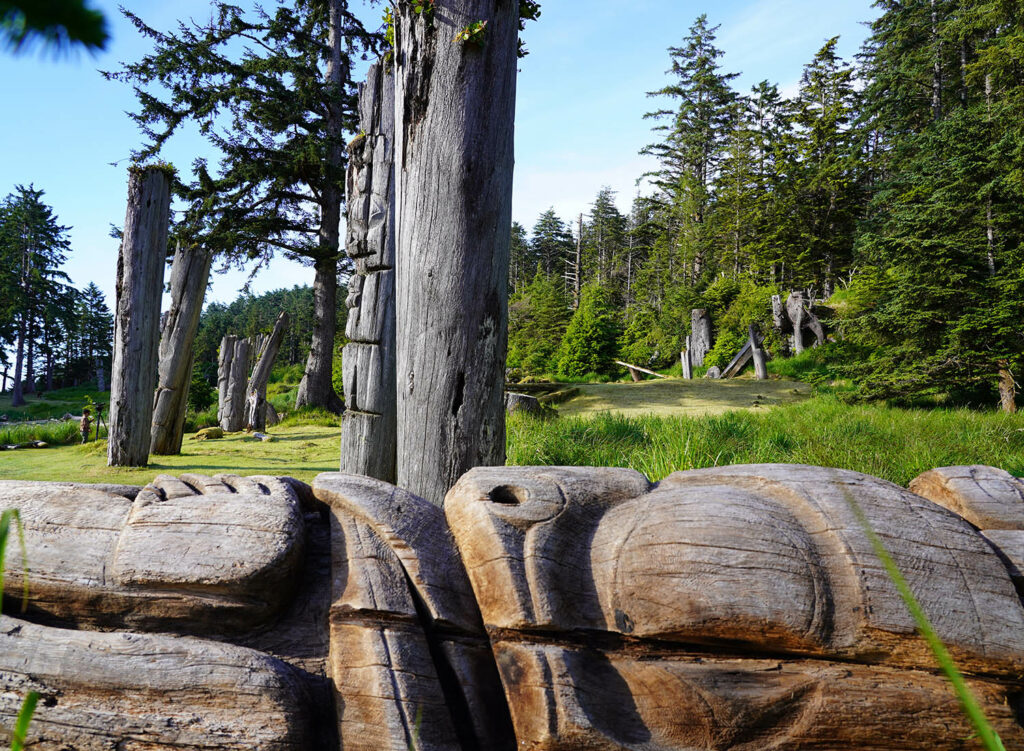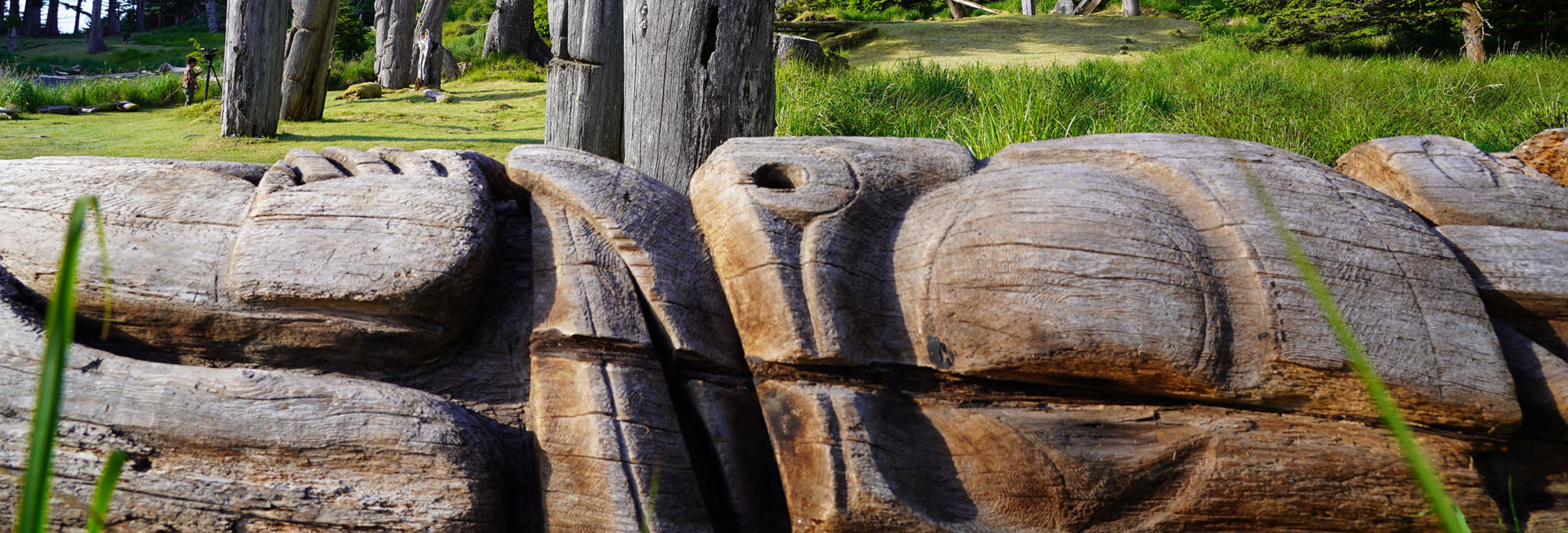
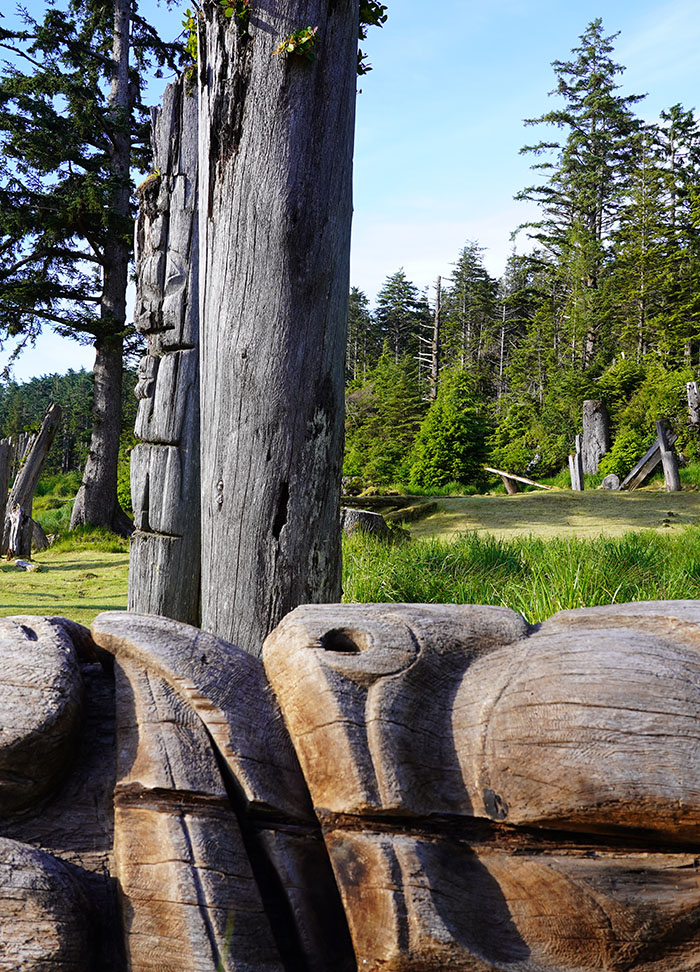
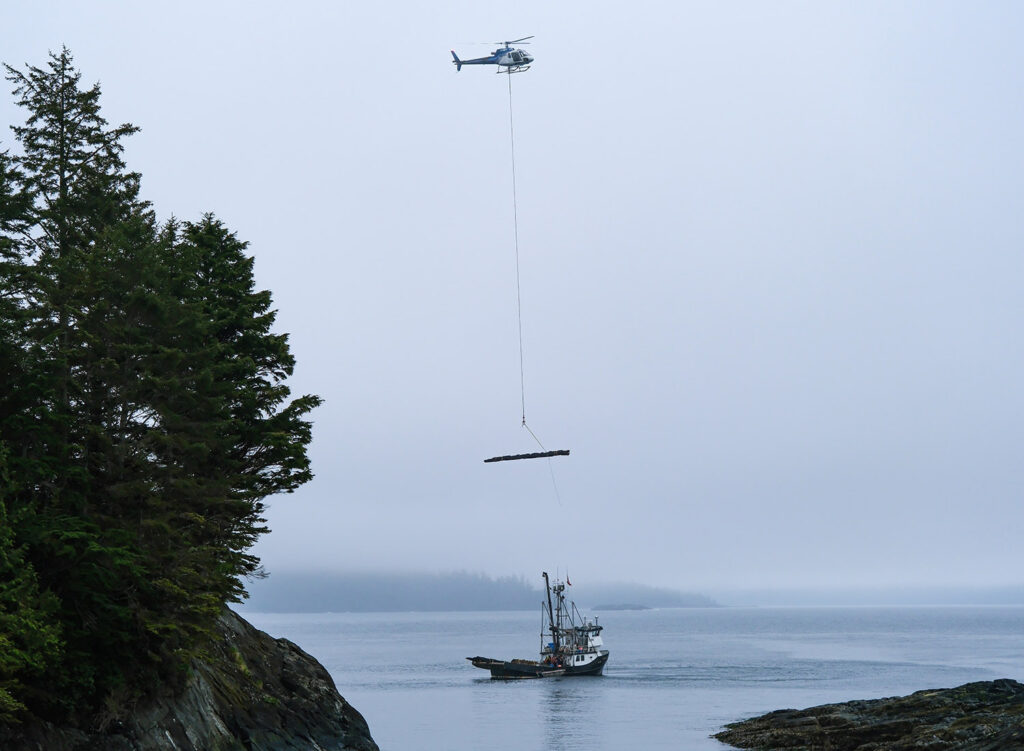
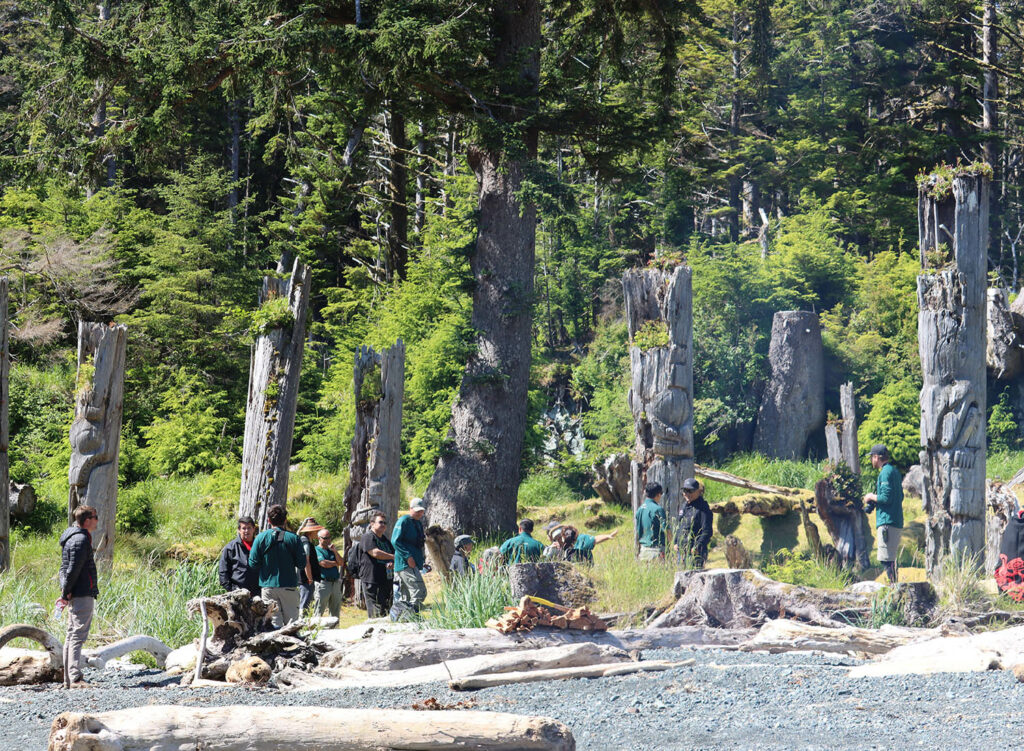
HAIDA GWAII, CANADA—Monumental poles carved from cedar have been returned to the village of SG̱ang Gwaay Llnagaay, a historic community of the Haida people of Canada’s Pacific Northwest. According to Haida Laas, the newsmagazine of the Haida Nation, the poles had been taken from the village in the 1930s and displayed in the city of Prince Rupert, then the Royal BC Museum and the Museum of Anthropology at the University of British Columbia. Carved in the eighteenth or nineteenth century with figures such as bears and orcas, the poles represented families and memorialized the dead. The village in the Haida Gwaii archipelago has been uninhabited since the 1880s, but more than 30 ceremonial poles still stand there. These five poles were repatriated to the Haida in 1976 and 2019; this spring, they were transported by boat and then individually by a sling-equipped helicopter to SG̱ang Gwaay Llnagaay. Haida elders, descendants of SG̱ang Gwaay Llnagaay villagers, and others involved in the repatriation effort arrived at the site a few weeks later for a procession, ceremonial food burning, songs, and stories to welcome the poles home. Since a hurricane-force storm damaged SG̱ang Gwaay Llnagaay in 2018, archaeologists have been excavating ornamental and domestic objects of everyday life from the remnants of longhouses there, including bird-bone drinking straws, a carved block of argillite stone, and perforated thimbles. To read more about the history of the place and the recent archaeological project, go to “Off the Grid: SG̱ang Gwaay, British Columbia, Canada.”