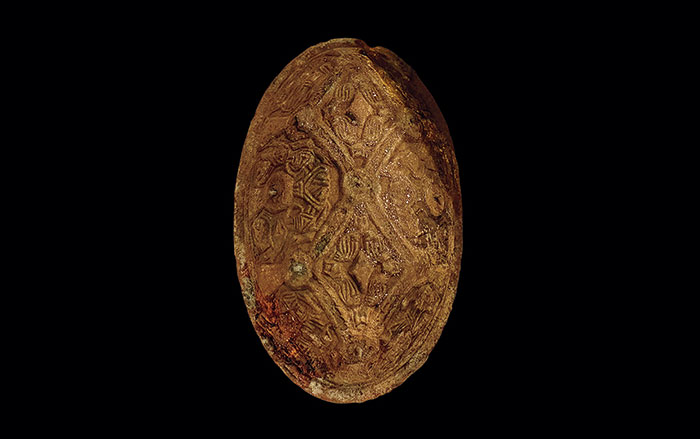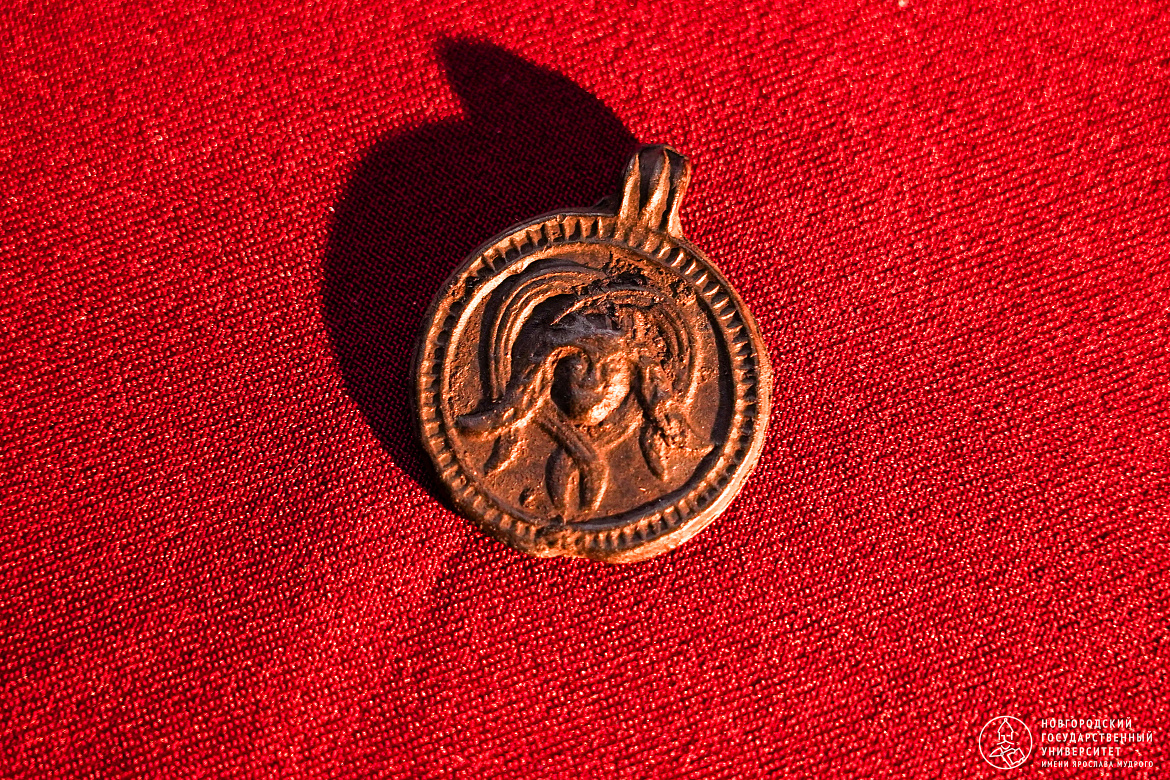
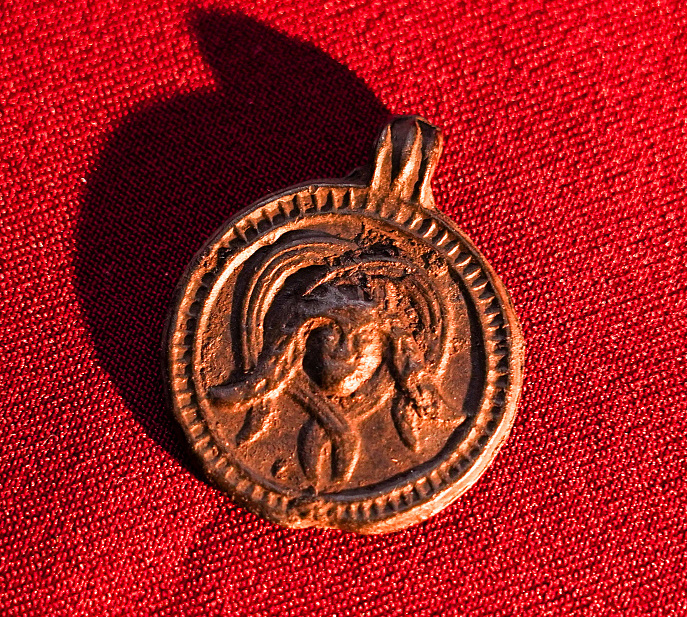
VELIKY NOVGOROD, RUSSIA—A copper-alloy pendant dated to the eleventh century was unearthed in northwestern Russia’s town of Staraya Russa, Live Science reports. The pendant bears the image of a possible Christian warrior-saint carrying a spear and shield on one side, and a Medusa-like figure with snakes on the other. Four similar pendants dated to between the twelfth and fourteenth centuries have been found in the area. “The main characteristic of the serpentine pendant is its combination of images that are incompatible, from a strictly dogmatic standpoint,” said Sergey Toropov of Novgorod State University. He suggests that the warrior on the newly unearthed pendant represents the Christian saint Theodore Stratelates, who was known for killing a giant serpent in his home in Asia Minor. It is unclear if the image on the reverse of the pendant was intended to depict Medusa, a pagan character from Greek mythology. “The ‘incompatible’ images in this case could symbolize the victory of the forces of light over the forces of darkness,” Toropov surmised. The eleventh-century pendant also suggests that Christianity had an influence in this area of northwestern Russia earlier than previously thought, he concluded. To read about the burial of a medieval man unearthed in the Siberian Altai, go to "Siberian William Tell."