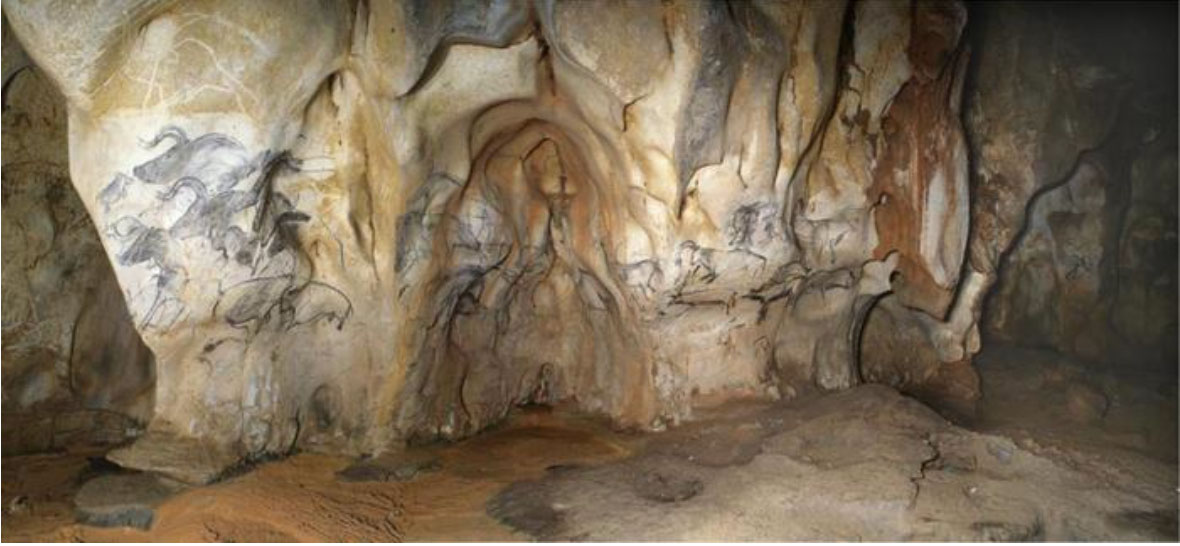
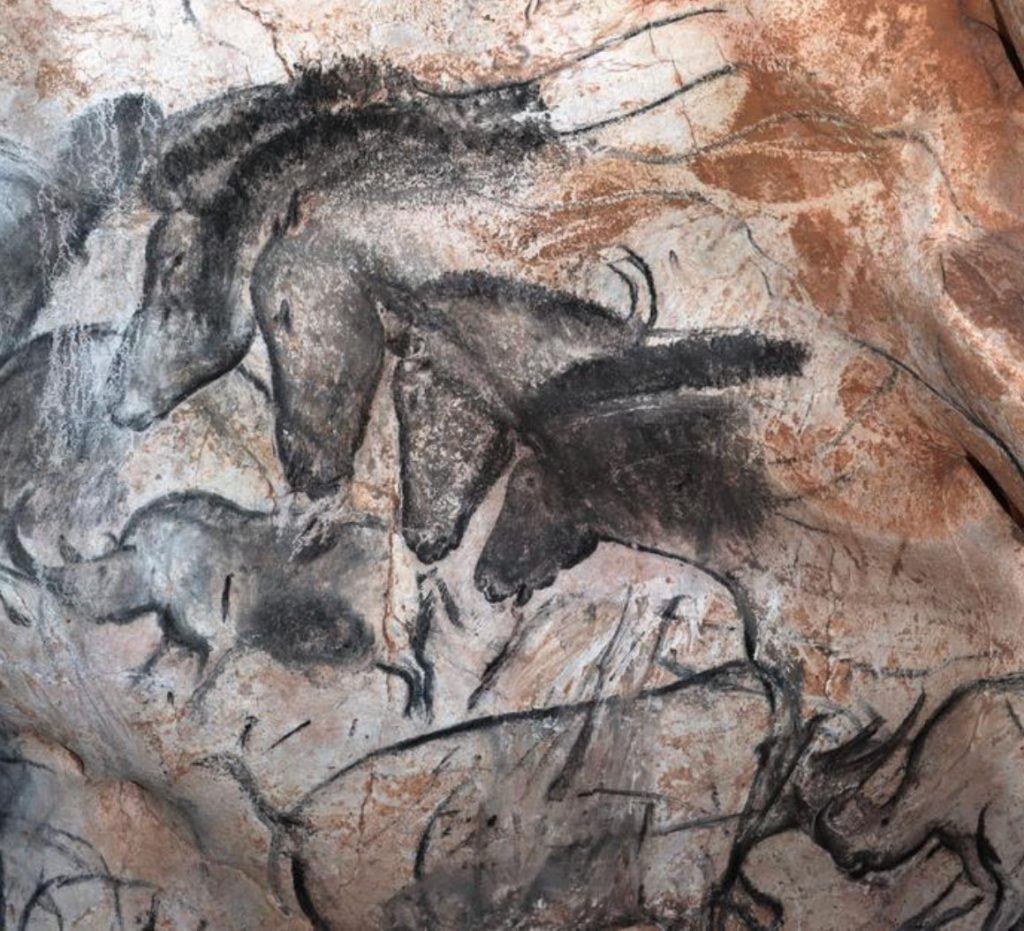
PARIS, FRANCE—SciNews reports that a team of researchers including Philippe Walter and Yohan Boulard of Sorbonne University have examined the 37,000-year-old artworks inside Chauvet Cave with ultraviolet fluorescence spectroscopy. Located in southeastern France, the cave contains more than 1,000 drawings and engravings depicting horses, cave lions, mammoths, woolly rhinoceroses, bears, and bison. By shining ultraviolet light on the cave paintings from about eight feet away, Walter and his colleagues observed that some materials absorbed the light, while others gave off a visible glow. The color of the glow allowed the researchers to identify the materials on the cave walls and any organic impurities in them. Charcoal absorbs the ultraviolet light and so does not glow, but the black lines of the Horses Panel were found to be covered with a thin layer of calcite. This may have acted as a natural varnish and protected the drawings, the researchers explained. They also determined that in some places in the Alcove of the Lions, calcite flows formed on bare rock, but not on the drawings. This could suggest that the pigments in the drawings influenced how the flow of minerals crystallized. The team members also observed an orange glow beneath some of the charcoal marks in the cave, including smears thought to have been left by torches. When they tried to recreate the orange glow in the lab, only heated limestone and heated calcite produced a similar orange signal under ultraviolet light, suggesting that the images in the cave had been drawn with heated charcoal. “These results showcase the careful interaction between humans and geology that allowed these artworks to be preserved for tens of thousands of years,” Walter concluded. Read the original scholarly article about this research in the journal ACS Omega. To listen to an acoustic reconstruction of how sound travels in Chauvet Cave, go to “Videos: Listening to the Ancient World.”