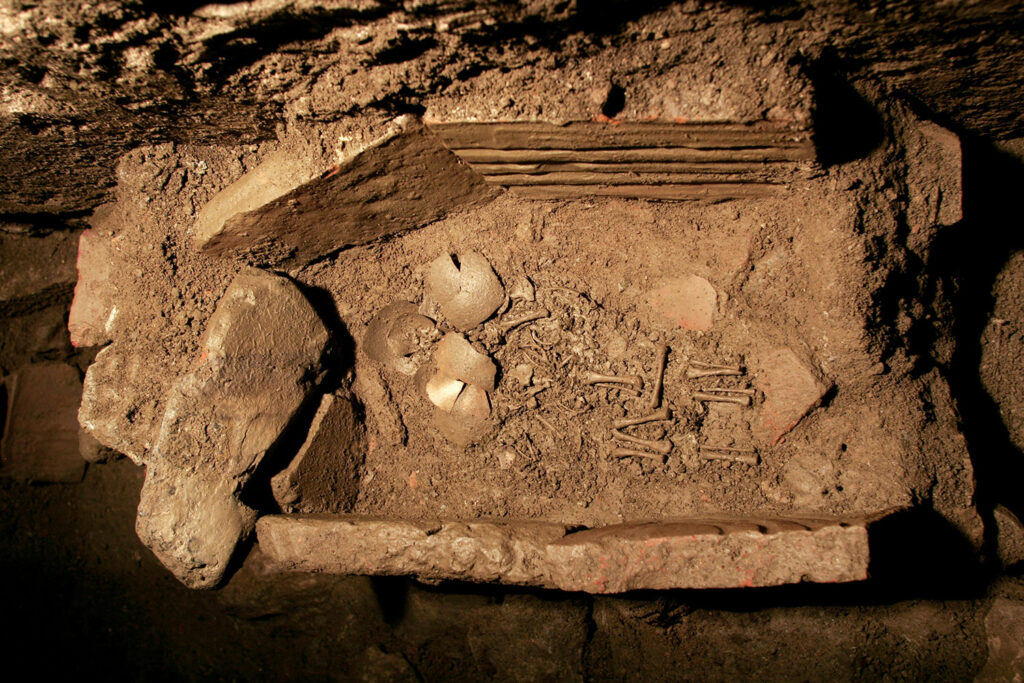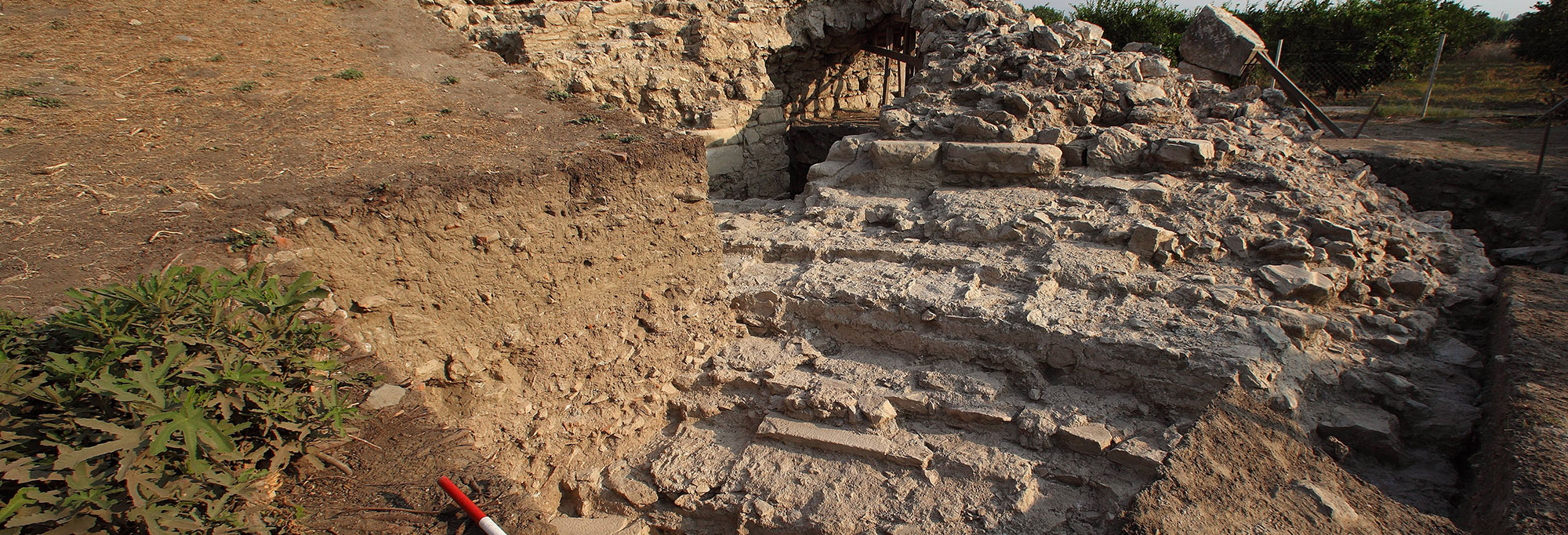
VIENNA, AUSTRIA—The remains of two newborns have been recovered from a public latrine in Anatolia’s ancient city of Ephesus, according to a La Brújula Verde report. The latrine was located at the odeon, a space for music and poetry performances, within the city's sanctuary of Artemis. The small tomb, made of bricks and stones, has been dated to the eighth or ninth century A.D., after the odeon had been abandoned. Analysis of the remains indicates that the infants had died shortly before or after birth, and were likely to have been twins. “In ancient societies, the burial place of very young children was usually different from that of adults because their social status was different,” said Caroline Partiot of the Austrian Academy of Sciences. “That is why it is common to find their tombs in spaces that were not originally intended for that purpose, such as beneath house floors or in wells,” she added. Yet the twins had been placed in shrouds for burial with an iron object, perhaps the needle used to sew the burial cloths. “When the pregnancy was unwanted, the treatment of the body was usually summary or nonexistent,” Partiot said. “In the Odeon, however, we find a burial that exhibits all the features of a normalized tomb, suggesting special care by the family and that the death of these children had an impact on the community,” she explained. Read the original scholarly article about this research in the journal Childhood in the Past. To read more about archaeology at the site, go to "Secrets of the Seven Wonders: Temple of Artemis at Ephesus."