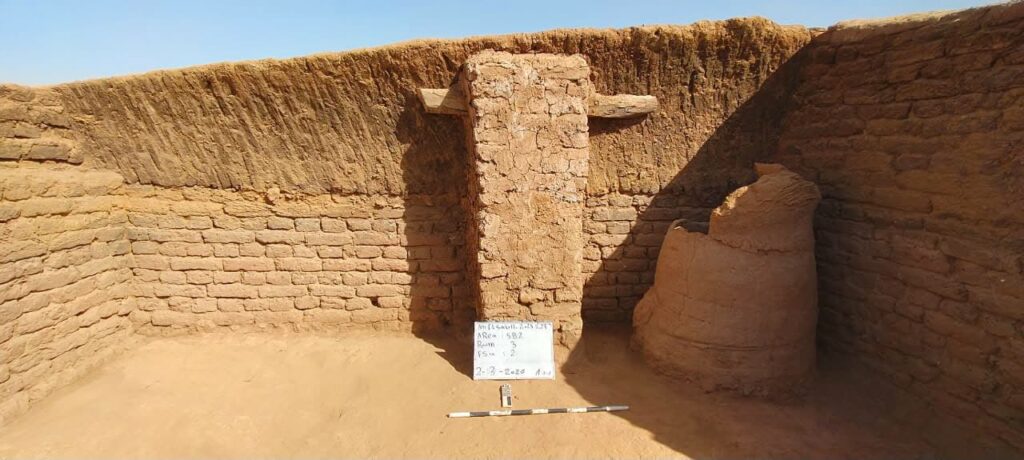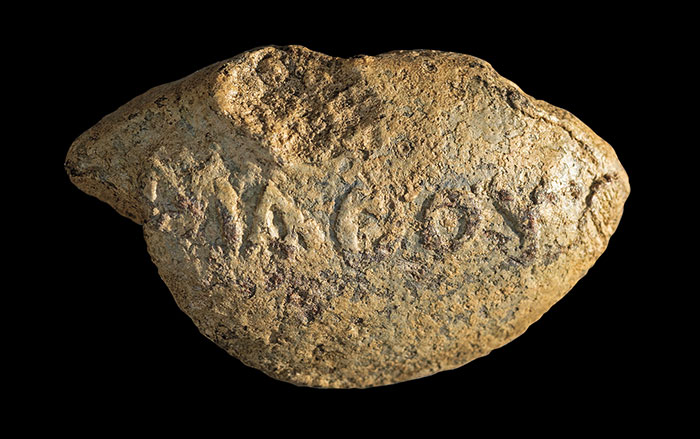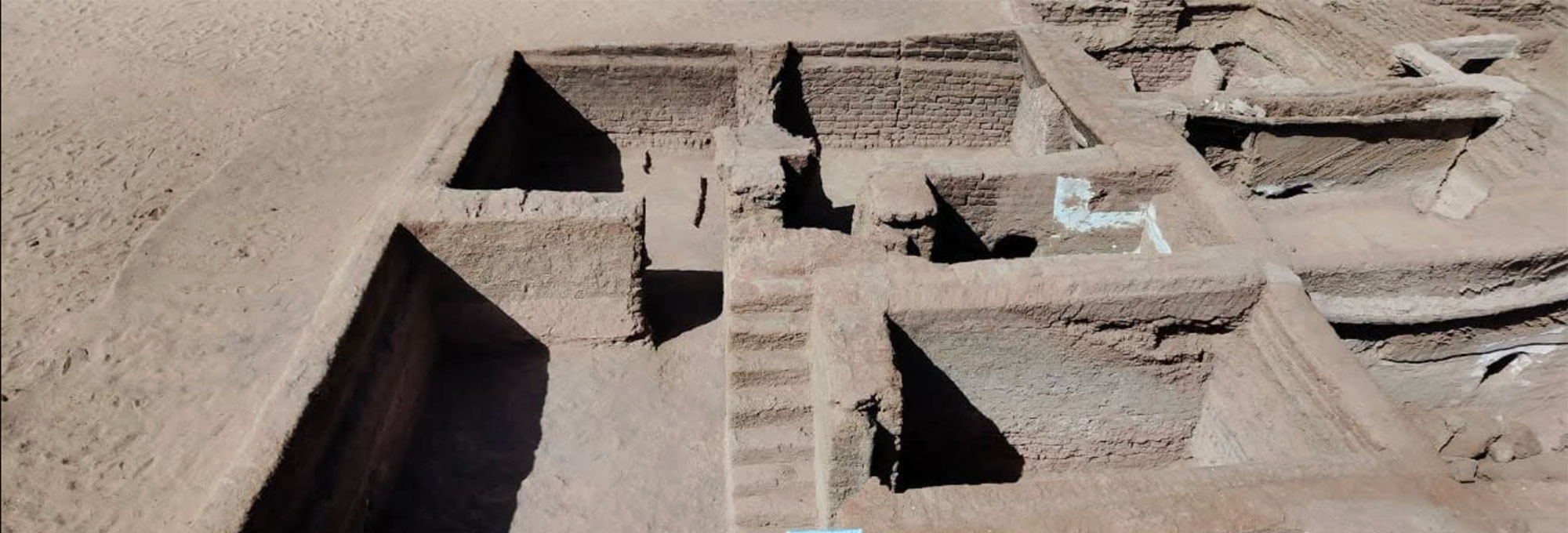
WESTERN DESERT, EGYPT—Ahram Online reports that remnants of a fortified city inhabited in the fourth century A.D. have been uncovered at the Ain El-Sabil site in Egypt’s Dakhleh Oasis. Hisham El-Leithy of the Supreme Council of Antiquities said that the well-planned city was laid out on a grid that created open squares and public spaces arranged around a central basilica. Mahmoud Massoud of Dakhla Antiquities added that traces of two watchtowers were found on the outskirts of the city. Pottery, bottles for oils and perfumes, oil lamps, and stone tools for grinding grain were recovered from mudbrick houses with spacious reception areas and vaulted roofs. One of the dwellings has been identified as the home of a church deacon named Tisous, who lived in the second half of the fourth century. Another structure, the home of Tabibos, has been dated to the early fourth century and is thought to have been used as a church before the construction of the basilica. “One of the excavation’s most significant discoveries is a collection of nearly 200 inscribed ostraca (pottery fragments used as writing material) bearing texts in both Coptic and Greek,” said Diaa Zahran of the Islamic, Coptic and Jewish Antiquities Sector. Ostraca were used to record a variety of information, such as commercial transactions and correspondence. Gold coins dating to the reign of Constantius II, who ruled from A.D. 337 to 361, were also recovered. For more on Byzantine-era Egypt, go to "Recovering Hidden Texts."