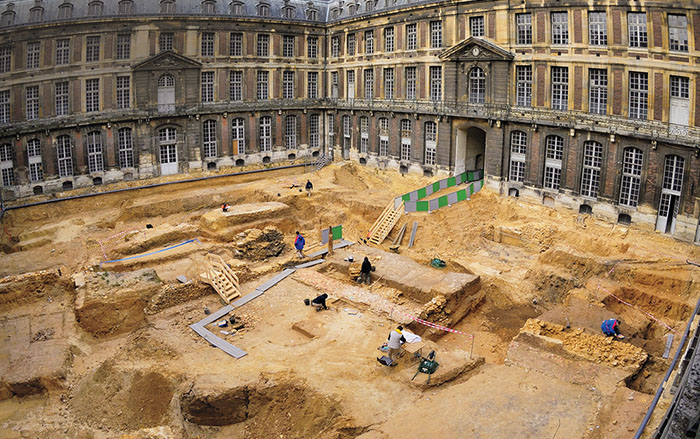
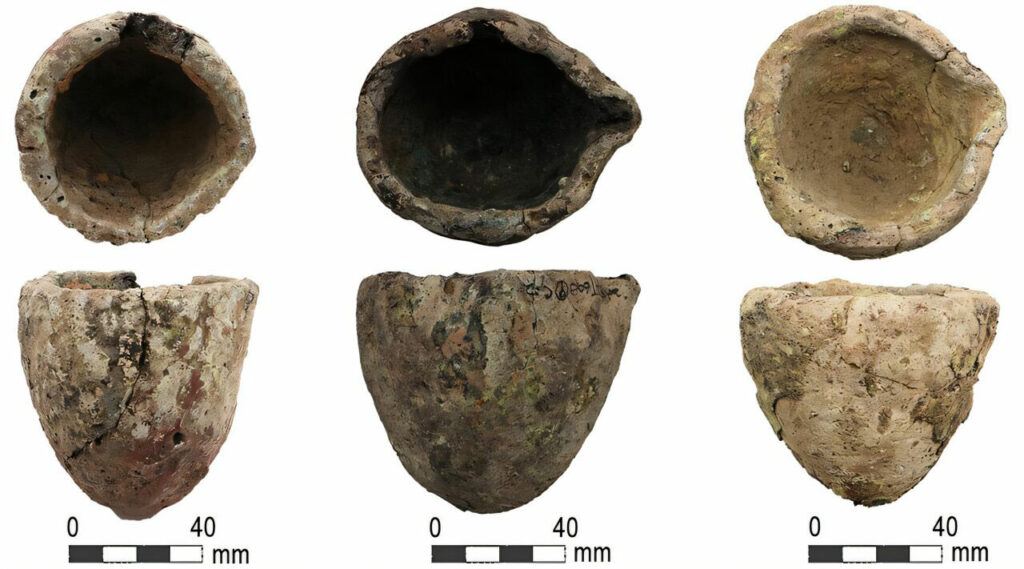
GUANGZHOU, CHINA—According to a Phys.org report, Chinese researchers have identified the earliest evidence of brass-making in East Asia at the site of Guangzhou. Ancient written Chinese sources allude to the production of brass, a metal alloy made from copper and zinc, as early as the tenth century. Prior to the new study, however, the oldest archaeological evidence dated only to the sixteenth century. Excavations at Guangzhou uncovered an ancient metal workshop in which a team led by Peking University archaeologist Hongyan Xiao found 80 crucibles. The researchers were able to identify tiny droplets of brass that had been trapped on the surfaces of three crucibles dating to the ninth and tenth centuries. “Understanding how people first learned to produce brass reveals how knowledge spread, how crafts became specialized, and how economies and long-distance exchange developed,” Xiao said. “A single crucible therefore contributes to much broader questions about the history of technology and human innovation.” Read the original scholarly article about this research in Antiquity. To read about brass sculptures crafted in West Africa, go to "The Benin Bronzes' Secret Ingredient."