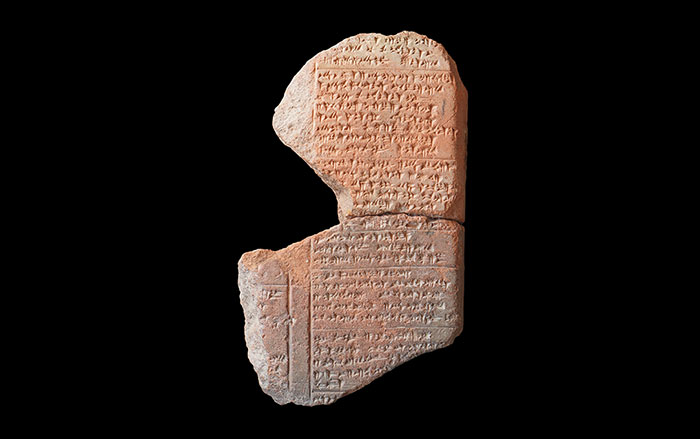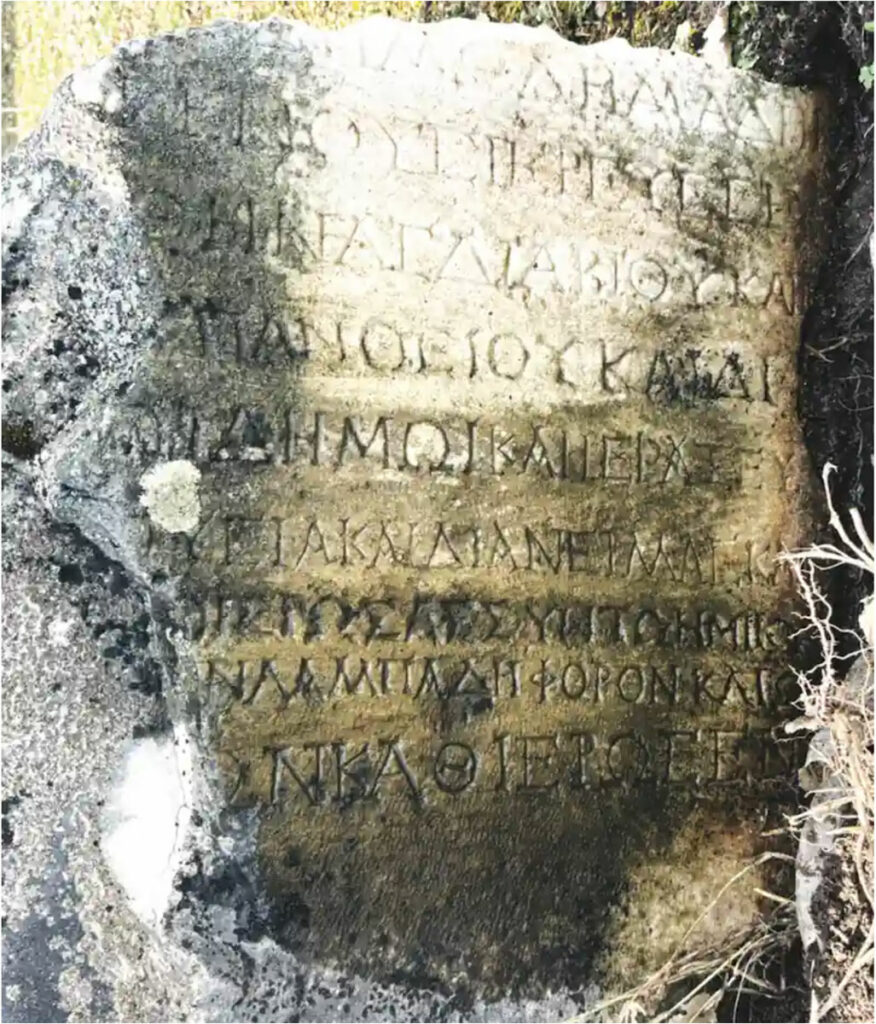
BANAZ, TURKEY— La Brújula Verde reports that nine inscriptions have been discovered in western Turkey at the site of the ancient Phrygian city of Acmonia. One of the inscriptions says that Demades, son of Dionysogenes, commissioned a torch-bearing statue, or lampadephoros. Demades was a priest who was known to scholars from an earlier inscription dated to A.D. 68. His lampadephoros is thought to have lit Acmonia’s main street to benefit the city’s residents. Another priest, Hierocles, son of Menander, and his son Hermogenes erected a statue of Demeter Karpophoros, a goddess associated with fertility and the harvest, according to the text of another inscription. Hierocles also sponsored and organized games for a festival honoring Asclepius, the god of medicine. This is the first time that the cult of Demeter Karpophoros has been identified in the region of Phrygia, explained Hüseyin Uzunoğlu of Akdeniz University. Two funerary poems are inscribed on a stele dedicated to two men thought to have been comrades in the Roman army. Another funerary inscription commemorating Mandana, a high priestess, was commissioned by her husband. Women sometimes shared the priesthood with their husbands, but they were also able to occupy such positions independently, Uzunoğlu explained. Read the original scholarly article about this research in Gephyra. To read about a lengthy Roman inscription from Aphrodisias, go to "The Cost of Doing Business."