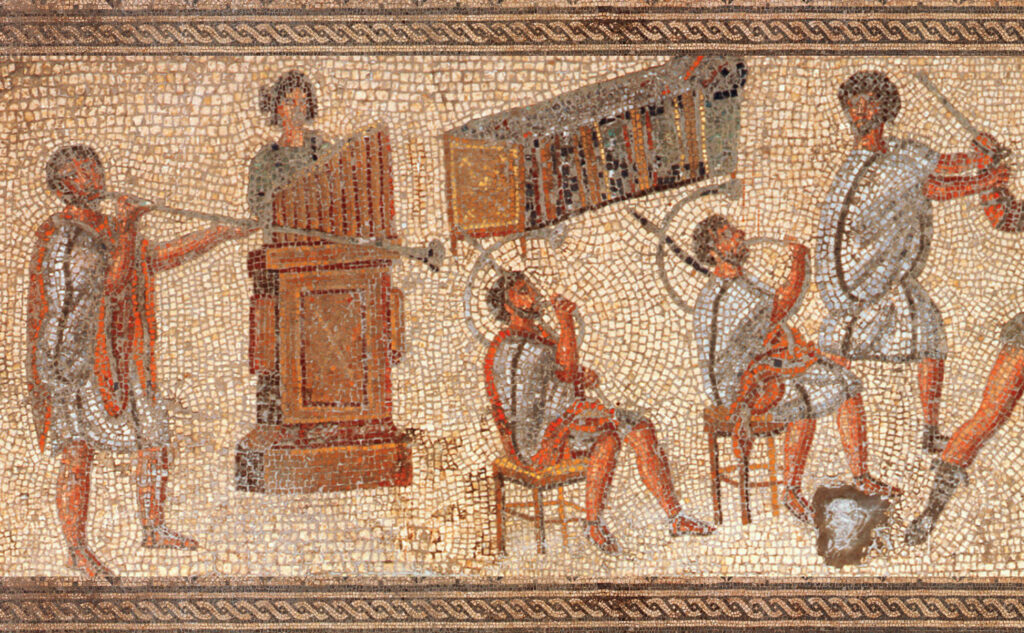
Since the Paleolithic period, people of every culture have used music as a means of communication and expression. The earliest known musical instruments are a collection of 35,000-year-old flutes, some made of bone and some of ivory, that archaeologists unearthed in southwestern Germany. The oldest example of musical notation can be found on a second-millennium B.C. cuneiform tablet excavated in the Bronze Age city of Ugarit in Syria. Ancient artists from the Mediterranean to China depicted instruments, musicians, and dancers in rock art, tomb paintings, and mosaics. Fragments, and, more rarely, intact examples of wind, string, and percussion instruments crafted from materials including ceramic, wood, and metal have been discovered across the globe.
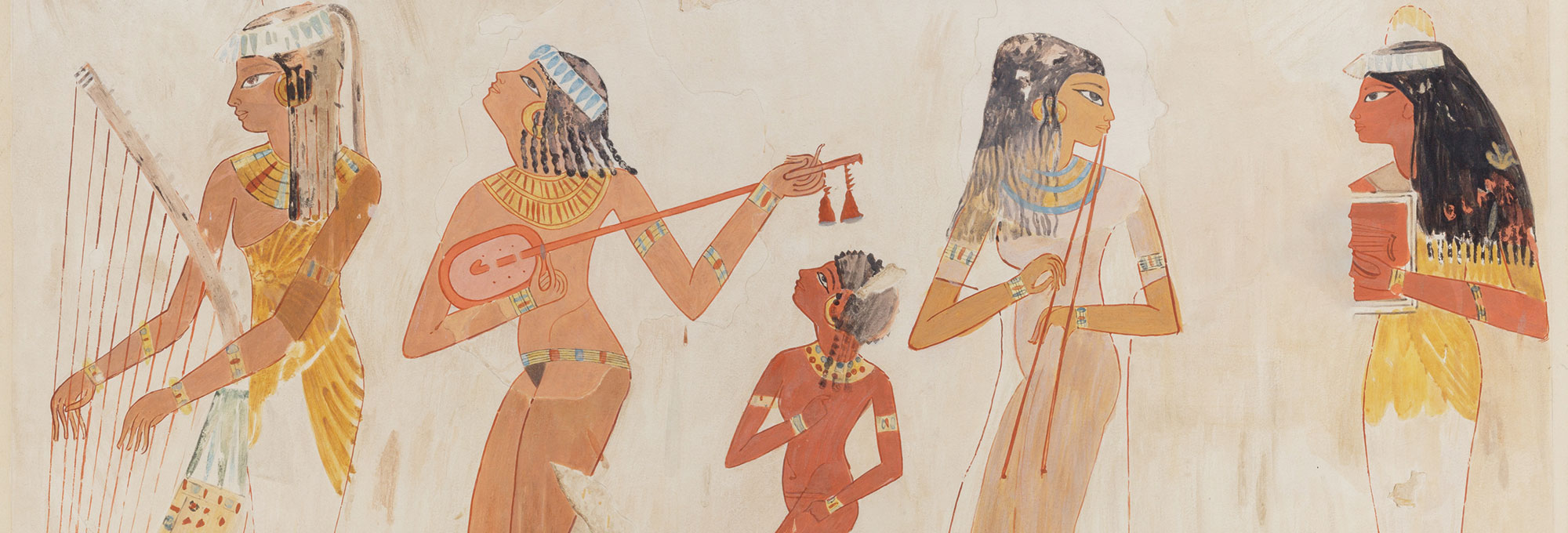
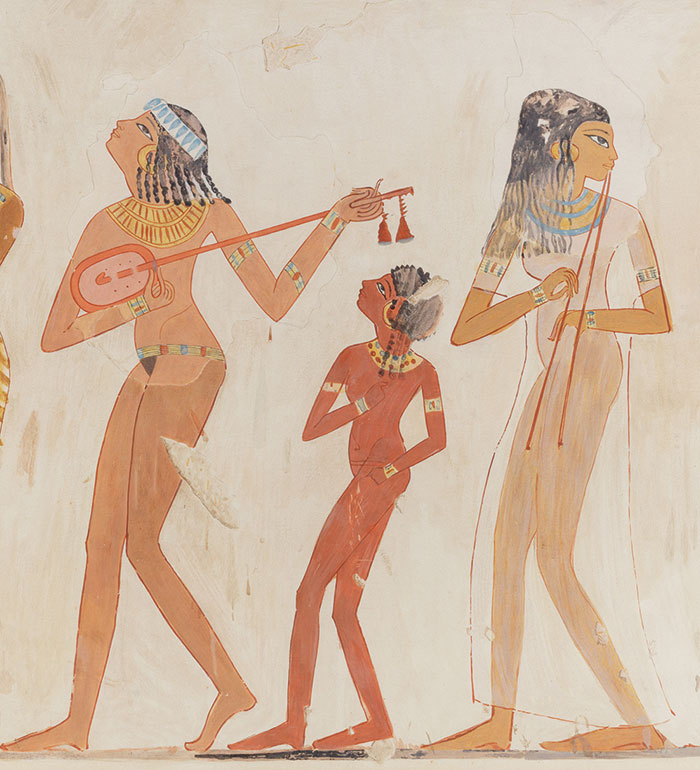
Although scholars have identified evidence of ancient musical traditions for centuries, the field of music archaeology only emerged as a formal discipline in the 1970s. Using artifacts, iconography, and written sources, music archaeologists are able to study ancient instruments as well as the contexts in which musicians played them. Technologies such as 3D printing now enable researchers to make and play replicas of instruments, approximating the sounds they produced. Digital tools are also revolutionizing the field of archaeoacoustics, which explores how people of the past experienced sound by examining the acoustic properties of spaces where instruments were played. Throughout human history, music has accompanied collective ritual events, celebrations, and private moments of grief and joy, from harps echoing for eternity in Egyptian tombs to lyres strummed by bards at feasts to horns blasting on the battlefield. “Music is very personal,” says Toon Sykora, curator of the Egyptian collection at the Dutch National Museum of Antiquities. “It gives a more human, more intimate, and, I think, a more honest view of ancient people than elaborate monuments, temples, or palaces ever could.”
To listen to how music might have sounded at some of the world's most iconic sites, click here.
Further Reading
Dancing Days of the Maya
In Guatemala, murals depict performances combining Catholic and Indigenous traditions
Tomb of the Chantress
A burial chamber in the Valley of the Kings provides a glimpse into the life of an ancient Egyptian singer
Hadrian's Bugler
Near Hadrian’s Wall, archaeologists unearthed the mouthpiece of a horn that Roman soldiers played while marching
Artifact Spotlight: Magdalenian Wind Instrument
Archaeologists once thought this 18,000-year-old conch shell was broken—then they tried to play it
Listening to the Gods of Ancient Peru
The acoustics of the Chavìn de Huántar temple complex amplified the experience of the ceremonies held there
-
The Music of Time September/October 2026
Musical Melting Pot
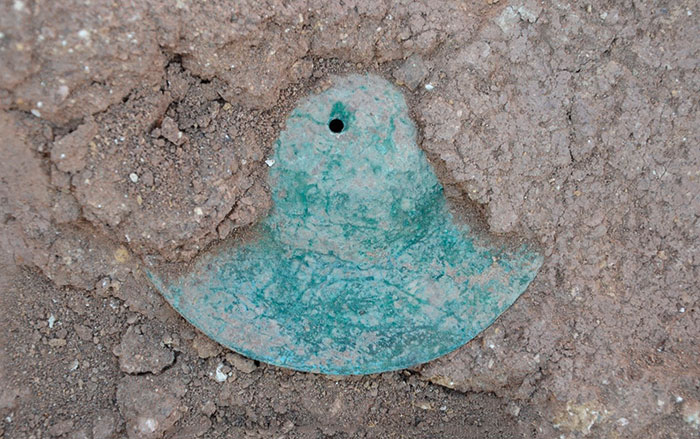 Khaled Douglas
 -
The Music of Time September/October 2026
An Instrument of Great Ceremony
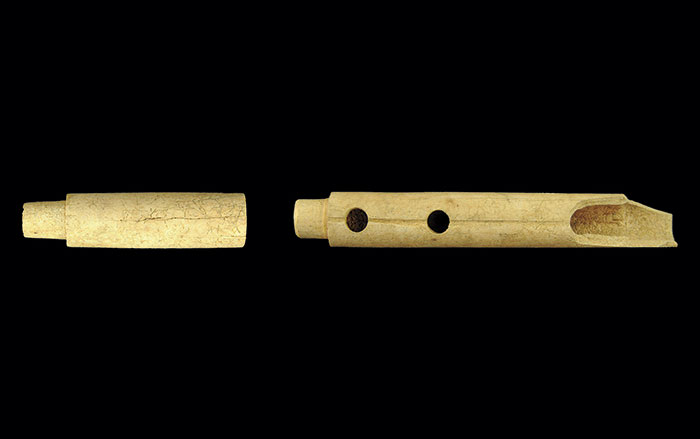 Photograph by Raffaele Franco. © Institute of Fine Arts – NYU
 -
The Music of Time September/October 2026
Medieval Warrior Troubadours
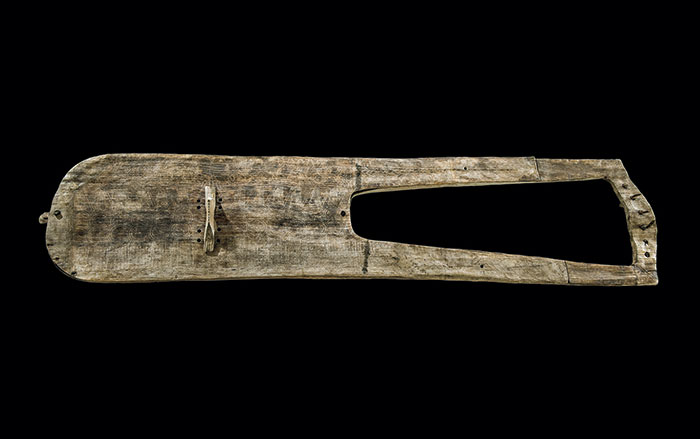 Archäologisches Landesmuseum Baden-Württemberg/Photo: Manuela Schreiner
 -
The Music of Time September/October 2026
Southwest Symphony
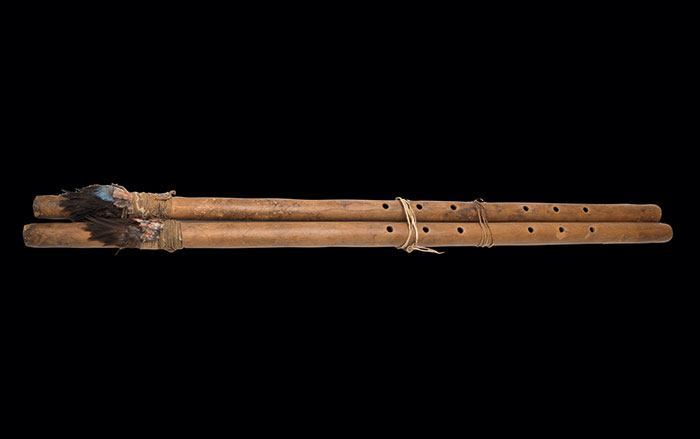 Arizona State Museum, University of Arizona/Photographer: Michelle Dillon
 -
The Music of Time September/October 2026
Accompanying the Afterlife
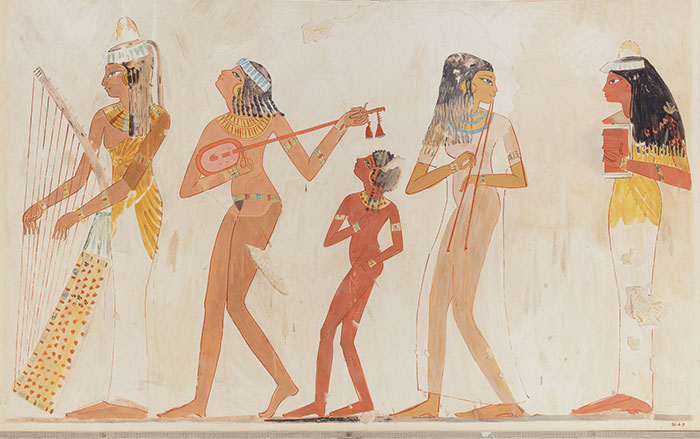 The Metropolitan Museum of Art, New York, Rogers Fund, 1930
 -
The Music of Time September/October 2026
War Pigs
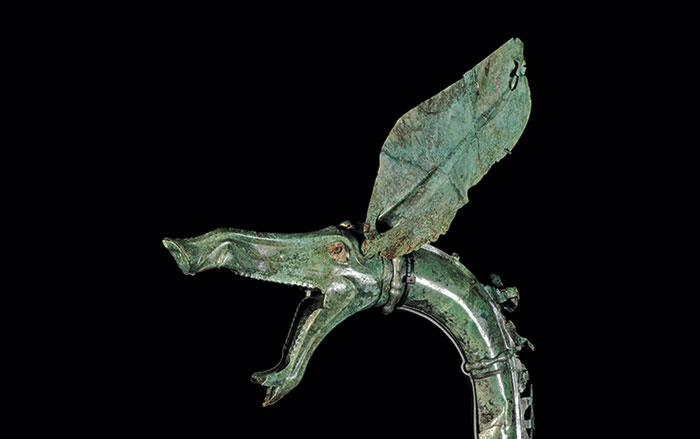 © Patrick Ernaux, Inrap, Site Archéologique de Tintignac, Naves, Corrèze
 -
The Music of Time September/October 2026
The New Sogdian Sound
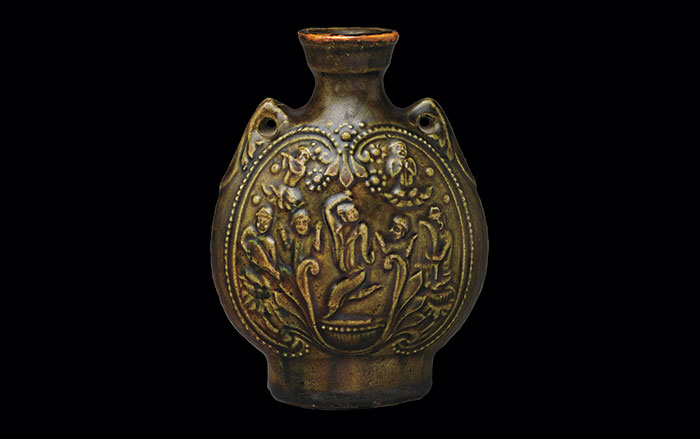 The Metropolitan Museum of Art, New York/Purchase, Mr. and Mrs. William P. Frankenhoff and Mrs. Richard E. Linburn Gifts, 2001